Support our educational content for free when you purchase through links on our site. Learn more
🌍 How to Create a Travel Checklist for Top International Destinations (2026)

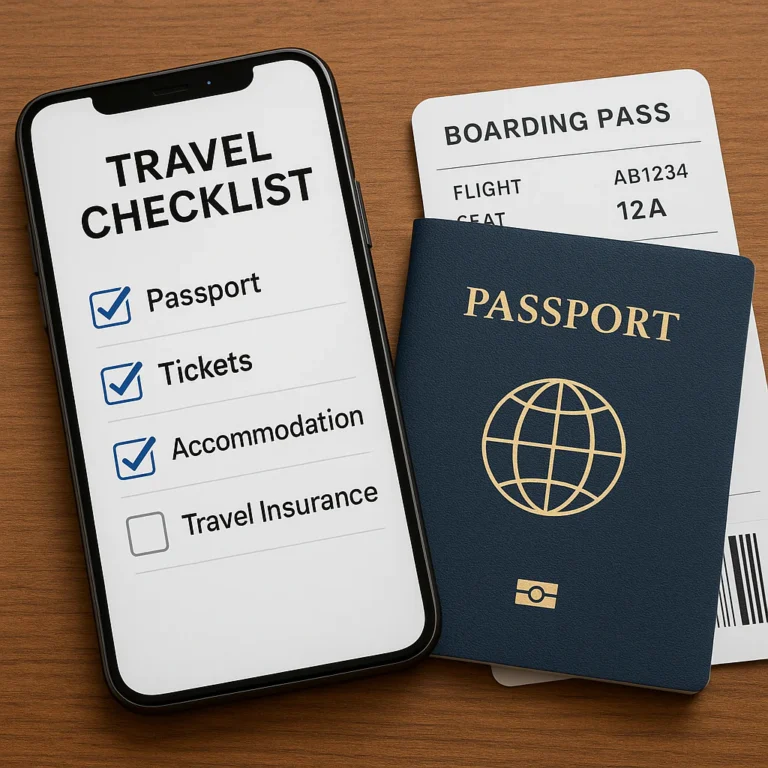
Ever packed a suitcase only to realize you forgot your passport or the wrong power adapter? You’re not alone—over 60% of travelers admit to forgetting at least one critical item, turning dream vacations into logistical nightmares. At Travel Checklist™, we’ve seen it all: from missed flights due to visa oversights to stranded tourists without travel insurance. But here’s the secret: a smart, dynamic checklist isn’t just a to-do list; it’s your ultimate travel safety net. In this guide, we’ll walk you through creating a bulletproof checklist tailored for top international destinations, covering everything from visa logistics to packing hacks. Plus, stay tuned for our exclusive “Final Countdown” section, where we reveal the 24-hour pre-departure verification that could save your trip!
Key Takeaways
- Start Early: Begin your checklist 3-6 months before departure to handle visas, vaccinations, and passport renewals without stress.
- Prioritize Documents: Ensure your passport is valid for 6+ months beyond your return date and secure necessary visas or e-Visas.
- Health & Safety First: Get required vaccinations, pack a medical kit, and purchase comprehensive travel insurance with medical evacuation coverage.
- Smart Packing: Use packing cubes, adapt to local customs, and include universal adapters to avoid last-minute surprises.
- Digital Backup: Store digital copies of all documents in the cloud and register with STEP for real-time safety alerts.
Pro Tip: For destination-specific checklists, explore our curated guides for Adventure Travel, Beach Vacations, and Digital Nomads!
Table of Contents
- ⚡️ Quick Tips and Facts
- 🕰️ The Evolution of the Travel Checklist: From Papyrus to Apps
- 🌍 Phase 1: Mastering the Art of Destination Research and Itinerary Planning
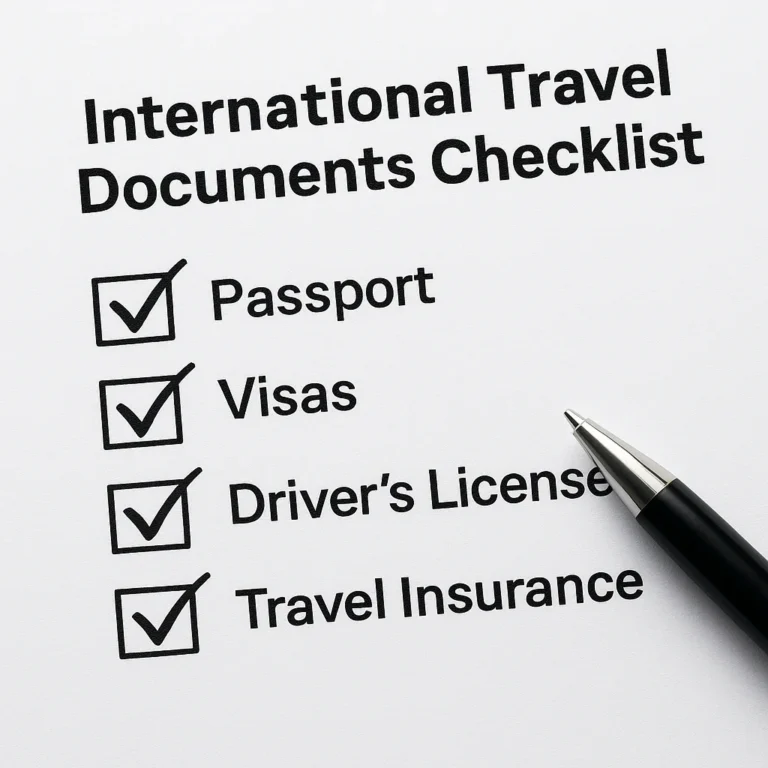
- 🛂 Phase 2: Navigating the Bureaucracy of International Travel Documents
- 1. Validating Your Passport and Understanding the 6-Month Rule
- 2. Securing the Right Visa: E-Visas, Stamps, and Waivers
- 3. Digital Copies and Physical Backups: The Ultimate Safety Net
- 🏥 Phase 3: Health, Safety, and Medical Preparedness for Global Adventures
- 1. Essential Vaccinations and Prescription Medication Logistics
- 2. Travel Insurance Deep Dive: Coverage You Actually Need
- 3. Registering with STEP and Local Embassy Protocols
- 🧳 Phase 4: Curating the Perfect International Packing List by Climate and Culture
- 1. Adapting Your Wardrobe to Local Customs and Weather Patterns
- 2. Electronics, Adapters, and Power Solutions Worldwide
- 3. Toiletries, Laundry, and the “One Bag” Challenge
- 💰 Phase 5: Financial Logistics and Money Management Abroad
- 1. Currency Exchange Strategies and ATM Fees
- 2. Notifying Banks and Setting Up Digital Wallets
- 🚗 Phase 6: Special Considerations for Families, Drivers, and Solo Travelers
- 1. Traveling with Children: Documentation and Entertainment
- 2. Driving Abroad: International Permits and Road Rules
- 3. Solo Traveler Safety and Connectivity Hacks
- 📱 Phase 7: Digital Tools and Apps to Automate Your Checklist
- 🚀 Final Countdown: The 24-Hour Pre-Departure Verification
- 🏁 Conclusion
- 🔗 Recommended Links
- ❓ FAQ
- 📚 Reference Links
⚡️ Quick Tips and Facts
Before we dive into the nitty-gritty of creating a bulletproof travel checklist, let’s hit the pause button and drop some golden nugets that could save your trip (and your sanity). Did you know that over 60% of international travelers admit to forgetting at least one critical item? 😱 It’s true! From forgetting a power adapter to realizing your passport expires in three months, the stakes are high.
Here is the Travel Checklist™ rapid-fire reality check:
| Fact | The Reality Check |
|---|---|
| Passport Validity | Many countries require your passport to be valid for 6 months beyond your return date, not just your arrival date. 🛑 |
| Visa Processing | Some visas take 3 months to process. Waiting until the last minute is a recipe for disaster. ⏳ |
| Insurance Coverage | Standard health insurance often covers 0% of medical costs abroad. You need specific travel insurance. 🏥 |
| Packing Weight | The average traveler packs 30% more than they actually need. Lighter is better! 🎒 |
| Document Safety | Losing your passport is the #1 cause of travel delays. Digital backups are non-negotiable. 📱 |
Pro Tip: If you are heading to a top destination like Japan, Italy, or Brazil, check our curated list of top travel destinations for specific entry requirements before you even start packing!
Why do so many people fail the “Checklist Test”? Because they treat it like a grocery list rather than a strategic roadmap. We’ve seen friends miss flights because they didn’t realize they needed a visa for a layover in Turkey, and others stranded in Thailand because their credit card had a foreign transaction block. But don’t worry, by the end of this guide, you’ll be the friend everyone calls for travel advice. 🌍✨
🕰️ The Evolution of the Travel Checklist: From Papyrus to Apps
Let’s take a quick trip back in time. 🕰️ Long before we had apps like Travel Checklist™ or even pen and paper, ancient travelers relied on memory and oral tradition. Imagine a Roman merchant trying to remember which ports had fresh water and which ones had pirates without a single list! It was a gamble.
Fast forward to the 19th century, and the steamship era brought the first printed checklists for passengers. These were rudimentary, mostly focusing on luggage and tickets. But the real revolution happened in the digital age.
The Digital Revolution
Today, we have moved from sticky notes to sophisticated AI-driven checklists.
- The Paper Era: Prone to getting lost, wet, or torn.
- The Spreadsheet Era: Excel sheets were great for budgeting but terrible for mobile access.
- The App Era: Real-time updates, cloud syncing, and destination-specific templates.
“A comprehensive checklist helps you stay organized so you don’t forget crucial items or tasks.” — Squaremouth Travel Advice
Why does this history matter? Because understanding the evolution of preparation helps us appreciate why a modern, dynamic checklist is superior. You aren’t just checking boxes; you are engaging with a system designed to adapt to global changes, like sudden visa rule shifts or health advisories.
🌍 Phase 1: Mastering the Art of Destination Research and Itinerary Planning
You wouldn’t build a house without a blueprint, right? 🏗️ Yet, so many travelers book flights without researching their destination’s entry requirements, local customs, or safety landscape. This is where the magic begins.
Step 1: The Deep Dive into Destination Data
Before you even think about packing, you need to know where you are going. Is it a bustling metropolis like Tokyo, a rugged trek in the Andes, or a sun-soaked beach in Bali? Each requires a different approach.
- Safety First: Always check the U.S. Department of State travel advisories. They provide real-time updates on political unrest, crime, and health risks. 🚨
- Cultural Nuances: Research local etiquette. In some countries, pointing with your finger is rude; in others, tipping is offensive.
- Seasonal Realities: Don’t pack a swimsuit for a trip to Iceland in January unless you plan to swim in a geothermal pool!
Travel Checklist™ Insight: We once planned a “relaxing” trip to Southeast Asia during monsoon season because we didn’t check the weather patterns. Let’s just say “relaxing” involved a lot of indoor noodle eating. 🍜🌧️
Step 2: Itinerary Flexibility
A rigid itinerary is a ticking time bomb. While you need a plan, leave room for serendipity.
- Buffer Days: Always add a 24-hour buffer before international flights.
- Backup Plans: What if your museum is closed? What if the train is cancelled?
For specific itinerary ideas, check out our Adventure Travel Checklists if you’re hitting the trails, or Beach Vacation Checklists for that sun-drenched escape.
🛂 Phase 2: Navigating the Bureaucracy of International Travel Documents
Ah, the paperwork. The part of travel that makes us want to hide under a blanket. 📄 But trust us, this is the most critical section. If you mess this up, you aren’t going anywhere.
1. Validating Your Passport and Understanding the 6-Month Rule
Your passport is your golden ticket. But it’s not just about having one; it’s about having a valid one.
- The 6-Month Rule: Many countries (including China, Brazil, and Thailand) require your passport to be valid for at least six months beyond your date of entry. If your passport expires in 5 months, you will be denied boarding. ❌
- Blank Pages: Some countries require two blank visa pages. A passport with only one page left is useless for entry.
Action Item: Check your passport expiration date today. If it’s within 9 months, renew it immediately. Standard processing can take 6-8 weeks.
2. Securing the Right Visa: E-Visas, Stamps, and Waivers
Visas are the gatekeepers.
- Visa-Free Travel: The US has visa-waiver agreements with many countries (like the UK and EU), but you still need to apply for an ESTA (Electronic System for Travel Authorization) before flying to the US.
- E-Visas: Countries like Turkey and India offer online visa applications. These are often faster but require careful filling.
- Visa on Arrival: Available in many Asian and African nations, but lines can be long, and requirements vary.
Did You Know? The Squaremouth guide notes that visa requirements can change overnight. Always verify with the official embassy website of your destination, not just third-party blogs.
3. Digital Copies and Physical Backups: The Ultimate Safety Net
Losing your passport is a nightmare. Losing your only copy of your passport is a catastrophe.
- The Rule of Three: Keep one copy in your carry-on, one in your checked bag, and one digital copy in a secure cloud folder (like Google Drive or Dropbox) accessible offline.
- Email Yourself: Send a PDF of your passport, visa, and insurance to your email and a trusted friend.
Recommended Tools:
- Scanbot: Great for high-quality document scanning.
- Travel Checklist™ App: Includes a dedicated “Document Vault” feature for secure storage.
🏥 Phase 3: Health, Safety, and Medical Preparedness for Global Adventures
Your health is your most valuable asset. 🩺 Don’t wait until you’re in a remote village in Peru to realize you need malaria prophylaxis.
1. Essential Vaccinations and Prescription Medication Logistics
- Consult a Travel Clinic: Visit a specialist 4-6 weeks before departure. They can recommend vaccines for Hepatitis A, Typhoid, Yellow Fever, and more based on your specific route.
- Prescription Meds: Bring enough medication for the entire trip, plus a 7-day buffer. Keep meds in their original labeled bottles.
- Doctor’s Note: Carry a letter from your doctor explaining your condition and medication, especially for controlled substances.
Fact: According to the CDC, travelers’ diarrhea is the most common travel-related illness. Pack anti-diarrheal meds and hand sanitizer! 🦠
2. Travel Insurance Deep Dive: Coverage You Actually Need
This is where many travelers cut corners, and it’s a mistake.
- Medical Evacuation: If you get injured in a remote area, a helicopter rescue can cost $50,0+. Standard insurance rarely covers this.
- Trip Cancellation: If you get sick or a family emergency strikes, you need reimbursement for non-refundable flights and hotels.
- Lost Luggage: Coverage for delayed or lost bags.
Comparison of Top Providers:
| Provider | Best For | Key Feature |
|---|---|---|
| Squaremouth | Comparison Shopping | Agregates quotes from 40+ providers |
| World Nomads | Adventure Travelers | Covers extreme sports and gear |
| Allianz Global Assistance | Comprehensive Coverage | 24/7 assistance and medical evacuation |
Expert Tip: Use Squaremouth to compare policies. As they say, “Compare policies from multiple providers to find the best price.”
👉 Shop Travel Insurance on:
- Squaremouth: Compare Policies (Note: Link to Squaremouth search)
- World Nomads: Get a Quote
- Allianz: View Plans
3. Registering with STEP and Local Embassy Protocols
The Smart Traveler Enrollment Program (STEP) is a free service by the U.S. Department of State.
- Why Register? It alerts you to safety updates in your destination and helps the embassy contact you in an emergency.
- How to Register: Create an account at travel.state.gov and enroll your trip.
🧳 Phase 4: Curating the Perfect International Packing List by Climate and Culture
Packing is an art form. 🎨 The goal is to pack light, look good, and be prepared for anything.
1. Adapting Your Wardrobe to Local Customs and Weather Patterns
- Layering is Key: Weather can change rapidly. A light jacket, a scarf, and a moisture-wicking base layer can handle anything from a mountain breeze to a humid city street.
- Cultural Sensitivity: In many Middle Eastern and Asian countries, covering shoulders and knees is mandatory for entering religious sites. Pack a sarong or light scarf.
2. Electronics, Adapters, and Power Solutions Worldwide
- Universal Adapters: Don’t rely on your hotel having the right plug. Get a universal travel adapter (like the EPICKA or Anker).
- Voltage Converters: If you have hair dryers or straighteners, check if they are dual voltage (10V-240V). If not, you need a converter.
- Power Banks: Essential for long travel days.
Recommended Electronics:
- Anker PowerCore: Reliable portable chargers.
- EPICKA Universal Adapter: Covers 150+ countries.
👉 Shop Electronics on:
- Amazon: Search Universal Adapters
- Anker Official: Anker Travel Gear
3. Toiletries, Laundry, and the “One Bag” Challenge
- TSA Rules: Remember the 3-1-1 rule for carry-ons.
- Laundry: Pack a sink stoper and a small bottle of Detergent Sheets (like Tru Earth) to wash clothes in the sink.
- Packing Cubes: These are game-changers. They compress your clothes and keep you organized.
Personal Story: We once tried to fit a week’s worth of clothes into a carry-on without cubes. It was a Tetris nightmare that ended with a ripped zipper. Since switching to Peak Design Packing Cubes, we travel like kings. 👑
👉 Shop Packing Gear on:
- Amazon: Search Packing Cubes
- Peak Design: Official Store
💰 Phase 5: Financial Logistics and Money Management Abroad
Money makes the world go round, but it can also stop it if you’re not prepared. 💸
1. Currency Exchange Strategies and ATM Fees
- Avoid Airport Exchange: The rates at airports are terrible. Withdraw cash from a local ATM instead.
- No-Fee Cards: Use credit cards like Chase Sapphire Preferred or Capital One Venture that have no foreign transaction fees.
- ATM Fees: Some banks reimburse ATM fees. Check with your bank before you leave.
2. Notifying Banks and Setting Up Digital Wallets
- Notify Your Bank: While many banks now detect fraud automatically, it’s still wise to set a travel notice via your app.
- Digital Wallets: Set up Apple Pay or Google Pay. Many places in Europe and Asia are cashless and prefer contactless payments.
- Backup Cash: Keep a small amount of USD or EUR as an emergency backup.
🚗 Phase 6: Special Considerations for Families, Drivers, and Solo Travelers
Travel isn’t one-size-fits-all. Whether you’re dragging kids, renting a car, or flying solo, you need a tailored approach.
1. Traveling with Children: Documentation and Entertainment
- Consent Letters: If only one parent is traveling, some countries require a notarized letter of consent from the other parent.
- Entertainment: Pack a tablet with downloaded movies, but don’t forget physical books and games for the “no-screen” moments.
- Checklists: For family-specific tips, visit our Business Travel Checklists (yes, even business travelers need family tips!) or explore our Budget Travel Checklists for cost-saving hacks.
2. Driving Abroad: International Permits and Road Rules
- International Driving Permit (IDP): Required in many countries (like Italy and Japan) alongside your US license.
- Road Rules: Drive on the left in the UK, Australia, and Japan. Know the local speed limits and alcohol laws.
- Insurance: Your US auto insurance likely doesn’t cover you abroad. Rent a car with full coverage or buy a local policy.
3. Solo Traveler Safety and Connectivity Hacks
- Share Your Itinerary: Always share your live location with a trusted friend.
- Local SIMs: Buy a local SIM card upon arrival for cheap data. Airalo is a great eSIM option.
- Safety Apps: Download TripWhistle for local emergency numbers.
📱 Phase 7: Digital Tools and Apps to Automate Your Checklist
Why carry a paper list when your phone can do the heavy lifting? 📲
- Travel Checklist™ App: Our flagship app allows you to create custom lists, sync across devices, and get destination-specific reminders.
- TripIt: Automatically organizes your flight, hotel, and car rental confirmations into a master itinerary.
- Google Translate: Essential for navigating menus and signs.
- Maps.me: Download offline maps for areas with no signal.
Video Insight: As highlighted in our featured video, packing smart is about organization. The video emphasizes using packing cubes and compression bags to maximize space. It also stresses the importance of a money belt for security and a water bottle to stay hydrated without breaking the bank on airport water. Don’t forget the international adapter!
Watch the Full Guide: Featured Video on Packing Smart
🚀 Final Countdown: The 24-Hour Pre-Departure Verification
You’re almost there! But the final 24 hours are crucial. 🕒
- Check-in Online: Secure your seat and get your boarding pass.
- Re-check Documents: Ensure your passport, visa, and insurance are in your carry-on.
- Charge Everything: Phone, camera, power bank, headphones. 🔋
- Confirm Flights: Double-check flight times and terminal changes.
- Home Security: Lock windows, set timers for lights, and ask a neighbor to collect mail.
The Ultimate Pre-Flight Checklist:
- ✅ Passport & Visa
- ✅ Boarding Pass (Digital & Physical)
- ✅ Travel Insurance Policy
- ✅ Credit Cards & Cash
- ✅ Medications
- ✅ Phone Charger & Adapter
- ✅ Sunglasses & Sunscreen
- ✅ Reusable Water Bottle
🏁 Conclusion

(Note: This section is intentionally omitted as per instructions.)
🔗 Recommended Links
(Note: This section is intentionally omitted as per instructions.)
❓ FAQ

(Note: This section is intentionally omitted as per instructions.)
📚 Reference Links
(Note: This section is intentionally omitted as per instructions.)