Support our educational content for free when you purchase through links on our site. Learn more
Family Travel Checklist: 8 Essentials Kids Need 🧳

Yes—families with children need a few specific travel checklist items beyond the usual clothes and tickets: age-appropriate comfort and entertainment, snacks, spare clothes, child-specific health supplies, and the right travel gear. The best family travel checklist also covers documents, safety, and the rules for your airline, destination, or car seat.
We learned to keep a spare outfit and wipes within reach after a “quick snack” turned into a full-shirt emergency before boarding. It’s a small addition to your carry-on, but it can save you from unpacking half the suitcase in a crowded terminal.
No two family trips need the same list. A beach holiday, long-haul flight, road trip, and camping weekend call for different gear, so start with your children’s ages and needs, then tailor the checklist to your route and plans.
Key Takeaways
- Make a checklist for your actual trip: account for each child’s age, health needs, destination, transport, and activities.
- Keep essentials accessible: carry travel documents, regular medication, snacks, wipes, and a spare outfit where you can reach them.
- Plan for comfort: bring familiar sleep or comfort items and a small selection of age-appropriate entertainment.
- Check official requirements: confirm current airline, airport security, destination, and child-restraint rules before departure.
- Share the packing work: assign tasks and review the list together so nobody assumes someone else packed the essentials.
Table of Contents
- ⚡ Quick Tips and Facts for Family Travel
- 🧳 Family Travel Checklist: Essential Items to Pack
- 1. Travel documents and identification
- 2. Clothes, shoes, and weather gear
- 3. Toiletries, diapers, and changing supplies
- 4. Medications and child-friendly first aid
- 5. Food, snacks, and hydration
- 6. Entertainment, comfort items, and screen-time essentials
- 7. Strollers, car seats, and other child travel gear
- 8. Safety, hygiene, and cleanup supplies
- 👶 What to Pack by Your Child’s Age
- Traveling with babies and infants
- Traveling with toddlers and preschoolers
- Traveling with school-age children
- Traveling with twens and teens
- ✈️ Family Travel Packing by Transportation
- Flying with children: carry-on checklist and airport tips
- Road trips with kids: car travel checklist
- Train, bus, and ferry travel with children
- 🌍 Family Vacation Checklist by Destination and Trip Type
- Beach and pool holidays
- Camping and outdoor adventures
- City breaks and sightseeing trips
- International travel with children
- 🩺 Health, Safety, and Accessibility Planning for Families
- 🛂 Passports, Consent Letters, and Other Family Travel Documents
- 🎒 How to Pack Efficiently for a Family Trip
- Carry-on versus checked luggage
- Family packing lists, cubes, and labeling tips
- What to leave at home or buy at your destination
- 🕰️ Before You Leave: A Family Trip Preparation Timeline
- 🏠 Home and Pet Checklist Before Family Travel
- Conclusion
- Recommended Links
- FAQ
- What should families pack first for a trip?
- What should go in a child’s travel carry-on?
- How many outfits should I pack for each child?
- Can children bring car seats and strollers on a plane?
- What travel documents do children need?
- How can I keep kids comfortable and entertained while traveling?
- Reference Links
Quick Tips and Facts for Family Travel
If you’re building a packing list for a family getaway, start with our travel checklist guide and tailor it to your children’s ages, destination, transport, health needs, and daily plans. There’s no magical suitcase that packs itself (we’ve checked), but a clear checklist can prevent the classic “we brought three hats and no toothbrushes” situation.
The short version: organize your list by person and category, keep urgent essentials in your carry-on or day bag, and confirm airline, accommodation, and destination rules before you leave.
| Family travel priority | What to do | Why it helps |
|---|---|---|
| Documents | Check passports, tickets, identification, and any required consent or medical documents | Missing paperwork can disrupt a trip before the fun begins |
| Health | Pack each child’s regular medication, care instructions, and a small first-aid kit | Familiar supplies are easier to use than a last-minute pharmacy hunt |
| Comfort | Bring a familiar sleep or comfort item when practical | New beds and routines can make bedtime a group project |
| Food and water | Pack age-appropriate snacks and refillable bottles, following transport rules | Hunger can turn a peaceful transfer into a dramatic production |
| Clothing | Choose outfits for the forecast and planned activities, with a spare set in the day bag | Spills, weather, and unexpected delays happen |
| Shared planning | Use a checklist everyone responsible for packing can see | Shared visibility helps prevent duplicate packing and missed essentials |
A good checklist is a prompt, not a command. A family staying at a resort may need swimwear and sun protection; a camping trip calls for different gear. For more outdoor planning, see our Adventure Travel Checklists and Beach Vacation Checklists.
A few principles save the most trouble:
- ✅ Pack for the trip you’re taking, not every imaginary emergency.
- ✅ Keep documents, medication, valuables, and a change of clothes easy to reach.
- ✅ Check airline, security, car-seat, and destination requirements directly with the relevant provider.
- ❌ Don’t assume every child needs the same list. A baby, a sensory-sensitive child, and a teenager have different needs.
- ❌ Don’t rely on memory for prescription details, allergies, or special equipment.
Family Travel Checklist: Essential Items to Pack
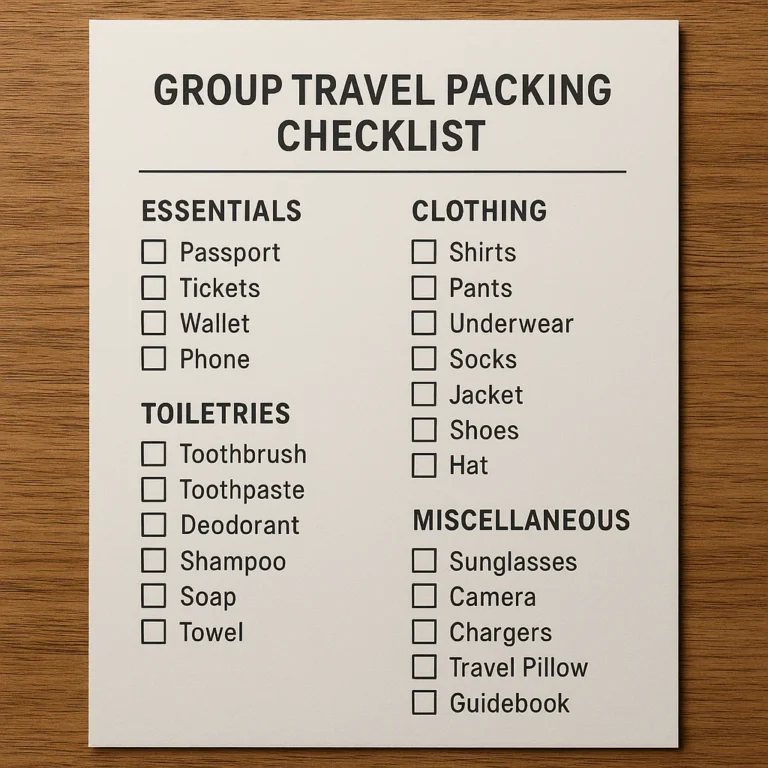
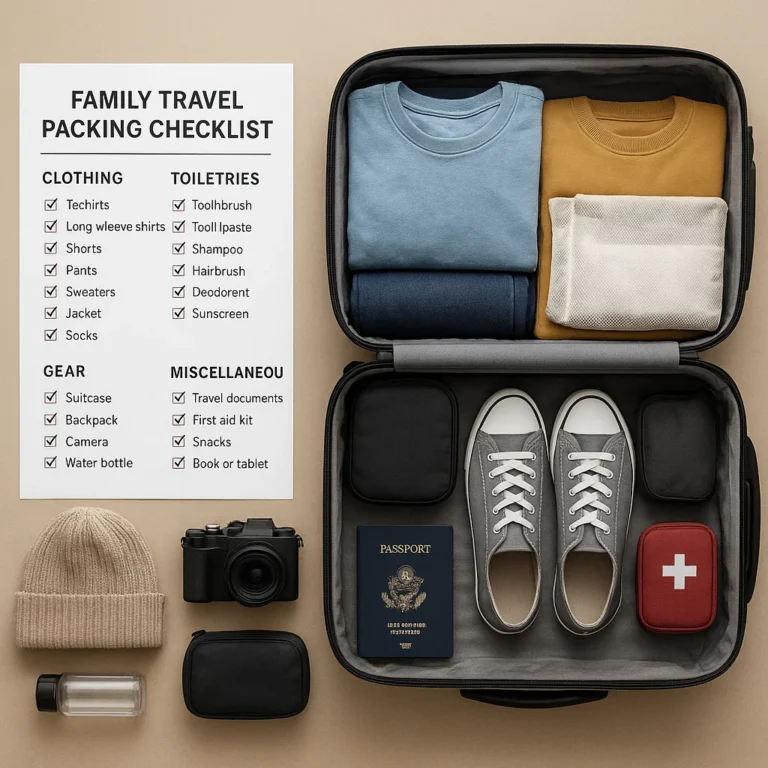
Think of your family packing list as several small lists: one for documents, one for each traveler, and one for shared gear. That makes it easier to see what’s genuinely missing instead of staring into a suitcase that appears to contain everything except the item you need.
1. Travel documents and identification
Gather travel paperwork before packing the small stuff. Requirements depend on your route, citizenship, airline, and destination, so verify them with official sources and your carrier.
- Passports or other accepted identification, as applicable
- Tickets, boarding passes, hotel or rental confirmations, and itinerary
- Travel insurance information and emergency contacts
- Prescription details and relevant health information
- Any required child travel consent documents
- Copies of important documents, stored separately from originals
- Reservation details for a rental car, child seat, stroller, or other special equipment
For international journeys, check the destination’s entry rules through its official government or embassy resources. The U.S. Department of State has travel information for children, including guidance on U.S. passports for minors. Rules differ by country; a parent’s experience one trip is not a substitute for checking the rules for yours.
2. Clothes, shoes, and weather gear
Pack outfits around your itinerary and laundry access, rather than using a rigid number for every trip. A family road-tripping through several climates needs more layers than a family spending four nights at one hotel with laundry facilities.
- Everyday outfits, underwear, and socks
- Pajamas and a familiar sleep layer
- A warm layer and rain protection when the forecast or destination calls for them
- Comfortable shoes for walking and activity-specific footwear
- Swimwear and sun hat for pool, beach, or warm-weather plans
- Spare outfit for each young child in the day bag
- Seasonal items such as gloves, thermal layers, or sun-protective clothing
One competing packing guide recommends one outfit, pair of underwear, and pair of socks per day for school-age children. That’s a useful starting point, not a universal rule. We’d adjust for laundry access, messy activities, climate, and whether a child is prone to spills. A Cozi family packing list suggests planning outfits around the trip and including layers, swimwear, and outerwear where needed; its vacation packing checklist is another useful reference.
3. Toiletries, diapers, and changing supplies
Bring the items your family depends on, especially for the first day and any stretch without convenient shops.
- Toothbrushes, toothpaste, and floss
- Hairbrush or comb and hair ties
- Travel-size soap, shampoo, and moisturizer, if needed
- Diapers or pull-ups, wipes, and changing pad
- Nappy cream, spare bags, and a change of clothes for babies
- Period products or other personal-care items
- Hand wipes or sanitizer, used appropriately and kept out of children’s reach
For flights, road trips, and long transfers, keep a small changing kit accessible rather than burying all the wipes under a pile of sweaters. Follow product instructions and local transport rules for liquids.
4. Medications and child-friendly first aid
Pack medication your child already uses, along with the dosing instructions supplied by a health professional or product label. Don’t start a new medicine or use a sleep aid just to make travel easier without appropriate medical advice. Children’s needs and safe use depend on factors such as age, health, and the specific product.
Consider bringing:
- Regular prescription medication in its original packaging
- A copy of medication instructions and relevant prescription information
- Any child-specific medical devices and their supplies
- Adhesive bandages and basic first-aid items
- Thermometer, if appropriate for your family
- Any allergy plan or emergency medication prescribed for your child
- Contact details for your child’s clinician and travel insurer
The CDC’s Traveling with Children guidance recommends planning for children’s health needs before travel. Ask your child’s clinician or pharmacist about medication storage, time-zone changes, and what supplies are suitable for your route. For current travel health information, check the CDC Travelers’ Health destination pages.
5. Food, snacks, and hydration
Food planning is less about packing a pantry and more about avoiding a long gap between meals when your child is tired, hungry, and waiting in a slow-moving queue.
- Familiar, non-messy snacks
- Refillable water bottles, if appropriate for the trip
- Baby formula, expressed milk, or food required for your child, subject to current transport rules
- Bibs and feeding utensils for babies or toddlers
- A small bag for wrappers and spills
Check security and airline rules before packing liquids or food. TSA has specific guidance for traveling with children and screening; check its current child-travel advice and What Can I Bring? tool.
6. Entertainment, comfort items, and screen-time essentials
A few familiar activities can help children through a long wait without turning your carry-on into a toy shop.
- Books, coloring or activity books, and suitable pencils or crayons
- Small travel games or cards
- Downloaded shows, music, or audiobooks, if you use a device
- Headphones that fit the child comfortably
- Charging cables and a power bank, used according to carrier rules
- Favorite soft toy, blanket, or other comfort object
Cozi’s family packing checklist also suggests familiar comfort items and travel entertainment. Our own tactic is to keep one activity in reserve for the final stretch. A new sticker book can buy you a surprisingly peaceful ten minutes; don’t spend it all at the gate.
7. Strollers, car seats, and other child travel gear
The right equipment depends on your child, route, and transport provider. Before traveling, confirm what can be checked, carried onboard, rented, or installed at your destination.
- Stroller, travel stroller, or baby carrier
- Car seat or booster suitable for the child and vehicle
- Child harness or mobility support, if appropriate and permitted
- Portable crib or sleep equipment, if needed and not provided
- Sunshade, rain cover, or weather protection
- Special feeding, medical, or accessibility equipment
Contact the airline, rental-car company, and accommodation directly. For car-seat guidance in the United States, consult the National Highway Traffic Safety Administration’s child passenger safety resources. Don’t assume a rental provider’s seat is the right size or fit for your child.
8. Safety, hygiene, and cleanup supplies
Small cleanup and safety items are easy to overlook because they don’t feel like “vacation gear” until you need them.
- Tissues, wipes, and resealable bags
- Hand-cleaning supplies appropriate for your family
- Sun protection and insect protection suitable for the destination and child
- Reflective or identifying details for crowded outings, if useful
- A simple plan for what children should do if separated from adults
- Contact information accessible to caregivers, with privacy in mind
For destination-specific outdoor essentials, our Adventure Travel Checklists and Beach Vacation Checklists can help you tailor the list.
What to Pack by Your Child’s Age
Age is a helpful starting point, not a packing formula. Children’s routines, medical needs, comfort preferences, and independence vary widely—even within the same family.
| Age group | Useful focus | Often-forgoten item |
|---|---|---|
| Babies and infants | Feeding, changing, sleep, and soothing | More than one accessible outfit |
| Todlers and preschoolers | Snacks, movement, routines, and cleanup | Comfort object or familiar bedtime cue |
| School-age children | Activity, independence, and weather layers | A child-sized day bag and responsibility list |
| Twens and teens | Personal essentials, privacy, and autonomy | A shared plan for chargers, documents, and meeting points |
Traveling with babies and infants
For babies, plan around feeding, changing, sleep, and the care routine that works for your family.
- Diapers, wipes, changing pad, and disposal bags
- Formula, bottles, feeding supplies, or nursing essentials as needed
- Spare clothes for baby and a spare top for the caregiver
- Comfort item and age-appropriate sleep supplies
- Stroller or baby carrier suited to your itinerary
- Any prescribed medication or special care equipment
Break the day into manageable intervals where possible. A baby who usually naps in a quiet room may not follow that schedule in an airport; build flexibility into your plans instead of treating the itinerary like a stopwatch.
For flight screening, liquid and child-feding rules can vary by jurisdiction and may change. Verify details with the airline and security authority for your departure airport before you pack.
Traveling with toddlers and preschoolers
Todlers benefit from predictable routines and easy access to snacks, wipes, and a change of clothes.
- A small choice of familiar toys or books
- Easy-on, easy-off layers
- Snacks suited to your child and route
- Spare clothes in the day bag
- A comfort item for rest time
- Child-sized headphones or other preferred entertainment, if used
Give your child one simple packing job—chosing a book or placing a soft toy in the bag. It can build excitement and make the bag feel like theirs, though you’ll still want to check that the toothbrush made it in.
Traveling with school-age children
School-age children can help manage a checklist, choose outfits, and carry a small personal bag. Practical Mama’s packing list for school-age children recommends involving children in preparation and planning clothing, toiletries, entertainment, and electronics. That’s useful advice, with one important caveat: an adult should still verify documents, medication, and safety-critical items.
Try assigning age-appropriate tasks:
- Let the child select a few books or activities.
- Ask them to check off everyday clothing and comfort items.
- Review the list together for weather and planned activities.
- Have an adult double-check essentials and travel rules.
Traveling with twens and teens
Older children may want more independence, which can make travel smoother when expectations are clear.
- Let them manage a personal packing list and day bag.
- Agree on charging, data use, spending, and check-in expectations.
- Set a family meeting point and what to do if separated.
- Make sure each child knows how to contact a responsible adult.
- Keep necessary documents and essential medication under adult oversight when appropriate.
A teen can be responsible for their own headphones; they shouldn’t have to be the family’s only keeper of the hotel address, boarding details, and everyone’s medication.
Family Travel Packing by Transportation
Transport changes what needs to be reachable, what can be packed, and what rules apply. Keep your most time-sensitive essentials in a bag you can access, and confirm the latest requirements with the provider.
Flying with children: carry-on checklist and airport tips
For flights, put documents, medication, food needed during the journey, a change of clothes, and a few quiet activities in your carry-on or personal item.
Before departure:
- Confirm baggage allowances and child equipment policies with the airline.
- Check security rules for liquids, food, medication, and child-feding supplies.
- Keep boarding details and necessary documents accessible.
- Explain screening to children in calm, simple language.
- Pack one backup outfit where you can reach it.
TSA says that all passengers, including children, undergo security screening. Children who appear to be 12 or younger may receive modified screening procedures, while passengers 13 and older follow standard screening procedures; additional screening can occur if someone alarms. Check the TSA’s Traveling with Children guidance before flying in the United States, since procedures and individual circumstances may affect screening.
Road trips with kids: car travel checklist
A road-trip bag should be reachable without unloading the trunk at a rest stop. Before leaving, check car seats, route, breaks, and emergency arrangements.
- Correctly fitted child restraints for each child
- Water and snacks suited to the route
- Wipes, tissues, and waste bags
- A small activity kit
- Spare clothes and weather gear
- Charging cables and downloaded entertainment, if needed
- Navigation details and planned rest stops
The NHTSA’s car seat and booster seat guidance explains how child restraints support safety. Follow the seat manufacturer’s instructions and the laws that apply where you’re driving. For rental cars, confirm seat availability and suitability with the company before arrival.
Train, bus, and ferry travel with children
On shared transport, compact bags and quick access matter. Keep items you need during the journey together and avoid bringing more loose gear than you can manage while supervising children.
- Tickets, identification, and itinerary details
- Snacks, water, wipes, and a small entertainment kit
- Necessary medication
- Layers for changing temperatures
- Stroller or mobility equipment, after checking operator rules
- A simple plan for boarding, seating, and meeting again if separated
Rules for strollers, luggage, child seats, and onboard food vary by operator. Confirm directly with the transport provider rather than relying on a travel forum from three years ago.
Family Vacation Checklist by Destination and Trip Type
Your destination determines what deserves space in the bag. Start with the weather, activities, accommodation facilities, and how easy it will be to buy replacements.
Beach and pool holidays
For a beach or pool trip, plan for sun, water, wet clothing, and safe supervision.
- Swimsuits and a spare change of clothes
- Sun hats and child-appropriate sun protection
- Towels or confirmation that towels are provided
- Water shoes, goggles, or flotation equipment where suitable
- A wet bag for swimsuits
- Familiar snacks and refillable bottles
Follow local water-safety guidance and keep active supervision central. Equipment does not replace adult attention. Our Beach Vacation Checklists can help you adapt the list to your plans.
Camping and outdoor adventures
Camping adds shelter, lighting, weather, food storage, and bathroom planning to the family checklist. The featured camping video’s perspective is simple: comfort matters as much as the headline gear. It highlights a tent, bedding, flashlights or headlamps, food, baby wipes, toilet-paper and bathroom planning, and chairs. That’s a useful reminder that a family camping trip is not just “put tent in car, enjoy wilderness.”
Build your list around your campsite and facilities:
- Shelter and suitable bedding
- Lighting for adults and children
- Weather-appropriate clothing and footwear
- Food, safe water, and cooking supplies as needed
- Hygiene and bathroom supplies
- First aid and any regular medication
- Activities and comfort items for children
Check the campsite’s rules, local fire restrictions, wildlife guidance, and weather forecast. Our Adventure Travel Checklists offer more ways to plan for outdoor trips. Avoid using sleep aids for children as a travel convenience unless a qualified health professional has advised you.
City breaks and sightseeing trips
City trips usually involve long stretches on foot, changing transport, crowds, and limited chances to return to your accommodation.
- Comfortable walking shoes
- A compact day bag with water, snacks, and wipes
- Weather layers
- Tickets, address, and a family meeting plan
- Stroller or carrier suited to the route
- A short list of child-friendly breaks
Choose one or two priorities for the day and leave room for pauses. A child who has already seen three museums may not be ready for the “quick” fourth one. For more flexible low-cost planning, visit our Budget Travel Checklists.
International travel with children
International family travel calls for extra document and health checks. Requirements depend on nationality, destination, transit points, and the child’s circumstances.
- Verify each traveler’s passport and entry requirements.
- Check whether a visa, transit visa, or additional document is needed.
- Review guidance for a child traveling with one parent or another adult.
- Confirm health advice and medication considerations with a clinician.
- Save essential contacts and accommodation details in accessible form.
- Plan how your family will communicate if phones or data are unavailable.
The U.S. State Department provides passport guidance for children and destination-specific information through its country travel advisories. These resources apply to U.S. travelers; families of other nationalities should consult their own government’s official travel information.
Health, Safety, and Accessibility Planning for Families
A practical family checklist reflects how each child actually travels. That may mean planning for allergies, medication schedules, mobility needs, sensory needs, sleep routines, or communication support.
Before leaving:
- Ask a clinician or pharmacist about health questions specific to the child and destination.
- Pack prescribed medication and any associated instructions.
- Check how medication should be carried or stored during the journey.
- Confirm accessibility arrangements with airlines, hotels, and attractions.
- Share essential care information with another responsible adult, when relevant.
- Agree on a simple plan for getting help if a child becomes separated.
If your child has a disability or needs additional assistance at a U.S. airport, TSA’s TSA Cares service provides information about support during security screening. Contact the provider ahead of time when you need a specific accommodation; confirmation is better than hoping the right arrangement will appear at the gate.
Passports, Consent Letters, and Other Family Travel Documents
Documents are a high-consequence category: they take little room, but forgetting the required one can create a major delay.
Create a document checklist for every traveler:
- Passport or accepted identification, as required
- Tickets and booking confirmations
- Travel insurance and emergency contact information
- Medication or medical documentation, when relevant
- Entry or transit documents
- Any consent documentation required for the child’s route or circumstances
- Copies or secure digital records, stored separately from originals
There isn’t one universal consent-letter rule for all countries and travel situations. Check the official requirements of the destination, transit countries, airline, and relevant government authorities. For U.S. passport rules involving minors, begin with the U.S. State Department’s child passport page.
How to Pack Efficiently for a Family Trip
Efficient packing is less about folding technique and more about making the right things easy to find. We’ve found that packing by person can help on a short trip, while packing by category can be easier when several people share supplies. Choose the system that fits your family and luggage.
Carry-on versus checked luggage
| Pack in an accessible bag | Usually suitable for checked luggage |
|---|---|
| Documents and travel confirmations | Extra outfits and non-urgent clothing |
| Regular medication and essential care items | Bulky spare gear, if permitted |
| Snacks and comfort items needed in transit | Toiletries that are not needed during the journey |
| A child’s spare outfit | Extra shoes and destination-specific items |
| Small entertainment kit | Items you can wait to access until arrival |
Keep essential medication, valuables, and anything you may need during a delay with you, subject to applicable rules. Check airline and security guidance for restrictions before travel.
Family packing lists, cubes, and labeling tips
- Make a master list for shared items.
- Create a short list for each traveler, including age-specific or health-related needs.
- Add destination and activity lists for beach days, cold weather, or camping.
- Assign ownership so two adults don’t each pack the same item while neither packs the child’s shoes.
- Review the list together before closing bags.
Packing cubes or labeled pouches can help separate clothing, swimwear, and changing supplies. The best organizing system is the one you can use one-handed while keeping an eye on a small human who has just spotted a fountain.
What to leave at home or buy at your destination
Don’t pack an item simply because it appears on a generic list. Check what your accommodation provides, what you can buy nearby, and what your transport provider allows.
Often worth leaving behind: duplicate toys, bulky equipment you won’t use, and full-size toiletries when travel-size or destination supplies will do. Don’t assume you can easily replace prescription medication, a specialized feeding item, a comfort object, or a correctly fitted child seat. Verify availability before deciding to travel without something essential.
Before You Leave: A Family Trip Preparation Timeline
A little planning spread across several days beats a late-night family scavenger hunt.
Before booking or well ahead of departure
- Check travel documents, entry rules, and any visa requirements.
- Confirm child equipment, accessibility, and accommodation arrangements.
- Review health needs and speak with a clinician if needed.
- Reserve transport or equipment that must be arranged in advance.
In the days before departure
- Check the forecast and update clothing plans.
- Refill regular prescriptions and gather medication instructions.
- Download tickets, maps, and entertainment if useful.
- Wash and organize the clothes and gear on your list.
- Confirm transport times and booking details.
The day before travel
- Pack carry-on essentials and documents.
- Charge devices and prepare cables.
- Check that each child’s day bag includes the items they’ll need.
- Set out travel clothes and any morning medication.
- Review the departure plan with everyone.
Using a shared family list can reduce confusion. Cozi’s vacation packing checklist describes using shared lists and calendar reminders for packing and pre-trip tasks. For families who prefer a travel-specific checklist workflow, the Travel Checklist app can help keep preparations organized.
Home and Pet Checklist Before Family Travel
A smooth departure includes the home you’re leaving behind. Assign tasks clearly, especially when several adults are packing and one person is also coordinating pet care.
- Arrange pet care and share feeding or medication instructions.
- Check that doors and windows are secured.
- Follow your household’s usual appliance and thermostat procedures.
- Set up mail, plant, or home care as needed.
- Leave emergency contacts and key information with your trusted caregiver.
- Confirm transport, lodging, and arrival details one last time.
Cozi’s family vacation checklist includes reminders such as pet care and last-minute planning. Add household tasks to the same shared plan as packing so they don’t vanish beneath a pile of tiny socks.
Recommended Links
Family travel planning and packing
- Travel Checklist: family trip planning and packing
- Cozi Vacation Packing Checklist
- Practical Mama: Packing List for Traveling with School-Age Children
Official travel, health, and safety guidance
- TSA: Traveling with Children
- TSA: What Can I Bring?
- CDC: Traveling with Children
- U.S. Department of State: Passports for Children
- NHTSA: Car Seats and Booster Seats
Travel Checklist™ categories
- Adventure Travel Checklists
- Beach Vacation Checklists
- Budget Travel Checklists
- Backpacking Checklists
- Digital Nomad Checklists
FAQ

What are common travel checklist mistakes families with children should avoid?
The most common mistakes are using one generic list for every child, packing only for the ideal itinerary, forgetting accessible medication or spare clothes, and not checking current airline or destination requirements.
A checklist also needs to reflect who is responsible for each task. If two adults assume the other packed the child’s medication, the list hasn’t done its job. Assign ownership, then have an adult review high-priority items such as documents, medication, and child restraints.
Read more about “🎁 Travel Gift Checklist: 16 Ideas for Smother Trips (2026)”
How can parents use a checklist app to reduce travel stress with children?
Use the app as a shared, editable plan rather than a long list you open once and ignore. Divide tasks into categories such as documents, each child’s bag, health, transport, and home preparation. Assign tasks, check them off as they’re completed, and review outstanding items before departure.
A shared checklist can help caregivers see what has already been packed and reduce duplicate work. Travel Checklist™’s travel checklist resource can help you organize trip preparation around your family’s needs.
What safety items should be included in a family travel checklist?
The right items depend on your child and destination. Consider prescribed medication, a basic first-aid kit, emergency contacts, relevant allergy information, age-appropriate sun or insect protection, and any required medical or mobility equipment.
For car travel, make sure the child restraint is appropriate and installed according to its instructions and applicable law. For outdoor trips, add supplies based on conditions and local guidance. A safety item is useful only when it suits the child, route, and activity.
Read more about “15 Top Pet-Friendly Travel Destinations & Checklists 🐾”
How do you create a travel checklist for children’s needs?
Start with each child’s routine and needs, then work outward:
- List essential documents and health items.
- Add feeding, clothing, sleep, and comfort needs.
- Add supplies for your mode of transport.
- Add destination-specific clothing and activity gear.
- Include a spare outfit and a few familiar activities.
- Confirm requirements with transport providers and official sources.
- Review the final list with another responsible adult.
For babies and toddlers, keep diapering, feeding, and changing supplies accessible. For older children, include tasks they can manage themselves while an adult checks safety-critical items.
What are the best travel checklist apps for families with kids?
The best app is one your caregivers will actually open, update, and share. Compare options based on shared lists, task assignment, reminders, offline access, and how easily you can adapt a template to different children and trips.
Travel Checklist is relevant for organizing trip preparation, while Cozi offers family-oriented lists and calendar planning. Features can change, so review each provider’s current app details and privacy information before choosing.
Read more about “🌍 65 Top Travel Destinations to See in 2026”
How can a checklist app help families organize their travel plans?
A checklist app can place packing, reservations, reminders, and household tasks in one place, making it easier for several adults to coordinate. Create separate lists for each child, shared gear, travel documents, and before-you-leave chores.
Use clear ownership and due dates where helpful. For example, one caregiver can confirm car-seat arrangements while another checks passports and medication. The app can organize the work, but it cannot verify a country’s entry rules for you—use official sources for that.
Read more about “🎒 Is the PackPoint App Free? The 2026 Truth Revealed”
What essential items should families pack when traveling with children?
Most families should consider travel documents, regular medication, clothing suited to the forecast, toiletries, snacks, water, a change of clothes, and a few age-appropriate comfort or entertainment items. Babies may also need feeding and diapering supplies; children with specific needs may require specialized equipment.
The exact list depends on age, destination, transport, trip length, and what your accommodation provides. Keep urgent items accessible rather than packing everything into checked luggage.
Read more about “❄️ 15 Best Coolcation Destinations & Packing Lists”
What should families put in a child’s travel carry-on?
Pack documents as appropriate, regular medication, a change of clothes, snacks, a comfort item, wipes, and a small selection of quiet activities. For babies, include the feeding and changing supplies you may need during the journey.
Confirm baggage allowances and security rules with your airline and the relevant screening authority. In the United States, consult the TSA child-travel guidance and its What Can I Bring? tool.
How many outfits should I pack for each child?
There’s no single right number. Plan based on trip length, weather, activity level, laundry access, and the likelihood of spills. A spare outfit in the day bag is particularly useful for babies and young children.
One school-age packing guide suggests one outfit, underwear, and socks per day. Treat that as a baseline to adjust, not a rule. If you have laundry access, you may need less; if the trip includes muddy hikes or water activities, you may need more.
Read more about “🎒 How to Pack Light for a 5-Night Trip: The 25L Ultimate Guide (2026)”
Can children bring car seats and strollers on a plane?
Policies vary by airline, ticket type, and equipment. Check directly with your airline to learn how it handles child restraint systems, strollers, gate checking, and carry-on equipment. For car-seat use in a vehicle, verify that the seat fits the child and vehicle and follow the manufacturer’s instructions.
The FAA provides information about child safety on airplanes. Airline approval, aircraft fit, and the rules for your specific journey can differ, so confirm before travel.
What travel documents do children need?
The documents depend on the child’s nationality, destination, route, airline, and travel circumstances. A child may need a passport, visa, identification, or other paperwork. Additional documentation may be relevant when a child travels with one parent or another adult, but rules are not universal.
Check the destination government, transit authorities, airline, and your own government’s guidance. U.S. travelers can start with the State Department’s passport information for children.
Read more about “🧳 Travel Checklist for Group Travel Planning: 12 Steps”
How can families keep children comfortable and entertained during a long journey?
Bring a small rotation of familiar activities, snacks, water, comfortable layers, and a comfort item. Offer children chances to stretch and move when it’s safe and practical, and build pauses into long road trips.
For screens, download content ahead of time if you plan to use it, and pack suitable headphones and charging equipment. Keep one activity in reserve for a delay—future-you will appreciate the foresight.
Reference Links
- Transportation Security Administration: Traveling with Children
- Transportation Security Administration: What Can I Bring?
- Federal Aviation Administration: Traveling with Children
- Centers for Disease Control and Prevention: Traveling with Children
- CDC Travelers’ Health: Destination Information
- U.S. Department of State: Passports for Children
- U.S. Department of State: Travel Advisories
- National Highway Traffic Safety Administration: Car Seats and Booster Seats
- TSA Cares: Assistance with Screening
- Practical Mama: Packing List for Traveling with School-Age Children
- Cozi: Vacation Packing Checklist
- Travel Checklist™: Travel Checklist Guide