Support our educational content for free when you purchase through links on our site. Learn more
✈️ 50-Step Vacation Checklist: Prep Without the Panic

How do I prepare for a vacation checklist? Start by checking travel documents, bookings, health needs, and deadlines, then work through packing, home arrangements, and departure-day tasks. A simple countdown turns “I’m sure we’re forgetting something” into a plan you can actually finish.
We learned this the hard way on a trip when one traveler packed three books, four pairs of shoes, and absolutely no phone charger. The fix wasn’t a bigger suitcase; it was a better checklist—one shaped around the trip, with essentials handled before the last-minute scramble.
Key Takeaways
- Start with time-sensitive tasks: Check passports, entry rules, transportation, accommodation, insurance, and medications early.
- Prepare in stages: Use a vacation checklist for the weeks before departure, the final week, the last couple of days, and travel day.
- Pack for your actual itinerary: Match clothes, footwear, medication, and gear to the destination, weather, and activities.
- Plan for home while you’re away: Arrange pet care, mail, deliveries, bills, and basic home security.
- Keep backups of essentials: Save important documents and confirmations securely, and make key information available offline.
- Leave room for real life: Reconfirm bookings and travel updates, but keep the itinerary flexible enough for rest, delays, and pleasant surprises.
Table of Contents
- ⚡ Quick Tips and Facts
- 🧭 Vacation Planning Basics: What to Prepare and When
- 🗓️ Your Vacation Preparation Timeline
- 📅 Weeks Before Departure
- 1. Choose your destination, travel dates, and trip style
- 2. Check entry rules, visa requirements, and travel advisories
- 3. Confirm passport validity and renew if needed
- 4. Book flights, trains, or other transportation
- 5. Reserve accommodations and verify the location
- 6. Plan airport transfers and local transportation
- 7. Review travel insurance and choose suitable coverage
- 8. Check recommended vaccines and health requirements
- 9. Schedule medical, dental, or prescription appointments
- 10. Set a vacation budget and travel spending plan
- 11. Notify your bank and prepare payment cards
- 12. Research local customs, weather, and safety guidance
- 13. Build a flexible itinerary and book must-do activities
- 14. Arrange pet care, house-sitting, or childcare
- 15. Check your phone plan, roaming, and connectivity options
- 📋 The Final Week Before Your Vacation
- 16. Reconfirm bookings and check for schedule changes
- 17. Complete online check-in and save boarding passes
- 18. Make copies of important travel documents
- 19. Share your itinerary and emergency contacts
- 20. Refill prescriptions and prepare essential medications
- 21. Check baggage rules, carry-on limits, and prohibited items
- 22. Create a packing list for your destination and activities
- 23. Wash, mend, and plan your travel outfits
- 24. Arrange mail, deliveries, and household services
- 25. Pay upcoming bills and set up automatic payments
- 26. Download maps, tickets, translation tools, and entertainment
- 27. Check weather forecasts and adjust your packing plan
- 28. Prepare snacks, travel essentials, and a day-of bag
- 29. Confirm airport parking, rides, or drop-off arrangements
- 30. Make a home security and energy-saving plan
- 🧳 One or Two Days Before Departure
- 31. Check in for your flight and review your seat assignment
- 32. Pack your carry-on with documents and essentials
- 33. Pack checked luggage and weigh or measure your bags
- 34. Charge devices, power banks, and travel electronics
- 35. Prepare cash and separate backup payment methods
- 36. Tidy the kitchen and use up perishable food
- 37. Take out rubbish and secure doors and windows
- 38. Set out travel clothes and check your alarm
- 🚪 On Departure Day
- 39. Check flight status, traffic, and local transit updates
- 40. Confirm you have your passport, ID, wallet, and phone
- 41. Take final medication, toiletries, and comfort items
- 42. Lock up, adjust lights, and set your thermostat
- 43. Leave with enough time for airport or station security
- 44. Keep valuables and essential documents within reach
- 🌴 After Arrival: Your First-Day Vacation Checklist
- 45. Confirm your accommodation and check for issues
- 46. Get connected and share your safe arrival
- 47. Secure valuables and learn your accommodation’s safety features
- 48. Confirm return transport and key reservations
- 49. Keep receipts and track travel expenses
- 50. Leave room in the itinerary for rest and surprises
- 🛂 Essential Travel Documents and Entry Requirements
- Domestic versus international travel documents
- Passports, visas, transit rules, and customs forms
- Digital backups and secure document storage
- 💊 Health, Safety, and Travel Insurance Checklist
- Prescription medicines, first-aid supplies, and medical records
- Travel insurance coverage, exclusions, and emergency contacts
- Personal safety, scams, and emergency planning
- 💳 Vacation Budget, Money, and Payment Checklist
- Cash, cards, foreign currency, and ATM planning
- Travel budget categories and ways to avoid surprise costs
- 🎒 Packing Checklist: What to Bring on Vacation
- Carry-on essentials and personal-item checklist
- Clothing, shoes, toiletries, and activity-specific gear
- Electronics, adapters, chargers, and travel accessories
- What not to pack and common baggage mistakes
- Family, kids, and baby vacation packing tips
- 🏡 Home and Pet Preparation Before You Leave
- Home security, utilities, and appliance checks
- Pet care, plants, mail, and deliveries
- 🚗 Vacation Checklists for Different Types of Trips
- Family vacations and trips with children
- Road trips and rental-car vacations
- Beach holidays, camping, and outdoor adventures
- International vacations and long-haul flights
- Solo travel, group trips, and accessible travel
- ❌ Common Vacation Preparation Mistakes to Avoid
- ✅ Quick Vacation Prep Tips for a Smother Trip
- 🔗 Recommended Links
- ❓ FAQ
- How far in advance should I prepare for a vacation?
- What should I do first when preparing for a trip?
- What should I pack in my carry-on for a vacation?
- How can I prepare my home before leaving for vacation?
- What travel documents should I check before an international trip?
- How do I prepare for a vacation on a budget?
- 📚 Reference Links
⚡ Quick Tips and Facts
Preparing for vacation is easier when you treat it like a sequence of small jobs—not one heroic packing-night marathon fueled by coffee and optimism. We recommend starting with the deadlines that can derail a trip: passport and visa rules, transportation, lodging, medications, and travel insurance. Then work through packing, home preparation, and departure-day checks.
For a reusable plan tailored to different trips, see our guide to customizing a travel checklist for different types of travel.
| Quick fact | What to do |
|---|---|
| Start early | Begin when you book. International documents, medical appointments, and popular reservations may need extra lead time. |
| Use two backups | Keep critical documents available offline on your phone and in a separate physical copy. |
| Check the rules, not just the packing list | Airline baggage rules, entry requirements, and medication laws depend on your route and destination. |
| Pack for the trip you booked | Build around the actual forecast and planned activities, not the fantasy version where every day is sunny and every shoe is comfortable. |
| Protect home and pets | Arrange care, pause deliveries, secure the house, and handle perishables before departure. |
| Leave breathing room | A flexible itinerary is often more enjoyable than a minute-by-minute schedule. |
✅ Our team’s rule: If a task could prevent you from boarding, entering the country, getting essential medicine, or safely leaving home, put it near the top of your list.
🧭 Vacation Planning Basics: What to Prepare and When
A solid vacation checklist covers more than suitcase contents. Think of preparation as five connected plans:
- Trip logistics: dates, transportation, lodging, transfers, and reservations.
- Entry and health: identification, passports, visas, medication, vaccines, and insurance.
- Money and communication: payment cards, cash, phone service, maps, and emergency contacts.
- Packing: clothing, toiletries, activity gear, and carry-on essentials.
- Home and departure: pets, mail, utilities, security, and the final door-lock check.
The ideal start date depends on the trip. A domestic weekend away may need little advance work, while an international trip during a busy season can involve passport processing, visa applications, medical advice, and scarce bookings. Rather than relying on a single “start exactly this many months ahead” rule, work backward from the least flexible requirements. Check your destination’s current entry rules through its official government sources and review U.S. State Department travel advisories if you’re a U.S. traveler.
Turn the checklist into a working plan
A checklist works best when every task has an owner and a deadline. “Sort travel documents” is vague; “check passport expiry and entry requirements by Friday” is actionable.
- Add a due date to each time-sensitive task.
- Assign shared tasks to a specific person.
- Mark what is required, recommended, or optional.
- Keep booking confirmations and key contacts together.
- Review the list once a week, then daily during the final few days.
A travel checklist app can make shared planning easier, especially when one person books flights while another handles pet care. But digital convenience is not a substitute for a backup: phones run out of battery, apps need connectivity, and airport Wi-Fi is rarely at its most charming when you’re in a hurry.
🗓️ Your Vacation Preparation Timeline
This 50-step vacation preparation checklist is a flexible countdown, not a rulebook. Skip what doesn’t apply, add your trip-specific tasks, and adjust the timeline to match your bookings and destination. For instance, a road trip needs vehicle preparation; an international flight needs closer attention to entry rules and document validity.
| Timing | Main focus | High-priority tasks |
|---|---|---|
| Weeks before departure | Planning and requirements | Check documents, book travel, arrange care, review health and insurance needs |
| Final week | Confirmations and packing | Reconfirm bookings, check weather, refill prescriptions, prepare home |
| One or two days before | Finish and verify | Pack, check baggage rules, charge devices, secure documents |
| Departure day | Leave safely and on time | Check status and transport, complete final home checks, take essentials |
| After arrival | Setle in | Confirm lodging, get connected, secure valuables, review return arrangements |
📅 Weeks Before Departure
1. Choose your destination, travel dates, and trip style
Set the trip’s basic shape before booking: where you’re going, how long you’ll stay, who’s traveling, and what you want to do. A beach break, city weekend, hiking trip, and multi-country itinerary each call for different transport, luggage, and health preparations.
Ask yourselves:
- Are your dates flexible?
- Is the trip built around a fixed event or reservation?
- Does anyone in your group need accessibility support, child-friendly facilities, or regular rest breaks?
- Will you move between destinations, or unpack once and stay put?
A little flexibility can make it easier to compare routes and avoid overstuffing the itinerary. For outdoor ideas, browse our adventure travel checklists.
2. Check entry rules, visa requirements, and travel advisories
Check the official rules for every country you’ll enter or transit through. Requirements can include a visa, electronic travel authorization, proof of onward travel, vaccination documentation, or a passport with a certain period of validity remaining. Transit rules can differ from the rules for your final destination.
- Start with the destination’s government or embassy website.
- Review the U.S. State Department’s international travel information if applicable.
- Check CDC Travelers’ Health for destination-specific health guidance.
- Save a copy of relevant approvals and confirmations, both digitally and offline.
Don’t assume that a previous trip’s rules still apply. Requirements can change, and airlines may check documents before boarding.
3. Confirm passport validity and renew if needed
Check the expiry date for every traveler as soon as travel is being considered. Some destinations require a passport to remain valid for a specified period beyond arrival or departure; the exact rule varies. Use the destination’s official guidance rather than relying on a general “six-month rule.”
For U.S. passport applications and renewals, consult the U.S. Department of State passport page for current application steps and processing information. If a passport renewal is necessary, allow time for processing and delivery, and avoid booking nonrefundable plans until you understand your document timeline.
Small but useful habit: photograph the passport’s identification page for secure reference, but store it somewhere protected. A photo is not a replacement for the original passport.
4. Book flights, trains, or other transportation
Compare the full trip, not just the headline fare. A cheaper flight may have a long layover, inconvenient airport, restrictive baggage rules, or a connection that leaves little room for delays.
Before booking, check:
- Departure and arrival airports or stations.
- Connection time and whether you must change terminals.
- Baggage allowance and seat-selection rules.
- Change or cancellation terms.
- Arrival time relative to local transport and accommodation check-in.
- Accessibility or assistance needs.
For flight comparisons, Google Flights can help you review routes and dates. Once booked, rely on your airline’s own app or website for official schedule updates.
5. Reserve accommodations and verify the location
Check more than the room photos. Review location, check-in hours, cancellation terms, accessibility, kitchen or laundry facilities, and recent guest feedback. Look at the actual walking or driving distance to places you plan to visit; “near downtown” can be a very elastic phrase.
- Confirm the full street address and check-in instructions.
- Verify how to access the property if arriving late.
- Save the host or hotel’s contact details.
- Check whether local taxes, deposits, or parking arrangements apply.
- For short-term rentals, understand the property’s rules and emergency procedures.
Booking.com provides lodging search and reservation details, while Tripadvisor can help you compare traveler feedback. Reviews are useful signals, not guarantees—look for repeated, recent themes rather than one dramatic complaint or one suspiciously glowing review.
6. Plan airport transfers and local transportation
Work out how you’ll get from the airport or station to your first night’s accommodation before you arrive tired and juggling luggage. Check public transit hours, rideshare pickup zones, taxi options, car-rental arrangements, and any service disruptions.
For a rental car, review insurance coverage, fuel policy, driver eligibility, tolls, and whether your destination requires an International Driving Permit. Verify driving requirements with official authorities and the rental company. For an international road trip, see our adventure travel checklists for trip-specific preparation ideas.
7. Review travel insurance and choose suitable coverage
Compare insurance against the risks and costs you actually face. Policies vary, so read the wording for covered reasons, exclusions, medical limits, evacuation terms, baggage coverage, and claim requirements. Existing health coverage or a credit-card benefit may help, but check its limits and eligibility conditions.
Before buying, ask:
- Are prepaid, nonrefundable bookings exposed?
- Is emergency medical care covered at the destination?
- Does the policy cover the activities you plan to do?
- What qualifies as a covered cancellation or interruption?
- Are pre-existing conditions addressed, and what are the eligibility rules?
InsureMyTrip lets travelers compare plans from multiple providers. A comparison site is a starting point, not a substitute for reading the policy documents. No travel insurance policy covers every reason for changing plans.
8. Check recommended vaccines and health requirements
Use destination-specific health guidance early enough to arrange any appointments. The CDC Travelers’ Health destination pages provide travel health information for U.S. travelers; consult a qualified clinician for advice suited to your medical history and itinerary.
Consider:
- Routine vaccines and destination-specific recommendations.
- Local disease risks and preventive measures.
- Medication availability and import restrictions.
- Travel-related needs such as altitude, heat, or long flights.
- A suitable first-aid kit and any required medical documentation.
Recommendations depend on destination, duration, season, activities, and personal health. Don’t use a generic packing blog as medical advice.
9. Schedule medical, dental, or prescription appointments
If you need prescription medication, contact your clinician and pharmacy well before departure. Ask whether you can obtain enough for the trip, how it should be stored, and whether a letter or prescription copy is useful. For controlled or restricted medications, check the destination’s official import rules before packing them.
Keep essential medicine in your carry-on in its original packaging when practical. If you use temperature-sensitive medication or medical devices, confirm transport and storage arrangements with your clinician and carrier.
10. Set a vacation budget and travel spending plan
Estimate the whole trip, not only the flight and hotel. Include local transport, meals, activities, travel insurance, tips, connectivity, baggage fees, and a reserve for changes.
| Budget category | Planning question |
|---|---|
| Transportation | Are baggage, transfers, parking, and fuel included? |
| Accommodation | Are taxes, deposits, breakfast, or cleaning fees separate? |
| Food | Will you eat out, cook, or mix both? |
| Activities | Which experiences need advance reservations? |
| Contingency | What happens if you need an extra night or replacement transport? |
Track spending with a spreadsheet, banking app, or shared trip document. For cost-conscious planning, see our budget travel checklists.
11. Notify your bank and prepare payment cards
Check your bank’s current travel policies; some institutions no longer require travel notices, while others may offer them. Confirm your card works abroad, review foreign transaction fees, check withdrawal limits, and save the card issuer’s contact number separately from the card.
Carry a backup payment method and keep it in a different place from your primary wallet. If you plan to use cash, get a modest amount for arrival needs and check local payment customs. Never store a photo of full card details in an unsecured notes app.
12. Research local customs, weather, and safety guidance
Learn the practical basics: local clothing expectations, tipping customs, public transport etiquette, emergency numbers, and any neighborhood-specific safety advice. Check the forecast again closer to departure because seasonal averages are not a daily guarantee.
Use official travel advisories for security updates and trusted local sources for weather and transit. If your plans include remote areas, review adventure travel checklists and prepare for limited phone service or changing conditions.
13. Build a flexible itinerary and book must-do activities
Choose a few priority experiences, then leave open time around them. A realistic itinerary accounts for travel time, queues, meals, weather, and the human need to sit down occasionally.
- Group activities by location to reduce backtracking.
- Check opening days and seasonal closures.
- Book only the experiences that genuinely need advance reservations.
- Keep confirmation details and cancellation deadlines together.
- Add a backup option for weather-dependent plans.
A trip plan should guide the day, not scold you for enjoying an unplanned café stop.
14. Arrange pet care, house-sitting, or childcare
Confirm dates, handoff times, emergency contacts, and backup coverage with anyone caring for pets, children, or your home. Leave written instructions for feeding, medication, routines, and who can make decisions if you’re unreachable.
For pets, check food supplies, vet details, and any boarding requirements. For a house-sitter, share only the access and security information they need, and explain how to contact you in an emergency.
15. Check your phone plan, roaming, and connectivity options
Review your carrier’s roaming rules before departure. Alternatives may include an international add-on, a local SIM, or an eSIM, depending on your phone, destination, and needs. Confirm your device is compatible and unlocked if using another provider.
Download maps and essential files for offline access. If you’re combining work and travel, our digital nomad checklists cover additional connectivity and remote-work preparations.
📋 The Final Week Before Your Vacation
16. Reconfirm bookings and check for schedule changes
Review your airline, accommodation, transfer, and activity confirmations. Check travel dates, traveler names, addresses, departure terminals, check-in windows, and cancellation deadlines. Monitor official provider apps for updates rather than relying only on an old confirmation email.
17. Complete online check-in and save boarding passes
Check your airline’s online check-in window and complete the process when available. Save boarding passes in the airline app or wallet app, and keep a backup copy if the airline offers one. Confirm that each traveler’s name and document details match the booking.
A screenshot can be helpful offline, but some airlines update boarding passes dynamically. Check the app again before leaving for the airport.
18. Make copies of important travel documents
Create secure copies of your passport or ID, visas, insurance details, itinerary, accommodation information, and emergency contacts. Store a digital copy in an encrypted or otherwise protected location and a paper copy separately from the originals.
Avoid leaving sensitive documents on a shared or public device. A copy can help you retrieve information if something goes missing, but it does not replace the original document required for travel.
19. Share your itinerary and emergency contacts
Give a trusted person your rough itinerary, accommodation contacts, and a way to reach you. You don’t need to broadcast your travel plans publicly; share useful details with people who may genuinely need them.
Include:
- Dates and destinations.
- Flight or transport details.
- Accommodation contact information.
- A contact person for emergencies.
- Any relevant medical or care instructions.
20. Refill prescriptions and prepare essential medications
Confirm medication quantities, packaging, and transport needs. Keep important prescriptions accessible during travel, not buried in checked luggage. If your trip crosses time zones, ask your clinician or pharmacist how to manage dosing safely.
Pack a basic health kit appropriate to your destination and activities. Check the CDC’s travel health guidance for destination-specific recommendations and consult a healthcare professional for personal advice.
21. Check baggage rules, carry-on limits, and prohibited items
Review your airline’s current rules for carry-on size, personal items, checked baggage, batteries, and restricted goods. Rules can differ by airline, ticket type, and itinerary. For U.S. airport screening, verify current guidance through the TSA What Can I Bring? tool.
Don’t rely on a packing rule copied from another carrier or an old social media post. A bag that fits one airline’s limits may not fit another’s.
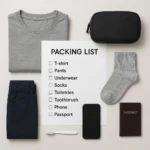
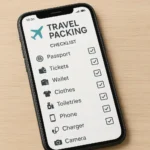
22. Create a packing list for your destination and activities
Start with essentials, then add items tied to the forecast and itinerary. Separate must-have items—documents, medicine, glasses, and payment methods—from items you can buy or borrow at your destination.
Use categories such as:
- Clothing and footwear.
- Toiletries and personal care.
- Medication and health supplies.
- Electronics and charging gear.
- Travel documents and money.
- Activity-specific equipment.
For a beach trip, explore our beach vacation checklists. For hiking, camping, or other active trips, use the adventure travel checklists.
23. Wash, mend, and plan your travel outfits
Wash clothes you intend to pack, repair anything that needs a quick fix, and plan outfits around the weather and activities. Choose items that work together rather than packing a different outfit for every imagined possibility.
If walking is on the agenda, test your shoes before the trip. A new pair and a full day of sightseeing can become a memorable partnership for all the wrong reasons.
24. Arrange mail, deliveries, and household services
Decide whether to pause deliveries, ask a trusted neighbor to collect packages, or use a mail-hold service. If using the U.S. Postal Service, review its current Hold Mail service and submit requests through official channels.
Tell a trusted contact what to do with unexpected deliveries and how to reach you. Don’t leave a visible pile of packages advertising that nobody is home.
25. Pay upcoming bills and set up automatic payments
Check payment due dates that fall during your trip. Pay early, set up an appropriate automatic payment, or schedule a reminder. Review recurring services and ensure you can access accounts if a verification code goes to your phone.
Avoid sharing passwords casually to make bill management easier. A secure, planned approach is less exciting than a billing surprise in another time zone.
26. Download maps, tickets, translation tools, and entertainment
Save maps for areas where data may be unreliable. Download tickets, reservation details, boarding passes, and needed entertainment to devices you’ll actually carry. Test that important files open offline before you leave home.
Useful options include Google Maps for offline maps, Google Translate for translation tools, and the relevant airline or transit apps for current travel updates.
27. Check weather forecasts and adjust your packing plan
Look at the forecast for each destination, not just the first city. Add layers or rain protection if appropriate, and check whether activities have weather-related requirements.
A forecast is a planning aid, not a promise. Keep one adaptable layer and consider what you’d do if a planned outdoor activity is canceled.
28. Prepare snacks, travel essentials, and a day-of bag
Gather the items you’ll want in transit: documents, medication, a water bottle you can fill after screening, snacks, tissues, headphones, chargers, and a spare layer. Check airline and security rules for food, liquids, and equipment.
For a road trip, keep water, snacks, navigation, and any roadside essentials accessible without unpacking the trunk at the first stop.
29. Confirm airport parking, rides, or drop-off arrangements
Confirm the pickup address, time, parking reservation, or transit route. Build in a backup plan for traffic, weather, and early-morning service gaps. If someone is driving you, share the terminal and airline details before departure day.
30. Make a home security and energy-saving plan
Decide who will check the house, whether lights need timers, and what should remain plugged in. Set heating or cooling to a safe, energy-conscious setting appropriate for your home, pets, plants, and local conditions.
Avoid turning off systems that protect your property or support anyone staying at home. When in doubt, follow appliance and home-system instructions, or ask a qualified professional.
🧳 One or Two Days Before Departure
31. Check in for your flight and review your seat assignment
If check-in is open, complete it and check the airline’s app for gate, seat, and baggage information. Recheck the flight status on departure day, as schedules and gates can change.
32. Pack your carry-on with documents and essentials
Keep essentials with you rather than in checked luggage:
- Passport or required ID.
- Wallet, backup payment method, and keys.
- Essential medication and glasses.
- Phone, charger, and compatible power bank.
- A change of clothes and basic toiletries if useful.
- Important documents and accommodation details.
For flights, check the carrier’s battery rules and keep spare lithium batteries in the cabin when required by the airline or security authority.
33. Pack checked luggage and weigh or measure your bags
Pack by category or use packing cubes so essentials are easy to find. Check the airline’s current size and weight limits, then leave room for souvenirs or unexpected items. Put anything fragile or difficult to replace in a suitable, protected place and follow airline rules for valuables.
If using packing cubes, Eagle Creek packing cubes offer a way to separate clothing and gear; cubes organize a suitcase, but they don’t magically create extra baggage allowance.
34. Charge devices, power banks, and travel electronics
Charge your phone, headphones, camera, watch, and power bank. Check plug compatibility and bring an adapter if your destination uses a different outlet. Verify that any power bank meets airline requirements and pack it as instructed by the carrier.
A multiport charger can reduce outlet juggling; Anker offers travel charging products. Confirm voltage and device compatibility before plugging in anything that isn’t dual-voltage.
35. Prepare cash and separate backup payment methods
If you’ll need local cash, plan where to obtain it and how to carry it safely. Keep your backup card separate from your primary wallet, and avoid carrying all your cash in one place. Save card-issuer contact details offline in case a card is lost or blocked.
36. Tidy the kitchen and use up perishable food
Eat, freeze, or discard food that may spoil while you’re away. Clean obvious spills, empty food waste, and check the fridge for items that won’t survive your return. A quick kitchen reset can make coming home much nicer.
37. Take out rubbish and secure doors and windows
Take out trash and recycling as appropriate. Check doors, windows, garage access, and any pet or house-sitter arrangements. If your home uses an alarm system, confirm that everyone who needs access understands the instructions.
38. Set out travel clothes and check your alarm
Lay out comfortable travel clothes, including layers suited to the weather and transport conditions. Set an alarm with enough time for your morning routine and departure. If traveling with others, confirm who is responsible for each morning task—“I thought you had the tickets” is not a robust operations plan.
🚪 On Departure Day
39. Check flight status, traffic, and local transit updates
Before leaving, check the airline or carrier’s official status information and your route to the airport or station. Look for traffic, weather, transit disruptions, and terminal changes. Recalculate your departure time if conditions have changed.
40. Confirm you have your passport, ID, wallet, and phone
Do a final essentials check before closing the door:
- Passport or required ID.
- Wallet and payment cards.
- Phone and keys.
- Boarding pass or ticket.
- Essential medication.
- Glasses or other medically necessary items.
Keep these accessible, not at the bottom of a suitcase. For international travel, confirm you have the documents required for your route.
41. Take final medication, toiletries, and comfort items
Pack any items you still need to use that morning. Check liquids and other restricted items against current security rules. Keep essential medicine in your carry-on and follow any storage instructions.
42. Lock up, adjust lights, and set your thermostat
Before leaving, check windows and doors, set alarms and lights as planned, and adjust temperature settings appropriately. Photographing a stove or locked door may reassure some travelers, but use that as a personal memory aid—not as a substitute for checking it in person.
43. Leave with enough time for airport or station security
Allow time for traffic, check-in, baggage drop, security, and any mobility or family needs. Airport recommendations depend on the airport, route, airline, and time of day, so follow your carrier’s current guidance and the airport’s advice rather than a universal rule.
44. Keep valuables and essential documents within reach
Keep documents and valuables secured and close to you during transit. Stay aware of your bags in crowded areas, and don’t leave phones, wallets, or passports unattended at cafés, gate areas, or vehicle stops.
🌴 After Arrival: Your First-Day Vacation Checklist
45. Confirm your accommodation and check for issues
Verify that the address and room match your reservation. Check basic safety and practical details, including entry instructions, emergency exits, locks, and how to contact the host or front desk. Raise any booking or room issue promptly while records and support channels are easy to access.
46. Get connected and share your safe arrival
Set up your phone plan or Wi-Fi, download any necessary local transport app, and message your trusted contact that you’ve arrived. Avoid posting real-time location details publicly if you prefer to keep travel plans private.
47. Secure valuables and learn your accommodation’s safety features
Find out how to lock doors and windows and where emergency information is located. Use a room safe if appropriate, but keep a separate record of what you’ve stored and how to retrieve it. Carry only what you need for the day.
48. Confirm return transport and key reservations
Check the departure point, pickup time, and transport arrangements for your next leg. Review important reservations and local opening hours. It’s much easier to fix a mistaken station or airport while you still have time.
49. Keep receipts and track travel expenses
Save receipts for expenses you may need to claim or track. A shared note or budgeting app can help a group settle costs without making every meal feel like an audit.
50. Leave room in the itinerary for rest and surprises
Once the essentials are handled, let the destination surprise you. Keep the plans you care about, but don’t treat every unplanned detour as a checklist failure. The best travel day may be the one you didn’t schedule down to the minute.
🛂 Essential Travel Documents and Entry Requirements
Travel documentation varies by nationality, destination, transit route, and trip purpose. Check official rules for every place on your itinerary and verify requirements again before departure.
Domestic versus international travel documents
For domestic trips, check the accepted identification rules for your transport provider and destination. For international travel, confirm passport validity, visa or electronic authorization requirements, entry forms, and any transit documentation.
U.S. travelers can check passport services through the U.S. Department of State and destination guidance through its international travel page. These resources apply to U.S. travelers; travelers of other nationalities should consult their own government’s official travel guidance.
Passports, visas, transit rules, and customs forms
A visa-free arrival does not automatically mean you can transit without additional paperwork. Check each airline and destination’s official instructions, especially when changing countries or airports.
Keep a list of:
- Passport and visa requirements.
- Approval numbers and travel authorization records.
- Transit visas or airport transfer rules.
- Customs or arrival forms.
- Proof-of-onward-travel or accommodation requirements, if applicable.
Digital backups and secure document storage
Store a digital copy securely and keep a paper copy separate from your originals. Save emergency contact numbers and booking details offline. If you lose access to your phone, a paper copy can help; if paper is lost, your protected digital backup may help. Neither backup replaces original documents when authorities require them.
💊 Health, Safety, and Travel Insurance Checklist
Good preparation can make it easier to get help when plans change or health needs arise. Use destination-specific official guidance and advice from qualified professionals.
Prescription medicines, first-aid supplies, and medical records
Pack enough essential medication for the trip plus a reasonable delay buffer if your clinician and local rules allow it. Keep it in its original packaging where practical, and check whether import permits or medical letters are needed. The CDC recommends planning health needs around the destination and traveler; personal medication advice should come from your healthcare provider.
Travel insurance coverage, exclusions, and emergency contacts
Keep your policy number, emergency assistance number, and claims instructions accessible offline. Check whether the policy covers the activities you plan, what documentation a claim requires, and how it interacts with existing health or card benefits.
A plan with a low headline cost may have exclusions or limits that matter more than the price. Compare policy wording and buy only after understanding what is and isn’t covered.
Personal safety, scams, and emergency planning
Learn the local emergency number and the safest way to contact your accommodation, travel provider, or consular services. Protect your phone and wallet in crowded spaces, use reputable transport, and be cautious with unsolicited requests for money or personal information.
For U.S. travelers abroad, the State Department’s Smart Traveler Enrollment Program can provide travel and security information. It does not replace travel insurance or personal safety planning.
💳 Vacation Budget, Money, and Payment Checklist
A prepared money plan combines access, security, and flexibility. Check card acceptance and cash needs at your destination, and avoid relying on a single card or a single way to access funds.
Cash, cards, foreign currency, and ATM planning
Before departure, confirm that your cards work abroad, check fees and withdrawal limits, and save your bank’s contact number. Carry a backup card separately from your main wallet. If carrying cash, divide it between secure locations rather than keeping everything together.
Travel budget categories and ways to avoid surprise costs
Budget for transport, lodging, meals, local travel, activities, connectivity, baggage, tips, and a contingency. Check cancellation terms before committing to bookings and note when deposits or final balances are due.
For value-focused itinerary ideas and spending plans, see our budget travel checklists.
🎒 Packing Checklist: What to Bring on Vacation
A useful packing list starts with the trip, not the closet. Check your planned activities, accommodation facilities, weather, and airline baggage rules. Then pack deliberately: essential items first, optional extras last.
Carry-on essentials and personal-item checklist
Keep your most important documents, medication, valuables, and immediate comfort items in your cabin bag. Depending on your trip, that may include:
- Travel documents, wallet, phone, and keys.
- Prescription medicines and medical supplies.
- Charger, headphones, and a compatible power bank.
- A change of clothing and basic toiletries.
- Glasses, contact lenses, or other essential personal items.
- Snacks and an empty refillable water bottle, subject to screening rules.
For U.S. airport screening, check the current TSA guidance. Airline and security rules can change, so verify them for your own route.
Clothing, shoes, toiletries, and activity-specific gear
Pack clothing you can layer and combine. Choose footwear based on actual activities, and don’t bring an untested pair for a walking-heavy itinerary. Use destination-specific checklists for beach trips, hiking, camping, or city breaks.
- Beach vacation checklists can help with sun, swim, and water activities.
- Adventure travel checklists can help identify activity-specific safety gear.
- Backpacking checklists are useful when luggage space and weight matter.
Electronics, adapters, chargers, and travel accessories
Check voltage, plug type, and device compatibility for your destination. Use reliable charging equipment, and follow airline rules for batteries and power banks. An adapter changes plug shape; it does not necessarily convert voltage.
Anker chargers and Eagle Creek packing cubes are examples of practical travel accessories. Compare the product specifications with your devices and airline requirements before packing.
What not to pack and common baggage mistakes
Avoid packing restricted items, unnecessary duplicates, valuables in checked bags, or “just in case” gear you cannot realistically use. Check the airline’s restrictions and the destination’s rules for food, medication, batteries, and outdoor equipment.
Common mistakes include:
- Assuming every airline has the same baggage limits.
- Packing all essential medication in checked luggage.
- Forgeting the correct power adapter.
- Bringing new shoes without testing them.
- Packing for a hypothetical week of perfect weather instead of the forecast.
Family, kids, and baby vacation packing tips
Pack around each child’s needs, routines, and transport arrangements. Keep snacks, a change of clothes, comfort items, and necessary medication easy to reach. Check airline and destination rules for child restraints, strollers, car seats, and baby supplies.
For a family group, divide responsibility clearly: one adult handles documents, another checks bags, and older children can manage their own small essentials with a final adult review.
🏡 Home and Pet Preparation Before You Leave
Leaving home well prepared is part of vacation planning, not a last-minute chore. A written house-closing routine helps you avoid the classic mid-drive question: “Did we turn that off?”
Home security, utilities, and appliance checks
Before leaving:
- Close and lock doors and windows.
- Set alarms, lights, and thermostats as planned.
- Unplug nonessential devices where appropriate.
- Empty rubbish and handle perishable food.
- Confirm garage doors and other access points are secure.
- Give a trusted person the contact details they may need.
Don’t disconnect appliances or systems that support safety, essential services, pets, or people staying at home.
Pet care, plants, mail, and deliveries
Leave written care instructions, food and medication details, vet contacts, and a backup contact for pets. Arrange plant care and mail or package collection. The USPS Hold Mail service is one option for eligible U.S. addresses; confirm current conditions and submit requests through the official site.
🚗 Vacation Checklists for Different Types of Trips
The core checklist stays similar, but the details change with your trip. Build a tailored list instead of forcing a beach holiday, family road trip, and backpacking route into the same suitcase-shaped template.
Family vacations and trips with children
Add child-specific travel documents, comfort items, medication, snacks, car-seat plans, and care arrangements. Share responsibilities among adults and keep an accessible set of essentials for delays.
Road trips and rental-car vacations
Check vehicle condition, tires, lights, fluid levels, required documents, roadside assistance, route, and parking. For rental cars, review the booking details, driver requirements, insurance, pickup hours, fuel policy, and toll arrangements. Keep water, snacks, and basic roadside supplies accessible.
Beach holidays, camping, and outdoor adventures
For beaches, consider sun protection, swimwear, water shoes, and activity-specific items; see our beach vacation checklists. For hiking or camping, check weather, route conditions, water, safety equipment, permits, and offline navigation with our adventure travel checklists.
International vacations and long-haul flights
Double-check passport and visa requirements, transit rules, medication regulations, phone connectivity, and payment access. Keep essential documents and medicine in your carry-on, and consider how you’ll handle sleep, hydration, and meals during the journey.
Solo travel, group trips, and accessible travel
Solo travelers can share an itinerary with a trusted contact and keep emergency details offline. Groups should assign tasks and agree on meeting points. Travelers who need accessibility support should contact airlines, stations, hotels, and activity providers in advance to confirm the specific arrangements.
❌ Common Vacation Preparation Mistakes to Avoid
- Leaving documents until the final week: Check passport and entry requirements early.
- Assuming a confirmation means everything is settled: Recheck times, locations, names, and baggage rules.
- Packing by habit instead of itinerary: Match luggage to activities, weather, and accommodation facilities.
- Keeping all backups one phone: Save critical details offline and keep a separate physical copy.
- Putting essential medicine in checked luggage: Keep important medication accessible and follow storage instructions.
- Overplanning every hour: Leave room for delays, rest, and discoveries.
- Ignoring the return home: Plan pet care, bills, mail, food, and household security before departure.
- Using stale advice as current policy: Verify entry, airline, security, insurance, and health rules with official sources.
The competing advice about how early to start varies because trips differ: one checklist may recommend preparing about a month ahead, while another suggests beginning several months before international or peak-season travel. Trust the deadlines, not a universal countdown. Start as soon as you have a trip to protect, and prioritize whatever has the longest processing time.
A related 37-tip video checklist also recommends preparing a packing list early, confirming bookings, arranging home care, and checking travel documents before departure. Its useful reminder—“making a packing list a month before your trip is the key to being prepared”—is a practical starting point, but document and visa timelines may require more lead time.
✅ Quick Vacation Prep Tips for a Smother Trip
- Work backward from departure. Set deadlines for documents, bookings, care arrangements, and packing.
- Make the list personal. Add items for your destination, activities, mobility needs, family, and pets.
- Use a hybrid system. Store information digitally for convenience and keep key details available offline or on paper.
- Keep one master itinerary. Share it with the people who need to know where you’ll be.
- Review official sources close to departure. Travel conditions and rules can change.
- Do a final door-to-door sweep. Documents, medicine, phone, wallet, keys, locks, and transport plan.
The goal isn’t to check every possible box. It’s to handle the important ones early enough that your departure feels like a beginning—not a timed escape room.