Support our educational content for free when you purchase through links on our site. Learn more
🧳 Travel Checklist for Group Travel Planning: 12 Steps

The best travel checklist for group travel planning is a shared, deadline-driven system that assigns every task to a real person. Use it to coordinate documents, budgets, bookings, transportation, packing, health needs, and last-minute changes without turning one traveler into the unpaid tour operator.
Group trips get complicated quickly: one person arrives early, another needs an accessible room, a third has a food allergy, and someone has somehow booked a hotel in the wrong city. We’ve found that a shared checklist, clear owners, and one central itinerary prevent most of the chaos before it starts.
The winning formula is simple: agree on the trip’s purpose, set a realistic budget, plan around the least flexible traveler, and leave room for free time. A perfect itinerary is less useful than one everyone can actually enjoy.
Key Takeaways
- Use one shared checklist: Keep tasks, deadlines, owners, booking details, and emergency information in a single trusted place.
- Assign responsibility clearly: Every group task needs one owner, even if several people contribute.
- Set the budget before booking: Separate essential, comfortable, optional, and emergency costs.
- Plan for different needs: Consider passports, visas, accessibility, dietary requirements, medication, children, older adults, and varied activity levels.
- Build a flexible itinerary: Schedule one or two shared anchor activities each day, then protect free time.
- Prepare backup plans: Include alternatives for delays, bad weather, cancellations, lost documents, and separated travelers.
- Track expenses immediately: Use a tool such as Splitwise or Tricount instead of reconstructing every receipt at the end.
- Review the plan twice: Audit the checklist one week before departure and again on travel day.
- Keep safety information accessible: Store emergency contacts, insurance details, accommodation addresses, and meeting points securely and offline.
Table of Contents
- ⚡️ Quick Tips and Facts for Group Travel Planning
- 🧭 Group Travel Planning Basics and Background
- 📝 1. Build Your Group Travel Checklist
- 👥 Define the Group, Trip Style, and Shared Goals
- 📅 Choose Dates, Trip Length, and Planning Deadlines
- 💬 Set Up Group Communication Channels
- ✅ Assign Travel Planning Roles and Responsibilities
- 💰 2. Create a Realistic Group Travel Budget
- 💳 Estimate Transportation, Lodging, Meals, and Activities
- 🏦 Plan Deposits, Payment Deadlines, and Shared Expenses
- 🧾 Choose Expense-Splitting Apps and Record-Keping Methods
- 🛟 Build an Emergency Fund and Cancellation Buffer
- 🌍 3. Select the Best Group Travel Destination
- ☀️ Compare Weather, Seasonality, and Crowd Levels
- 🛂 Check Passport, Visa, and Entry Requirements
- ♿ Review Accessibility, Safety, and Health Considerations
- 🎯 Match Activities to Different Interests and Energy Levels
- ✈️ 4. Organize Group Transportation
- 🛫 Book Group Flights and Coordinate Arrival Times
- 🚆 Compare Trains, Buses, Rental Cars, and Private Transfers
- 🚐 Plan Airport Transfers and Local Transportation
- 🧳 Coordinate Baggage, Seats, and Travel Documents
- 🏨 5. Reserve Group-Friendly Accommodation
- 🛏️ Compare Hotels, Vacation Rentals, Hostels, and Resorts
- 🔑 Confirm Room Types, Bed Preferences, and Accessibility Needs
- 📍 Evaluate Location, Neighborhood Safety, and Nearby Amenities
- 📞 Verify Group Booking Policies, Deposits, and Check-In Rules
- 🗓️ 6. Design a Flexible Group Travel Itinerary
- 🗺️ Balance Must-See Attractions With Free Time
- 🎟️ Reserve Tours, Tickets, Restaurants, and Special Events
- 🚶 Group Activities for Different Ages, Abilities, and Interests
- 🌧️ Create Backup Plans for Weather, Closures, and Delays
- ⏰ Add Meeting Points, Buffer Time, and Daily Checkpoints
- 🍽️ Handle Group Dining and Dietary Requirements
- 🥗 Collect Allergies, Dietary Restrictions, and Food Preferences
- 🍴 Book Restaurants That Can Acommodate Large Groups
- 💵 Manage Restaurant Bills, Tips, and Separate Checks
- 🩺 Prepare Health, Safety, and Travel Insurance
- 💉 Review Vaccinations, Medications, and Medical Documents
- 🧴 Pack First-Aid Supplies, Prescriptions, and Personal Essentials
- 🛡️ Compare Travel Insurance for Groups and Families
- 📍 Share Emergency Contacts and Medical Information
- 🚨 Create a Lost-Child, Separation, and Emergency Action Plan
- 📄 Organize Group Travel Documents
- 🛂 Passports, Visas, Identification, and Copies
- 📱 Digital Travel Documents and Offline Access
- 📋 Booking Confirmations, Vouchers, and Reservation Numbers
- ☎️ Emergency Contacts, Embassy Details, and Local Resources
- 🎒 Create a Group Packing List
- 👕 Clothing and Weather-Appropriate Gear
- 🔌 Chargers, Adapters, Connectivity, and Shared Electronics
- 🧼 Toiletries, Comfort Items, and Reusable Supplies
- 🧰 Shared Group Items to Pack Once
- ✅ Individual Packing Checklist for Every Traveler
- 📲 Choose the Best Apps and Tools for Group Trips
- 🗺️ Maps, Navigation, Translation, and Offline Guides
- 💬 Messaging, Itinerary Sharing, and Location Updates
- 💸 Budgeting, Payments, and Expense Tracking
- ☁️ Shared Cloud Folders and Travel Planning Spreadsheets
- 🔐 Manage Money, Payments, and Connectivity Abroad
- 💳 Credit Cards, Cash, ATMs, and Foreign Transaction Fees
- 📶 eSIMs, Roaming Plans, Wi-Fi, and Group Connectivity
- 🔒 Fraud Prevention, Device Security, and Backup Access
- 🤝 Set Group Rules and Manage Travel Dynamics
- 🗣️ Agree on Decision-Making and Communication Norms
- 🕒 Handle Different Schedules, Sleep Habits, and Punctuality
- 🧘 Build in Solo Time and Opt-Out Opportunities
- ⚖️ Resolve Conflicts, Changes, and Last-Minute Decisions
- 👨 👩 👧 👦 Plan Group Travel for Families, Friends, and Multigenerational Groups
- 👶 Traveling With Babies, Children, and Teenagers
- 👵 Planning for Older Adults and Mobility Needs
- 🐾 Traveling With Pets or Service Animals
- 🌱 Plan Responsible and Sustainable Group Travel
- 🚆 Reduce Transport Impact and Choose Local Providers
- ♻️ Minimize Waste and Respect Local Communities
- 💚 Support Local Businesses and Ethical Experiences
- 📆 Group Travel Planning Timeline
- 🗓️ Six to Twelve Months Before Departure
- 📅 Three to Six Months Before Departure
- ⏳ One to Four Weeks Before Departure
- 🧳 The Day Before and Day of Departure
- 🏠 After the Trip: Receipts, Feedback, and Follow-Up
- 🚫 Common Group Travel Planning Mistakes to Avoid
- 🌟 Expert Tips for a Smother Shared Itinerary
- 🎉 Conclusion
- 🔗 Recommended Links
- ❓ FAQ
- 📚 Reference Links
⚡️ Quick Tips and Facts for Group Travel Planning
A successful group trip rarely happens by accident. It happens because someone remembers the passport expiry dates, someone else books the airport transfer, and nobody assumes that “we’ll figure it out when we get there” is a strategy. At Travel Checklist™, we use a shared travel checklist to turn scattered group-chat promises into visible, trackable tasks.
The short version:
- Agree on the trip’s purpose first: relaxation, adventure, food, culture, shopping, beach time, or a glorious mixture of all five.
- Plan around the group’s least flexible constraint: usually the smallest budget, shortest vacation window, dietary restriction, mobility need, or passport limitation.
- Choose one source of truth: a checklist app, shared itinerary, or spreadsheet. Five competing versions create five tiny travel disasters.
- Assign owners and deadlines: “Someone book dinner” is not a task. “Maya, reserve a table for eight by May 10” is.
- Build in opt-out time: a group trip should feel shared, not like a compulsory school excursion.
- Keep a backup plan: delayed flights, sold-out attractions, bad weather, and missing luggage are not theoretical possibilities.
- Protect documents and health information: the U.S. Department of State and CDC Travelers’ Health are useful starting points for international trips.
- Use a payment system everyone understands: shared expenses become awkward when the trip leader quietly becomes a bank.
- Create meeting-point rules: “Let’s meet near the station” is vague. “Main entrance, 5:30 p.m., next to the blue information sign” is wonderfully boring and effective.
- Review the checklist twice: once about a week before departure and again on departure morning.
Fast group-trip facts
| Planning area | Practical rule | Why it helps |
|---|---|---|
| Trip purpose | Agree on the “vibe” before booking | Prevents a beach break becoming an accidental museum marathon |
| Budget | Set a comfortable range, not only a maximum | Lets people make informed decisions before deposits |
| Itinerary | Schedule anchor activities, then add free time | Reduces fatigue and arguments |
| Documents | Store encrypted digital copies and carry originals securely | Helps if a passport, ticket, or policy number disappears |
| Communication | Use one group channel plus an emergency backup | Keeps updates visible when plans change |
| Expenses | Record shared costs immediately | Avoids detective work at the end |
| Safety | Use meeting points and buddy arrangements | Makes separation less chaotic |
| Packing | Separate personal and shared items | Stops four people bringing adapters while nobody packs medication |
The first video’s advice is especially sound: “Plan for the lowest common denominator,” “Balance your activity time with your free time,” and let everyone contribute something. You can revisit that perspective in the featured video. We tested this approach on a long weekend where one traveler wanted sunrise hikes and another wanted late breakfasts. The compromise was simple: one early group outing, one leisurely morning, and optional plans afterward. Nobody stormed off. A small miracle. 🙌
🧭 Group Travel Planning Basics and Background

Group travel planning means coordinating people, money, transport, accommodation, activities, health needs, documents, communication, and expectations in one workable system.
That sounds obvious, but groups often plan only the visible parts: flights, rooms, and restaurant reservations. The invisible parts, such as decision-making, accessibility, cancellation terms, and who has the emergency contact list, are what determine whether the trip feels smooth or like a committee meeting with luggage.
A useful checklist has three layers:
-
Individual tasks
Passport renewal, medication, personal packing, travel insurance, and required forms. -
Shared tasks
Lodging, group transportation, reservations, itinerary design, communication, and expense tracking. -
Contingency tasks
Delays, illness, lost documents, separation, severe weather, and changes to the itinerary.
What the available guidance tells us
The accessible Princeton pages display a security-verification message rather than the underlying checklist, so they cannot reliably support detailed claims. The visible notice says the site uses a security service to protect against malicious bots. That is a website-access issue, not travel guidance, and it should not be treated as evidence that any particular planning method is best.
By contrast, Northwestern’s publicly available international travel guidance recommends checking destination conditions, enrolling travelers in STEP, confirming passports, reviewing health guidance, carrying medication, protecting financial information, and registering group travel where applicable. These recommendations align with official U.S. State Department travel advice and CDC destination guidance.
The three questions every group should answer
Before anyone opens a hotel booking page, ask:
1. What are we actually trying to experience?
Use a quick poll such as Doodle or a shared form and ask each person to rank:
- Relaxation
- Outdoor adventure
- Food and nightlife
- Shopping
- History and museums
- Beaches and water activities
- Family time
- Wellness
- Festivals or special events
2. What can everyone comfortably manage?
The lowest common denominator does not mean choosing the dullest trip. It means avoiding a plan that excludes someone because of:
- Cost
- Time off work
- Mobility
- Fitness level
- Dietary needs
- Passport or visa limitations
- Childcare or caregiving responsibilities
- Comfort with nightlife, driving, crowds, or long travel days
3. Who owns each decision?
A group can have one trip coordinator without making that person responsible for everything. One traveler may oversee the big picture while others handle dinner bookings, transport research, activity reservations, or document collection.
Travel Checklist™ rule: If a task affects everyone, give it an owner, a deadline, and a visible status.
📝 1. Build Your Group Travel Checklist
Start with a master checklist that shows what needs doing, who is doing it, when it is due, and whether it is complete.
Suggested checklist structure
| Category | Example task | Owner | Deadline | Status |
|---|---|---|---|---|
| Documents | Verify passport validity | Each traveler | 6 months before departure | ☐ |
| Transport | Compare flight arrival times | Alex | 5 months before | ☐ |
| Lodging | Confirm room configuration | Priya | 4 months before | ☐ |
| Health | Review destination health advice | Each traveler | 8 weeks before | ☐ |
| Activities | Reserve main tour | Jordan | 6 weeks before | ☐ |
| Food | Collect allergies and preferences | Sam | 5 weeks before | ☐ |
| Money | Set shared-expense method | Group | 4 weeks before | ☐ |
| Packing | Confirm shared equipment | Casey | 1 week before | ☐ |
| Departure | Verify documents and transport | Everyone | 24 hours before | ☐ |
A checklist app such as Travel Checklist can be useful when you want categories, recurring tasks, and mobile access. For a more general task system, Todoist, Trello, and Notion can also work, although they may require more setup.
✅ Build the checklist in five passes
-
Create broad categories
Documents, money, transport, lodging, health, itinerary, food, packing, safety, and follow-up. -
Break vague tasks into actions
Replace “sort insurance” with:
- Compare cancellation coverage.
- Check medical exclusions.
- Save policy number.
- Share emergency assistance number.
-
Assign one owner per task
Multiple people can help, but one person should be accountable. -
Add a deadline earlier than the true deadline
A restaurant booking due Friday should be due Wednesday in your checklist. This leaves room for reality to behave like reality. -
Mark dependencies
You cannot finalize an airport transfer until arrival times are confirmed. You cannot reserve a rental with the wrong driver details.
Group checklist status labels
Use simple labels that communicate instantly:
- ✅ Done
- 🔄 In progress
- ⏳ Waiting for information
- ⚠️ Needs a decision
- ❌ Canceled or no longer required
Avoid ten-color systems. A checklist is not a traffic-control tower.
A useful personal story
On one trip, a friend wrote “book transport” on the group list. Three people assumed it meant airport transfers; another thought it meant intercity trains. The task remained “in progress” until arrival day, when we discovered everyone had planned a different leg. We now write origin, destination, date, passenger count, luggage needs, and booking owner in every transport task.
👥 Define the Group, Trip Style, and Shared Goals
A group can be four friends, three generations of one family, colleagues from different countries, or twenty people joining a destination wedding. The planning method changes with the group.
Create a traveler profile
Collect only information relevant to planning:
- Full name as shown on travel documents
- Preferred name
- Contact number
- Emergency contact
- Dietary requirements and allergies
- Mobility or accessibility requirements
- Medication considerations the traveler chooses to disclose
- Room and bed preferences
- Budget comfort zone
- Preferred activity level
- Passport or visa constraints
- Arrival and departure details
Keep sensitive information private. Do not paste passport numbers, medical records, or complete payment-card details into an ordinary group chat. The FTC’s travel scam guidance and CISA’s travel cybersecurity advice are useful reminders to limit exposed personal information.
Use a group decision matrix
| Decision | Ask the group | Recommended method |
|---|---|---|
| Destination | What experience does everyone want? | Ranked poll |
| Budget | What range is comfortable? | Anonymous survey |
| Dates | Which dates work for all essential travelers? | Shared availability grid |
| Accommodation | Privacy, kitchen, location, or amenities? | Pros-and-cons vote |
| Activities | What is essential versus optional? | Must/Maybe/Skip list |
| Dining | Any allergies or dietary limits? | Private collection plus summary |
| Pace | Slow, moderate, or packed? | Daily energy rating |
Distinguish “must,” “want,” and “nice”
Ask every traveler to list:
- Three must-haves
- Three things they would enjoy
- Three things they can skip
Then look for overlap. The overlap becomes the shared itinerary; the rest becomes optional time.
📅 Choose Dates, Trip Length, and Planning Deadlines
Dates affect flight availability, weather, school holidays, attraction capacity, and accommodation choices. Check official destination information through sources such as VisitBritain, Tourism Australia, or the destination’s official tourism board rather than relying only on social media.
Compare date options
| Factor | Questions to ask |
|---|---|
| Weather | Is the season suitable for the main activities? |
| Crowds | Are there festivals, school breaks, or major events? |
| Transport | Are arrival and departure times practical? |
| Work | How many vacation days does each traveler need? |
| Cost | Are peak dates within the group’s comfort zone? |
| Health | Could heat, pollen, altitude, or storms affect anyone? |
| Accessibility | Will services and attractions operate normally? |
Recommended group-trip timeline
- 6–12 months before: agree on purpose, destination shortlist, dates, budget, passports, and lodging style.
- 3–6 months before: book major transport and lodging; research entry rules and insurance.
- 6–10 weeks before: reserve popular activities, confirm health needs, and collect traveler information.
- 2–4 weeks before: finalize itinerary, meal reservations, transfers, and shared payments.
- One week before: download documents, confirm bookings, check weather, and audit the packing list.
- 24 hours before: verify departure times, meeting points, chargers, medication, and passports.
- During travel: update changes in one channel and mark completed tasks.
- After returning: settle expenses, save receipts, and record lessons for the next trip.
The IATA Travel Centre can help travelers research passport and visa requirements, but official government sources should be used for final confirmation.
💬 Set Up Group Communication Channels
A group needs a communication system that works when the Wi-Fi is unreliable, a phone battery is at 4%, and someone is standing on the wrong side of a train station.
Use a two-layer system
Primary channel
- Signal
- iMessage
- A dedicated group in Microsoft Teams or Slack for work travel
Backup channel
- SMS
- Email thread
- Printed emergency card
- Hotel front desk contact
- Agreed meeting point
Signal is known for end-to-end encrypted messaging, while WhatsApp is familiar to many international travelers. The best choice is the one everyone will actually monitor.
Pin these details
- Day-by-day itinerary
- Accommodation address
- Emergency contacts
- Airport and transfer details
- Group leader and backup leader
- Meeting-point rules
- Expense tracker link
- Document folder link
- Local emergency numbers
- Time zone
- “What to do if separated” instructions
A practical communication rule
Use the group chat for updates, not endless debates. Put long decisions in a shared document or poll, then post the result in the chat.
Example:
Decision needed by Wednesday, 6 p.m.: Choose between the central hotel and the apartment near the metro. Vote in the poll; comments belong in the planning document.
That single sentence can save 47 unread messages and one passive-agressive thumbs-up.
✅ Assign Travel Planning Roles and Responsibilities
A group trip works better when responsibility is distributed.
Useful planning roles
| Role | Responsibilities |
|---|---|
| Trip coordinator | Maintains the master checklist and itinerary |
| Transport lead | Tracks flights, trains, transfers, and delays |
| Accommodation lead | Confirms rooms, check-in, and accessibility |
| Finance lead | Records shared expenses and payment deadlines |
| Food lead | Collects dietary needs and handles reservations |
| Activity lead | Books tours, tickets, and backup activities |
| Safety lead | Stores emergency contacts and local guidance |
| Document lead | Organizes confirmations and secure copies |
| Well-being buddy | Checks that quieter, older, younger, or vulnerable travelers are supported |
One person can hold several roles in a small group, but avoid making one person the planner, payer, translator, navigator, medic, and emotional support department.
Use a responsibility chart
A simple RACI-style system can clarify who is:
- Responsible: completes the task
- Accountable: confirms it is complete
- Consulted: provides relevant input
- Informed: needs the result
For a group restaurant booking:
- Responsible: Food lead
- Accountable: Trip coordinator
- Consulted: Travelers with allergies
- Informed: Entire group
💰 2. Create a Realistic Group Travel Budget
Money affects every group decision, from destination selection to whether dinner becomes a sit-down meal or a supermarket picnic with excellent bread.
Create a budget before collecting non-refundable deposits. The Consumer Financial Protection Bureau and FTC travel advice offer useful general guidance on protecting payments and recognizing scams.
Group travel budget categories
| Category | Include |
|---|---|
| International or domestic transport | Flights, trains, buses, ferries, transfers |
| Local transport | Metro, taxis, rideshares, car rental, parking |
| Accommodation | Room charges, taxes, cleaning, resort or facility fees |
| Food | Groceries, restaurants, tips, drinks, snacks |
| Activities | Tickets, guides, equipment, deposits |
| Connectivity | eSIM, roaming, Wi-Fi |
| Documents | Visas, passport services, permits |
| Health | Medication, vaccines, consultations, insurance |
| Contingency | Delays, replacement items, emergency transport |
| Personal spending | Shopping, souvenirs, optional experiences |
Budget in three levels
- Core budget: unavoidable costs everyone needs.
- Comfort budget: useful upgrades such as better transport or more convenient lodging.
- Optional budget: excursions, nightlife, premium dining, and personal purchases.
This prevents someone from mistaking the group’s “estimated budget” for an all-inclusive promise.
💳 Estimate Transportation, Lodging, Meals, and Activities
Use a shared spreadsheet or expense app such as Splitwise, Tricount, or Setle Up. These tools differ in currency support, settlement features, and account requirements, so test the workflow before departure.
Calculate per-person costs carefully
For each shared item, record:
- Total amount
- Currency
- Taxes and service charges
- Deposit paid
- Refundability
- Number of people sharing
- Whether children receive a different rate
- Whether optional participants pay separately
- Payment deadline
- Receipt location
Example: shared apartment calculation
| Item | Amount type | Who shares it? |
|---|---|---|
| Accommodation | Whole-group | Everyone staying |
| Cleaning fee | Whole-group | Everyone staying |
| Airport transfer | Per vehicle | Travelers using it |
| Groceries | Actual use | People eating shared food |
| Private excursion | Per participant | People who opt in |
| Childcare | Specific users | Families using service |
Do not split everything equally by habit. Equal division is fast, but it can be unfair when one person has a private room, another skips an excursion, or children use fewer paid services.
🏦 Plan Deposits, Payment Deadlines, and Shared Expenses
Before booking, agree on:
- Who pays upfront
- How quickly others reimburse the payer
- Which payment methods are accepted
- What happens if someone cancels
- Whether deposits are refundable
- How currency conversions are handled
- Whether tips and service charges are shared
- What happens if an activity is optional
A fair payment policy
No one should front a large non-refundable cost without written agreement from the people responsible for reimbursing it.
For larger groups, collect deposits before booking. A payment request through PayPal, Venmo, Wise, or a bank transfer may work, depending on the countries involved. Check availability, consumer protection, and currency rules before choosing.
Avoid these common mistakes
❌ Mixing personal and shared purchases
❌ Waiting until the final day to enter expenses
❌ Rounding every conversion differently
❌ Assuming a deposit is refundable
❌ Making one traveler responsible for everyone’s credit-card rewards
❌ Forgeting local taxes or mandatory fees
❌ Treating optional activities as shared obligations
🧾 Choose Expense-Splitting Apps and Record-Keping Methods
| Tool | Best for | Watch-outs |
|---|---|---|
| Splitwise | Ongoing shared expenses | Some features may depend on account settings or region |
| Tricount | Simple trip groups | Confirm settlement methods and currency handling |
| Setle Up | Detailed group balances | Requires consistent entry habits |
| Google Sheets | Custom formulas and transparency | Someone must maintain it |
| Excel | Advanced budgeting | Less convenient on phones without setup |
| Paper log | Offline backup | Easy to lose and harder to reconcile |
Our recommended workflow
- Create the group before departure.
- Add every traveler and their currency.
- Agree on categories.
- Enter an expense immediately after payment.
- Upload or photograph the receipt.
- Mark whether the expense is shared, personal, or optional.
- Review balances every two or three days.
- Setle promptly after the trip.
The goal is not perfect accounting. It is clear, traceable, low-drama accounting.
🛟 Build an Emergency Fund and Cancellation Buffer
A contingency fund can cover:
- Replacement transport after a missed connection
- A hotel night caused by a cancellation
- Emergency medication
- Lost luggage essentials
- Unexpected local transport
- Communication after phone loss
- Medical or evacuation-related costs not covered by insurance
Travel insurance policies vary considerably. Compare coverage through established providers and check guidance from the U.S. Department of State on travel insurance. Look for limits, exclusions, pre-existing-condition rules, adventure-sports exclusions, and whether the policy pays providers directly or reimburses the traveler.
Keep emergency funds separate from the daily spending budget. If everything is stored in one shared wallet, a spectacular seafood dinner may accidentally consume the money intended for a taxi after a cancelled flight.
🌍 3. Select the Best Group Travel Destination
The best group destination is not necessarily the most famous. It is the one that supports your group’s budget, mobility, interests, travel experience, and tolerance for complexity.
Destination scorecard
Score each candidate from 1 to 5:
| Criterion | Destination A | Destination B | Destination C |
|---|---|---|---|
| Flight or rail access | |||
| Budget fit | |||
| Accommodation variety | |||
| Activity mix | |||
| Accessibility | |||
| Health and safety confidence | |||
| Weather suitability | |||
| Ease of local transport | |||
| Dietary flexibility | |||
| Backup options |
Give more weight to constraints that could stop someone from participating. A destination with dazzling scenery but no practical transport may lose to a less glamorous place that everyone can enjoy.
☀️ Compare Weather, Seasonality, and Crowd Levels
Check historical climate information from official tourism sources and national meteorological agencies. The World Meteorological Organization provides broader climate context, while official destination tourism websites often explain seasonal conditions.
Ask:
- Is the main activity weather-dependent?
- Is the group comfortable with heat, rain, snow, or humidity?
- Are storms, wildfires, or monsons possible?
- Will attractions operate outside peak season?
- Are daylight hours suitable?
- Does the season create health concerns such as heat stress or altitude issues?
- Are major events likely to fill accommodation?
Do not rely only on average temperatures. A group may tolerate a warm afternoon but struggle with a week of high humidity, no air conditioning, and packed public transport.
🛂 Check Passport, Visa, and Entry Requirements
Every traveler should verify requirements for their own nationality. Use official government sources, the destination’s embassy, and the IATA Travel Centre as cross-checks.
Confirm:
- Passport validity
- Blank-page requirements
- Visa or electronic travel authorization
- Transit visa rules
- Proof of onward travel
- Vaccination or health documentation
- Customs restrictions
- Travel consent documents for minors
- International driving permit requirements
- Re-entry requirements for residents or students
Northwestern’s guidance recommends checking passports and keeping copies, while the State Department explains how to handle lost or stolen passports abroad.
Document workflow
- Each traveler checks official entry information.
- Each traveler reports only the status: ready, needs renewal, visa pending, or uncertain.
- The document lead records deadlines, not sensitive passport numbers.
- Travelers save secure copies independently.
- The group performs a final verification shortly before departure.
Requirements can change. Recheck them after booking and again before leaving.
♿ Review Accessibility, Safety, and Health Considerations
Accessibility includes much more than wheelchair ramps. Consider:
- Step-free entrances
- Elevator reliability
- Distance between transport and lodging
- Bathroom design
- Seating opportunities
- Visual and hearing information
- Availability of mobility equipment
- Medication access
- Quiet spaces
- Heat or altitude exposure
- Accessible tours and vehicles
The U.S. Access Board offers accessibility standards, while destination tourism boards may provide local information. Ask accommodation and tour operators specific questions in writing; “accessible” can mean very different things to different businesses.
For health, consult CDC Travelers’ Health and a qualified medical professional. Group leaders should not diagnose travelers or pressure anyone to disclose private health information.
🎯 Match Activities to Different Interests and Energy Levels
Use an anchor-and-branch itinerary:
- Anchors: one or two activities where most people participate.
- Branches: optional activities for smaller groups.
- Free time: unscheduled time for rest, wandering, laundry, naps, or escape from one another’s excellent but exhausting company.
Example:
| Time | Shared plan | Optional branch |
|---|---|---|
| Morning | Breakfast and historic district walk | Sleep in or visit a market |
| Afternoon | Free time | Museum, beach, shopping, or café |
| Evening | Group dinner | Early return or nightlife |
The first video’s recommendation to balance activities with free time is particularly valuable for multigenerational groups and trips longer than a weekend. A group should share experiences without requiring identical energy levels.
✈️ 4. Organize Group Transportation
Transportation is where individual bookings become a group puzzle. The cheapest flight for one person may create a six-hour wait for everyone else. The fastest route may involve stairs, multiple transfers, or luggage problems.
Group transportation decision table
| Option | Strengths | Drawbacks | Best for |
|---|---|---|---|
| Commercial flight | Fast over long distances | Delays, baggage rules, separate bookings | International or distant trips |
| Train | City-center access, comfortable movement | Limited routes or reservations | Regional travel |
| Bus | Broad coverage, often simple | Longer journey, less space | Budget-conscious routes |
| Rental cars | Flexible, useful in rural areas | Drivers, insurance, parking, splitting vehicles | Road trips |
| Private transfer | Door-to-door and coordinated | Less flexible, capacity limits | Airport arrivals and large luggage |
| Rideshare | Convenient in supported cities | Availability and surge conditions | Short local trips |
| Public transit | Affordable and often efficient | Navigation and accessibility challenges | Urban exploration |
The U.S. Department of Transportation provides consumer information for air travel, while individual carriers publish current baggage, seating, and disruption policies.
🛫 Book Group Flights and Coordinate Arrival Times
You have two broad options:
Book individually
Advantages
- Travelers can use their preferred airline or loyalty program.
- Each person manages their own payment.
- Changes may be easier for travelers with different schedules.
Drawbacks
- Arrival times may vary.
- Seats may not be together.
- The group may have different baggage policies.
- A late arrival can disrupt transfers.
Use a group booking service
Advantages
- Centralized passenger information.
- Possible group policies or coordinated support.
- Easier to track a larger party.
Drawbacks
- Terms may be less flexible.
- Deposits and deadlines can be complex.
- Some travelers may have fewer individual choices.
Before booking, compare:
- Arrival and departure times
- Connection length
- Airport changes
- Baggage allowance
- Seat selection
- Name-change rules
- Cancellation and rebooking policies
- Assistance for minors or travelers with disabilities
- Whether one disrupted booking affects the whole group
Record each traveler’s confirmation code separately, even when reservations are linked.
🚆 Compare Trains, Buses, Rental Cars, and Private Transfers
For train and bus travel, confirm:
- Station location
- Boarding procedure
- Seat reservations
- Luggage limits
- Accessibility
- Connection time
- Refund conditions
- Last departure of the day
For rental cars, confirm:
- Driver eligibility
- License and international permit rules
- Insurance and excess
- Automatic versus manual transmission
- Vehicle capacity with luggage
- Child-seat rules
- Parking
- Border-crossing restrictions
- Fuel and toll procedures
Use reputable rental information and compare providers through Rentalcars.com or the official rental company. Link the booking to the actual driver, not simply the person with the strongest enthusiasm for road-trip playlists.
🚐 Plan Airport Transfers and Local Transportation
Create a transfer card containing:
- Flight or train number
- Arrival time
- Number of passengers
- Number and type of bags
- Driver or provider contact
- Pickup location
- Backup plan
- Approximate journey time
- Payment method
- Accessibility requirements
A group should know what happens if:
- The first traveler arrives before the rest.
- Luggage is delayed.
- The driver cannot enter the terminal.
- A phone has no data.
- The flight diverts or lands late.
- Some travelers need to leave immediately while others wait.
For local mobility, download maps and transit information before leaving. Google Maps, Citymapper, and local transport apps can help, but offline screenshots and a written address remain useful backups.
🧳 Coordinate Baggage, Seats, and Travel Documents
Make one shared transport table:
| Traveler | Route | Booking code | Seat | Bags | Arrival | Special need |
|---|---|---|---|---|---|---|
| Taylor | New York–Lisbon | Recorded privately | 14A | 1 carry-on | 08:40 | Aisle |
| Morgan | New York–Lisbon | Recorded privately | 14B | Checked bag | 08:40 | None |
Do not publish full booking codes, passport details, or payment data in a public document. Use a restricted folder or private app access.
Pack essential medication, one change of clothes, valuables, and critical documents in carry-on luggage. The TSA and relevant national aviation authority provide current screening guidance.
🏨 5. Reserve Group-Friendly Accommodation
Accommodation determines the group’s daily rhythm. A beautiful property with poor transport can create more friction than a simpler place near a station.
Accommodation comparison
| Type | Benefits | Drawbacks | Ideal group |
|---|---|---|---|
| Hotel | Privacy, reception, housekeeping, predictable services | Less shared space, room-layout limits | Friends, colleagues, mixed preferences |
| Vacation rental | Kitchen, lounge, shared gathering area | Cleaning rules, deposits, variable quality | Families or groups who cook together |
| Hostel | Social spaces, flexible room types | Less privacy and noise control | Budget-oriented younger groups |
| Resort | Amenities and on-site activities | Less local immersion, possible added fees | Relaxation-focused groups |
| Aparthotel | Kitchenettes plus hotel support | Limited common space | Longer stays or mixed needs |
| Villa | Large shared spaces and privacy | Transport dependency, management complexity | Celebrations or extended families |
Search through reputable platforms such as Booking.com, Expedia, or Vrbo, then verify property rules and cancellation terms directly when possible.
🛏️ Compare Hotels, Vacation Rentals, Hostels, and Resorts
Ask each property:
- How many beds are genuinely available?
- Are sofa beds counted as beds?
- Are bathrooms private or shared?
- Is there an elevator?
- Can rooms be near one another?
- Is late check-in possible?
- Is luggage storage available?
- Does the kitchen include enough equipment?
- Are there quiet hours?
- Are there cleaning or occupancy rules?
- Is the location practical for the group?
- What is the cancellation policy?
- Are taxes and mandatory fees included in the quoted total?
For a shared rental, read reviews for recurring problems rather than isolated complaints. Look for mentions of:
- Check-in confusion
- Noise
- Heating or air conditioning
- Water pressure
- Bedding accuracy
- Neighborhood safety
- Host responsiveness
- Hidden restrictions
- Transportation difficulty
🔑 Confirm Room Types, Bed Preferences, and Accessibility Needs
Do not assume “sleeps eight” means eight adults will sleep comfortably. Confirm:
- Number of actual beds
- Bed dimensions
- Sofa-bed suitability
- Room-sharing preferences
- Snoring or sleep-schedule concerns
- Gender or privacy preferences
- Cribs and child beds
- Accessible bathrooms
- Ground-floor options
- Air conditioning
- Kitchen and laundry access
A fair room-allocation method might prioritize:
- Accessibility needs
- Families with children
- Travelers who require a private room for medical or practical reasons
- Previously agreed preferences
- A rotation or transparent cost adjustment
Write down the allocation before arrival. Surprises are fun in birthday cakes, not sleeping arrangements.
📍 Evaluate Location, Neighborhood Safety, and Nearby Amenities
Map the accommodation against:
- Airport or station
- Main group activities
- Grocery stores
- Pharmacies
- Hospitals or clinics
- Public transport
- Restaurants
- Accessible routes
- Late-night arrival options
- Safe walking routes
Check travel advisories and local guidance using official government sources. For U.S. travelers abroad, the State Department country information pages provide country-specific information.
A central location may cost more in convenience terms but save time, taxi coordination, and missed reservations. A cheaper outlying property may work if the group is comfortable with longer journeys and reliable transport.
📞 Verify Group Booking Policies, Deposits, and Check-In Rules
Ask for written confirmation of:
- Deposit amount and due dates
- Cancellation deadlines
- Name-change rules
- Minimum-stay requirements
- Group behavior policies
- Check-in and check-out time
- Security deposit procedures
- Cleaning responsibilities
- Visitor restrictions
- Noise rules
- Payment splitting
- Accessibility arrangements
- Luggage storage
Save emails and booking confirmations in the shared document. If the property uses a third-party platform, keep the platform confirmation and the property’s direct instructions.
🗓️ 6. Design a Flexible Group Travel Itinerary
A group itinerary should answer where, when, how, who, and what if without dictating every breath.
A practical day template
| Time | Plan | Details |
|---|---|---|
| 8:00–9:30 | Breakfast | Shared or independent |
| 10:00 | Group anchor | Meeting point and transport |
| 13:00 | Lunch | Reservation or flexible options |
| 14:30–17:00 | Free or optional time | Branch activities |
| 18:30 | Check-in point | Message or meeting place |
| 19:30 | Group dinner | Reservation and bill plan |
| After dinner | Optional | Early night, drinks, walk, or downtime |
Do not make every block mandatory. A vacation with no blank spaces is a business conference wearing sunglasses.
🗺️ Balance Must-See Attractions With Free Time
Classify itinerary items:
- Must-do: central to the trip’s purpose
- Strong preference: important to some travelers
- Optional: enjoyable if energy and conditions allow
- Backup: useful if weather or availability changes
Use geographic clustering. Visiting attractions in the same neighborhood reduces transport time and keeps the group from zigzaging across a city like a confused chess piece.
Add realistic buffers
Include time for:
- Finding toilets
- Buying tickets
- Security checks
- Slow walkers
- Photos
- Coffee
- Unexpected queues
- Getting lost
- Small arguments about directions
The U.S. National Park Service emphasizes planning ahead for conditions, reservations, and safety; the same principle applies to urban attractions.
🎟️ Reserve Tours, Tickets, Restaurants, and Special Events
Reserve in advance when an activity has:
- Limited capacity
- Timed entry
- Seasonal demand
- Special accessibility arrangements
- A large-group minimum
- A strict cancellation deadline
- A need for transport coordination
Use official attraction websites where possible. Third-party sites such as GetYourGuide and Viator can broaden options, but compare meeting points, cancellation policies, operator identity, and review quality.
For every booking, record:
- Date and local time
- Time zone
- Meeting point
- Booking reference
- Contact number
- Participant list
- Payment status
- Cancellation deadline
- Accessibility details
- Backup option
🚶 Group Activities for Different Ages, Abilities, and Interests
Offer parallel choices without splitting the group into permanent factions.
Example:
- Group A: guided food tour
- Group B: accessible museum
- Group C: quiet café and market
- Everyone reunites for dinner
Ask travelers to rate activities by:
- Physical intensity
- Duration
- Cost
- Weather exposure
- Social intensity
- Accessibility
- Booking commitment
| Activity | Intensity | Duration | Cost level | Optional? |
|---|---|---|---|---|
| Old-town walk | Moderate | 2 hours | Low | Yes |
| Cooking class | Low–moderate | 3 hours | Medium | Yes |
| Mountain hike | High | 6 hours | Medium | Yes |
| Museum visit | Low | 2–3 hours | Medium | Yes |
| Beach afternoon | Low | Flexible | Low–medium | Yes |
A traveler who opts out is not rejecting the group. They may simply be rejecting steep steps before breakfast.
🌧️ Create Backup Plans for Weather, Closures, and Delays
For each major outdoor plan, add an indoor or low-effort alternative.
| Original plan | Backup |
|---|---|
| Boat trip | Aquarium, market, or cooking class |
| Hike | Scenic train, museum, or spa |
| Beach day | Indoor pool, gallery, or food tour |
| Outdoor festival | Restaurant reservation or theater |
| Walking tour | Hop-on hop-off transport or guided museum |
Check cancellation policies before booking non-refundable activities. Keep at least one unbooked option each day so the group can adapt without paying for a replacement plan.
⏰ Add Meeting Points, Buffer Time, and Daily Checkpoints
Every meeting point should include:
- Exact location
- Landmark
- Local time
- Arrival deadline
- Contact person
- What happens if someone is late
- What happens if phones fail
Example:
Meet 9:40 a.m. at the museum’s main entrance beside the ticket office. Depart 9:50 a.m. If separated, go inside and wait at the information desk.
Use two daily check-ins:
- Morning: confirm plans and transport.
- Evening: confirm the next day and identify changes.
This small ritual prevented a real-world mishap when two travelers thought “free morning” meant breakfast together and three others assumed it meant a train excursion. Nobody missed the train, but the croissants had to work harder than expected.
🍽️ Handle Group Dining and Dietary Requirements
Food can be a highlight or the spark that ignites a group debate about onions. Collect dietary information early and privately.
Dietary information form
Ask:
- Allergies
- Intolerances
- Vegetarian or vegan preferences
- Religious or cultural requirements
- Foods someone cannot safely consume
- Cross-contact concerns
- Medication-related restrictions
- Comfort with shared kitchens or buffets
- Preferred meal budget
Do not label a preference as an allergy. Do not minimize an allergy as a preference.
Resources such as Food Allergy Research & Education provide safety information, while travelers should consult medical professionals for personal advice.
🥗 Collect Allergies, Dietary Restrictions, and Food Preferences
Create a private summary for the food lead:
| Traveler | Requirement | Severity or note | Communication need |
|---|---|---|---|
| Traveler A | Peanut allergy | Ask about cross-contact | Local-language card |
| Traveler B | Vegetarian | No meat or fish | Flexible |
| Traveler C | Gluten-free | Medical requirement | Confirm preparation |
| Traveler D | No restriction | Prefers local food | Flexible |
For international travel, prepare translated allergy cards through a reliable service or a professional translation provider. A translation app can help, but do not rely on it alone for severe allergies.
🍴 Book Restaurants That Can Acommodate Large Groups
Ask restaurants:
- Can they seat the full party together?
- Is a set menu required?
- Can they handle allergies safely?
- Can they provide separate checks?
- Is a deposit required?
- Is there a time limit?
- Is there a cancellation charge?
- Can the group arrive in waves?
- Is the venue accessible?
- Are children welcome?
- Can they accommodate cultural or religious requirements?
Use OpenTable, Resy, or the restaurant’s official booking channel where available. Always reconfirm large bookings shortly before arrival.
💵 Manage Restaurant Bills, Tips, and Separate Checks
Agree in advance:
- Separate checks or one bill
- Shared starters
- Alcohol treatment
- Tip calculation
- Children’s meals
- Taxes and service fees
- Currency conversion
- Who pays if a traveler leaves early
A simple rule works well:
Personal items are personal; explicitly shared items are shared.
If separate checks are impossible, one traveler can pay and record the expense immediately in the expense tracker.
🩺 Prepare Health, Safety, and Travel Insurance
Health planning should be practical, private, and destination-specific. Start with CDC Travelers’ Health and official local health information, then consult a medical professional for individual needs.
Health preparation checklist
- Review routine vaccinations.
- Check destination-specific recommendations.
- Pack enough prescription medication plus a reasonable backup.
- Keep medication in original labeled packaging.
- Carry a medication list.
- Confirm whether medications are legal at the destination.
- Pack essential items in carry-on luggage.
- Identify nearby healthcare providers.
- Confirm insurance assistance contacts.
- Plan for heat, cold, altitude, insects, food, and water conditions.
- Share only necessary information with the designated safety lead.
The International Society of Travel Medicine provides a directory and travel-health resources.
💉 Review Vaccinations, Medications, and Medical Documents
Create a personal medical packet that may include:
- Medication names and doses
- Prescriber contact
- Allergies
- Insurance details
- Emergency contact
- Relevant medical letter
- Vaccination record where required
- Copies of prescriptions
Store it securely. The group leader does not need everyone’s full medical history. A traveler can instead provide a sealed emergency card or tell the safety lead exactly what to do.
🧴 Pack First-Aid Supplies, Prescriptions, and Personal Essentials
A shared first-aid kit might include:
- Adhesive bandages
- Blister protection
- Antiseptic wipes
- Gauze and tape
- Digital thermometer
- Oral rehydration supplies
- Twezers
- Hand sanitizer
- Disposable gloves
- Common over-the-counter items appropriate for the group
- Small scissors where permitted
- Emergency contact card
Do not share prescription medication casually. Check airline and border rules before packing medical equipment or liquids.
For outdoor trips, use a more specialized checklist from our Adventure Travel Checklists category.
🛡️ Compare Travel Insurance for Groups and Families
Travel insurance can include different combinations of:
- Trip cancellation
- Trip interruption
- Medical treatment
- Emergency evacuation
- Baggage delay
- Baggage loss
- Missed connection
- Rental-car protection
- Adventure-sports coverage
Read the policy wording. Pay attention to:
- Pre-existing conditions
- Alcohol-related exclusions
- Unattended baggage
- Natural disasters
- Pandemic-related exclusions
- High-risk activities
- “Known event” clauses
- Maximum medical limits
- Required documentation
- Claim deadlines
Insurance is not a substitute for official emergency services. In a medical emergency, seek immediate care first. Northwestern’s guidance similarly advises going directly to the nearest hospital in a medical emergency, then contacting the relevant assistance and trip contacts.
📍 Share Emergency Contacts and Medical Information
Prepare an emergency card with:
- Local emergency number
- Accommodation address
- Group coordinator
- Backup coordinator
- Insurance assistance line
- Nearest embassy or consulate
- Local hospital or clinic
- Transport provider
- Family emergency contact
- Instructions for lost passport or cards
For U.S. citizens, the U.S. Embassy and Consulate directory provides official information. Other nationalities should use their own government’s consular resources.
🚨 Create a Lost-Child, Separation, and Emergency Action Plan
Before departure, agree on:
- Where the group meets if separated.
- How long everyone waits.
- Who calls whom.
- Whether children stay with a designated adult.
- What information a traveler should show local authorities.
- How the group communicates a location change.
- What to do if a phone is lost.
- Who contacts family or emergency services.
For children, add:
- Recent photo stored securely
- Parent or guardian contact
- Medication information
- Consent documents where needed
- Clothing description
- Buddy system
- Clear “stay put” instruction
The goal is not to frighten anyone. It is to replace panic with a rehearsed sequence.
📄 Organize Group Travel Documents
Documents should be accessible without being exposed. Use a secure cloud folder with limited permissions, and keep offline copies for essential items.
Document categories
| Category | Examples |
|---|---|
| Identity | Passport, national ID, driving license |
| Entry | Visa, electronic authorization, health certificate |
| Transport | Tickets, boarding passes, transfer confirmations |
| Lodging | Hotel booking, rental instructions, check-in code |
| Activities | Tour vouchers, attraction tickets, permits |
| Health | Insurance card, prescriptions, medical letter |
| Finance | Emergency card contacts, payment instructions |
| Safety | Embassy details, emergency numbers, group plan |
Avoid storing complete card numbers, passwords, or identity documents in a public link. Use strong passwords and multi-factor authentication where available. The National Cybersecurity Alliance offers consumer security guidance.
🛂 Passports, Visas, Identification, and Copies
Each traveler should:
- Check the original document.
- Confirm the name matches bookings.
- Verify expiration and entry rules.
- Save a secure scan.
- Carry a paper copy separately.
- Keep the original secure during the trip.
- Know where the nearest consulate is.
Copies do not replace originals for boarding or border control, but they can simplify replacement if documents are lost.
📱 Digital Travel Documents and Offline Access
Before departure:
- Download airline and accommodation apps.
- Save confirmations as PDFs.
- Make documents available offline.
- Screenshot critical QR codes.
- Add bookings to a calendar.
- Test access while in airplane mode.
- Share only necessary files with the group.
- Keep a printed emergency summary.
Do not rely on a single traveler’s phone. At least two people should have access to the itinerary and emergency contacts.
📋 Booking Confirmations, Vouchers, and Reservation Numbers
Use a consistent filename format:
2026-06-14_Hotel_Lisbon_GroupBooking.pdf
Include:
- Provider
- Date
- Traveler names
- Confirmation number
- Cancellation deadline
- Contact details
- Payment status
- Meeting point
- Notes about accessibility or dietary arrangements
Keep the itinerary chronological. Searching through a folder named “Trip Stuff FINAL final 2” is a character-building exercise nobody requested.
☎️ Emergency Contacts, Embassy Details, and Local Resources
Record contact information in both international and local formats where appropriate. Include:
- Country emergency number
- Police and fire services
- Ambulance
- Embassy or consulate
- Accommodation
- Insurance assistance
- Tour operators
- Airline or rail provider
- Local hospital
- Group leader
For international travelers, consult the State Department travel alerts or the equivalent authority for your nationality shortly before departure.
🎒 Create a Group Packing List
A group packing list should distinguish personal essentials from shared equipment.
Personal packing categories
- Identity and travel documents
- Medication
- Clothing
- Sleepwear
- Comfortable footwear
- Toiletries
- Weather protection
- Electronics
- Chargers
- Reusable water bottle
- Personal comfort items
- Activity-specific gear
Shared packing categories
- First-aid kit
- Universal adapter
- Multi-port charger
- Luggage scale
- Laundry supplies
- Reusable shopping bags
- Compact umbrella
- Printed emergency sheet
- Children’s supplies
- Outdoor equipment
- Shared entertainment
Travelers going farther with less luggage may prefer our Backpacking Checklists, while those building a low-cost trip can use the Budget Travel Checklists.
👕 Clothing and Weather-Appropriate Gear
Pack for the forecast and the itinerary, not the fantasy version of the trip.
Consider:
- Layering
- Rain protection
- Sun protection
- Modest clothing for religious sites
- Comfortable walking shoes
- Swimwear
- Warm layers for transport
- Laundry access
- Dress codes
- Activity-specific footwear
Check official weather information close to departure. The National Weather Service is useful for U.S. destinations; use the relevant national meteorological service elsewhere.
🔌 Chargers, Adapters, Connectivity, and Shared Electronics
Bring:
- Correct plug adapter
- Device chargers
- Power bank
- Charging cables
- Portable battery
- Offline maps
- eSIM or roaming plan
- Headphones
- Backup storage if needed
A universal travel adapter from Anker or Tessan may help, but check voltage compatibility. An adapter changes plug shape; it does not necessarily convert voltage.
👉 CHECK PRICE on:
- Anker travel accessories: Amazon | Anker Official Website
- TESSAN travel adapters: Amazon | TESSAN Official Website
🧼 Toiletries, Comfort Items, and Reusable Supplies
Useful group items include:
- Travel-size toiletries
- Prescription supplies
- Menstrual products
- Earplugs
- Eye masks
- Hand sanitizer
- Tissues
- Reusable water bottles
- Laundry bags
- Compression bags
- Snacks
- Small towel
- Reusable cutlery
For airline liquids and screening rules, check the TSA liquids guidance.
🧰 Shared Group Items to Pack Once
Assign an owner for each item:
| Item | Owner | Packed? |
|---|---|---|
| First-aid kit | Safety lead | ☐ |
| Universal adapter | Tech lead | ☐ |
| Power bank | Tech lead | ☐ |
| Laundry detergent | Accommodation lead | ☐ |
| Printed emergency sheet | Document lead | ☐ |
| Reusable bags | Food lead | ☐ |
| Child supplies | Family lead | ☐ |
| Activity equipment | Activity lead | ☐ |
Do not assume the traveler who owns the largest suitcase will carry every shared item. Weight and responsibility should be distributed too.
✅ Individual Packing Checklist for Every Traveler
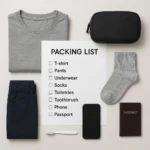
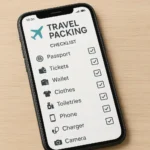
Each person should confirm:
- ☐ Passport or ID
- ☐ Visa or entry authorization
- ☐ Tickets and booking access
- ☐ Wallet and backup payment method
- ☐ Medication
- ☐ Phone and charger
- ☐ Weather-appropriate clothing
- ☐ Comfortable shoes
- ☐ Toiletries
- ☐ Insurance information
- ☐ Emergency contact
- ☐ Copies of essential documents
- ☐ Required activity gear
- ☐ A small carry-on with essentials
Run a “door check” before leaving: passport, phone, wallet, medication. It is less glamorous than a travel montage and much more useful.
📲 Choose the Best Apps and Tools for Group Trips
The best tool is not the one with the most icons. It is the one the entire group can access, understand, and update.
Tool comparison
| Tool | Strength | Best use |
|---|---|---|
| Travel Checklist | Dedicated travel task organization | Packing and trip preparation |
| Google Calendar | Shared dates and reminders | Reservations and deadlines |
| Google Drive | Shared documents | Confirmations and reference files |
| Familiar group messaging | Real-time updates | |
| Signal | Privacy-focused messaging | Sensitive communication |
| Splitwise | Shared expenses | Ongoing cost tracking |
| Trello | Visual workflow | Assigning planning tasks |
| Notion | Flexible travel hub | Detailed itinerary and databases |
| Google Maps | Saved places and navigation | Daily movement |
| Citymapper | Urban transit guidance | Supported cities |
🗺️ Maps, Navigation, Translation, and Offline Guides
Before leaving:
- Download offline maps.
- Save accommodation and hospitals.
- Mark meeting points.
- Save train and bus stations.
- Download translation resources.
- Record the local address in the local script where useful.
- Test navigation without a data connection.
Google Maps may not show every local transit change in real time. Cross-check with official transport providers, especially during strikes, public holidays, or severe weather.
💬 Messaging, Itinerary Sharing, and Location Updates
Agree on message conventions:
- URGENT: requires immediate attention.
- UPDATE: plan changed but no action needed.
- MET: location and time.
- CHECK-IN: traveler confirms they are safe.
- DECISION: vote required by a stated deadline.
Do not use live location sharing as a substitute for communication or consent. Travelers should choose what they share and with whom.
💸 Budgeting, Payments, and Expense Tracking
A checklist app handles tasks, but expense apps handle balances. Connect them through a shared workflow:
- Checklist task: “Create expense group.”
- Expense app: Add travelers and currency.
- Checklist task: “Enter accommodation deposit.”
- Expense app: Upload receipt and split correctly.
- Checklist task: “Review balances.”
- Expense app: Confirm reimbursement.
This separation keeps task management and accounting from becoming one giant, unsearchable document.
☁️ Shared Cloud Folders and Travel Planning Spreadsheets
A practical folder structure:
00 Emergency01 Transport02 Accommodation03 Activities04 Food05 Health and Insurance06 Expense Receipts07 Packing and Checklists
Use permission settings. Make critical files available offline. Avoid editing key documents simultaneously without a clear owner.
🔐 Manage Money, Payments, and Connectivity Abroad
Before international travel, tell your bank where you are going if required, verify card functionality, and review foreign transaction policies. The Consumer Financial Protection Bureau provides general financial education, while your bank’s official guidance controls your account.
Payment backup plan
Each traveler should consider carrying:
- Primary card
- Backup card stored separately
- Small amount of local currency
- Emergency cash plan
- Bank contact information
- Digital wallet where accepted
- A secure record of card cancellation instructions
Never store a complete card number in a shared group document.
💳 Credit Cards, Cash, ATMs, and Foreign Transaction Fees
Discuss:
- Who pays deposits
- Which cards work abroad
- ATM access
- Cash preferences
- Tipping customs
- Dynamic currency conversion
- Shared cash withdrawals
- Reimbursement timing
When an ATM or card terminal asks whether to charge in your home currency or local currency, travelers should understand the exchange-rate implications and review their card issuer’s guidance. Avoid making financial decisions on behalf of another traveler.
📶 eSIMs, Roaming Plans, Wi-Fi, and Group Connectivity
Compare:
- Carrier roaming
- Local SIM
- eSIM
- Pocket Wi-Fi
- Accommodation Wi-Fi
- Public Wi-Fi
Providers such as Airalo, Holafly, and Ubigi offer eSIM options in many destinations, but device compatibility, coverage, activation, and hotspot rules vary.
👉 CHECK PRICE on:
- Airalo eSIM: Airalo Official Website | Airalo on Amazon
- Holafly eSIM: Holafly Official Website | Holafly on Amazon
Download eSIM instructions and activation details before departure. A group should not depend one person’s data connection for navigation.
🔒 Fraud Prevention, Device Security, and Backup Access
Use:
- Screen locks
- Strong unique passwords
- Multi-factor authentication
- Device tracking
- Encrypted backups
- Minimal sensitive data
- Official charging equipment
- Caution with public USB ports
- Secure Wi-Fi or a trusted VPN according to your organization’s policy
The CISA travel cybersecurity guidance covers practical steps for protecting devices and accounts.
If a phone is lost:
- Move to safety.
- Use another device to lock or locate it.
- Contact the carrier.
- Change critical passwords.
- Cancel payment cards if needed.
- Tell the group where to meet.
- Report theft according to local procedures.
🤝 Set Group Rules and Manage Travel Dynamics
Good group rules are not controlling. They are a kindness to future-you, who otherwise ends up negotiating breakfast while hungry and jet-laged.
Agree on these before departure
- Daily start time
- Punctuality expectations
- Solo-time permission
- Alcohol and nightlife boundaries
- Room and quiet hours
- Expense rules
- Photography consent
- Child supervision
- Decision-making method
- What happens when plans change
- How concerns can be raised privately
🗣️ Agree on Decision-Making and Communication Norms
Choose a decision method:
- Consensus: everyone agrees.
- Majority vote: useful for optional activities.
- Trip leader decides: useful during time-sensitive disruptions.
- Affected travelers decide: best for personal room, dietary, or accessibility choices.
A strong rule is:
Use group input for shared costs and shared commitments; use individual choice for personal time and personal spending.
🕒 Handle Different Schedules, Sleep Habits, and Punctuality
Write times precisely:
- “Leave at 8:30” could mean wheels moving at 8:30.
- “Meet at 8:30” could mean arriving at 8:30.
Use:
- Meet time
- Depart time
- Grace period
- Late plan
Example:
Meet 8:15, depart 8:25, five-minute grace period, then contact the transport lead.
For accommodation, agree on quiet hours and shared-space expectations. Night owls and early risers can coexist if neither believes their schedule is morally superior.
🧘 Build in Solo Time and Opt-Out Opportunities
Normalize phrases such as:
- “I’m skipping this one and will meet you for dinner.”
- “I need an hour alone.”
- “I’m going back to the hotel.”
- “I’m not comfortable with that activity.”
- “I’ll join the optional branch later.”
The first video’s “opt-in or opt-out” approach works because it protects both participation and autonomy. Groups often become happier when nobody has to pretend that every activity sounds exciting.
⚖️ Resolve Conflicts, Changes, and Last-Minute Decisions
Use a simple conflict sequence:
- State the issue without blame.
- Identify who is affected.
- Separate urgent from non-urgent decisions.
- Offer two or three workable options.
- Decide using the agreed method.
- Record the result.
- Move on.
For urgent safety decisions, the trip leader may act first and explain afterward. For non-urgent preferences, do not manufacture a crisis because two people prefer different cafés.
👨 👩 👧 👦 Plan Group Travel for Families, Friends, and Multigenerational Groups
A family trip may involve naps, booster seats, accessibility, school schedules, medication, and different expectations of privacy. A friends’ trip may involve nightlife, budget variation, and changing participation. A multigenerational trip often needs all of the above.
Create separate checklists for:
- Adults
- Children
- Older adults
- Travelers with accessibility needs
- Drivers
- Travelers joining late or leaving early
👶 Traveling With Babies, Children, and Teenagers
Confirm:
- Passport and consent documents
- Car seats
- Stroller rules
- Child medication
- Snacks and water
- Sleep schedule
- Safe meeting points
- Entertainment
- Child-friendly accommodation
- Supervision responsibilities
- Emergency contacts
For international travel with minors, check official government requirements. The U.S. Department of State provides family travel information for U.S. citizens.
Do not assume the oldest teenager is automatically a responsible supervisor. Assign adults clearly.
👵 Planning for Older Adults and Mobility Needs
Ask privately about:
- Walking distance
- Stairs
- Rest breaks
- Bathroom access
- Medication schedules
- Meal timing
- Heat and cold tolerance
- Transportation assistance
- Travel insurance
- Emergency plans
Use slower itineraries, shorter transfers, and accommodation near practical services. A “free afternoon” may be essential recovery time rather than wasted sightseeing potential.
🐾 Traveling With Pets or Service Animals
Verify:
- Airline or rail rules
- Destination entry requirements
- Vaccination and microchip requirements
- Health certificates
- Accommodation policies
- Service-animal documentation
- Transport crate requirements
- Emergency veterinary care
Use official government animal-travel guidance, such as the U.S. Department of Agriculture APHIS pet travel resources, and contact the carrier directly.
🌱 Plan Responsible and Sustainable Group Travel
Group travel can reduce some impacts through shared transport and accommodation, but large groups can also strain local services. Responsible planning means considering the destination as a community, not merely a backdrop.
Practical choices
- Use public transit where feasible.
- Walk shorter routes.
- Choose locally owned restaurants and guides.
- Avoid overcrowded or exploitative attractions.
- Respect wildlife.
- Carry reusable supplies.
- Follow local waste and water rules.
- Travel outside peak periods when practical.
- Stay longer rather than taking multiple short trips.
- Follow codes from organizations such as Leave No Trace.
For beach trips, see our Beach Vacation Checklists. For remote itineraries, use the Adventure Travel Checklists category.
🚆 Reduce Transport Impact and Choose Local Providers
Compare the full journey, not only the headline ticket:
- Door-to-door time
- Number of vehicles
- Accessibility
- Luggage
- Reliability
- Carbon implications
- Cost
- Safety
Shared airport transfers may reduce vehicles, but a private vehicle can be the safer choice for a large group with mobility needs or late-night arrival.
♻️ Minimize Waste and Respect Local Communities
Bring:
- Refillable bottles
- Reusable shopping bags
- Minimal packaging
- Reef-safe or destination-appropriate personal products
- Reusable cutlery where useful
Follow local instructions for waste, water, dress, photography, and religious sites. A group’s size increases visibility, so respectful behavior matters more, not less.
💚 Support Local Businesses and Ethical Experiences
Look for:
- Local guides
- Independent restaurants
- Community-owned activities
- Transparent wildlife policies
- Fair labor practices
- Small cultural organizations
- Accommodation with credible sustainability practices
Be cautious of vague “eco” claims. Ask what the provider actually does, who benefits financially, and how animals or local communities are treated.
📆 Group Travel Planning Timeline
A timeline transforms an overwhelming trip into manageable checkpoints.
🗓️ Six to Twelve Months Before Departure
- Agree on group purpose and destination shortlist.
- Poll dates and budgets.
- Check passport validity.
- Research visas and entry requirements.
- Compare accommodation types.
- Estimate transport and lodging.
- Identify accessibility and health considerations.
- Create the shared checklist.
- Assign roles.
- Decide the expense-tracking method.
- Book major transport and accommodation when appropriate.
📅 Three to Six Months Before Departure
- Confirm every traveler’s participation.
- Collect arrival and departure details.
- Review cancellation rules.
- Research insurance.
- Reserve popular activities.
- Check local transport.
- Confirm room layout.
- Create the document folder.
- Discuss dietary requirements.
- Decide on group communication.
- Begin a shared packing list.
⏳ One to Four Weeks Before Departure
- Recheck entry requirements.
- Confirm reservations.
- Reserve restaurants and transfers.
- Download maps and apps.
- Arrange eSIM or roaming.
- Verify medication supplies.
- Share the emergency plan.
- Review the budget.
- Confirm payment deadlines.
- Check weather.
- Assign shared packing items.
- Perform a group itinerary review.
🧳 The Day Before and Day of Departure
Day before
- Charge devices and power banks.
- Download offline documents.
- Check transport status.
- Pack medication in carry-on luggage.
- Confirm meeting point.
- Review baggage rules.
- Set alarms in the correct time zone.
- Save accommodation address offline.
Departure day
- Passport or ID
- Wallet and cards
- Phone
- Medication
- Tickets
- Water and snacks
- Group contact access
- Airport or station arrival buffer
Mark tasks complete in the checklist rather than relying on memory. Memory is optimistic before dawn.
🏠 After the Trip: Receipts, Feedback, and Follow-Up
Within a few days:
- Setle shared expenses.
- Save receipts.
- Submit insurance claims if needed.
- Report lost items.
- Record medical follow-up.
- Return rented equipment.
- Collect feedback.
- Note what to repeat or avoid.
- Archive the itinerary.
- Update the checklist template.
Ask three questions:
- What prevented a problem?
- What caused unnecessary stress?
- What will we change next time?
That final question is where a one-off holiday becomes a reusable group travel system.
🚫 Common Group Travel Planning Mistakes to Avoid
1. Booking before agreeing on the trip’s purpose
A group that has not agreed on the vibe is not ready to choose a destination.
2. Treating the cheapest option as the best option
A low headline cost may hide inconvenient transfers, poor accessibility, baggage charges, or non-refundable terms.
3. Making one person do everything
The master planner deserves a holiday too. Share ownership.
4. Ignoring the least flexible traveler
A plan that works only for the most available, mobile, or financially comfortable traveler is not a group plan.
5. Packing the itinerary too tightly
Leave space for rest, delays, laundry, and spontaneous discoveries.
6. Assuming everyone has the same budget
State what is included, optional, shared, and personal.
7. Sharing sensitive documents carelessly
Use restricted access and secure storage.
8. Forgeting to plan for separation
Meeting points and backup communication are simple and powerful.
9. Waiting until the end to settle expenses
Record costs as they happen.
10. Failing to reconfirm reservations
Large parties are especially vulnerable to outdated booking details.
🌟 Expert Tips for a Smother Shared Itinerary
Use the “one anchor per day” rule
One major shared activity gives the group a common experience without turning the trip into a military exercise.
Create a “decision deadline”
If nobody votes by the deadline, the assigned owner chooses from the approved options. Endless discussion is not democratic; it is simply late.
Separate planning channels from social channels
Important instructions disappear quickly under restaurant photos and memes. Keep the checklist or planning document authoritative.
Photograph the meeting point
A screenshot with a pin and landmark is often more useful than a paragraph of directions.
Keep two versions of the itinerary
- Full version: bookings, contacts, notes, payment details.
- Traveler version: times, locations, actions, and emergency information.
Add a “why this matters” note to difficult tasks
“Verify passport validity” feels abstract. “Some destinations require validity beyond the trip” creates urgency. Confirm current rules through official sources such as the State Department, the destination’s embassy, or the relevant government portal.
Use a group packing audit
Each traveler reports:
- Ready
- Missing one item
- Needs help
- Bringing shared item
- Not participating in activity
This catches the missing hiking shoes before the mountain appears outside the window.
Keep the itinerary flexible, not vague
Flexibility needs boundaries:
- What is fixed?
- What can change?
- Who decides?
- By when?
- What is the backup?
Give the group a reset point
At the end of each day, spend five minutes confirming tomorrow. That tiny ritual is how our group avoided the “two different breakfast plans” disaster and eventually found the correct train platform with time to spare. The mystery was never whether a checklist app could replace judgment. It was whether the group would actually use one shared system. Once everyone could see the plan, ownership, and next action, the answer became pleasantly obvious.