Support our educational content for free when you purchase through links on our site. Learn more
18 Essential Documents to Carry While Traveling ✈️

The essential documents to carry while traveling are the ones that prove your identity, permission to enter, travel plans, and access to help: usually a valid passport or accepted ID, any required visa, tickets and itinerary, plus relevant insurance, health, or family paperwork. Check official rules for every destination and transit stop, then keep key details available both offline and in a secure backup.
We learned the value of an offline itinerary the unglamorous way: after landing somewhere new, our phone had no signal, the hotel address was buried in an inbox, and the taxi driver was waiting patiently while we tried to remember the name of the street. A printed address would have saved us the world’s least impressive scavenger hunt.
Not every trip needs all 18 documents below, and copies don’t replace originals when authorities require them. But with the right documents organized before departure, you can spend less time rummaging through email and more time getting where you’re going.
Key Takeaways
- Check requirements early: Passport validity, visas, transit rules, and accepted ID depend on your route and nationality.
- Carry the right originals: Bring required travel documents, not just screenshots or photocopies.
- Keep backups separate: Save secure digital copies and print essential details, including emergency contacts.
- Match documents to your trip: Families, drivers, travelers with prescriptions, and long-stay visitors may need extra paperwork.
- Use a checklist: Track applications, confirmations, and packing so a missing document doesn’t become a last-minute plot twist.
Table of Contents
- ⚡️ Quick Tips and Facts
- 🧭 Travel Document Basics: What Counts and Why It Matters
- ✅ Essential Travel Documents Checklist: 18 Documents to Consider
- 1. Passport and Passport Details
- 2. Travel Visa and Entry Permits
- 3. National ID, Driver’s License, and Other Identification
- 4. Travel Itinerary and Accommodation Details
- 5. Flight Tickets and Boarding Passes
- 6. Travel Insurance Certificate and Policy Details
- 7. Proof of Onward or Return Travel
- 8. Hotel, Rental, and Host Confirmations
- 9. Driver’s License and International Driving Permit
- 10. Vehicle Rental and Road Documents
- 11. Children’s Birth Certificates and Consent Letters
- 12. Vaccination Certificates and Health Records
- 13. Prescription and Medication Documentation
- 14. Event, Tour, and Attraction Tickets
- 15. Student, Senior, or Membership Cards
- 16. Emergency Contacts and Important Addresses
- 17. Financial and Customs Documents
- 18. Work, Study, or Residency Documents
- 🌍 Documents for International vs. Domestic Travel
- International Travel Document Requirements
- Domestic Flights and Land Travel ID Rules
- 👨 👩 👧 Travel Documents for Families, Minors, and Special Circumstances
- 🛂 Entry Rules, Passport Validity, and Transit Requirements
- 📱 Paper Copies, Digital Documents, and Secure Storage
- 🔐 How to Protect Your Travel Documents from Loss or Theft
- 🚨 What to Do If Your Passport or Documents Are Lost
- 🧳 When to Pack and How to Organize Your Travel Paperwork
- ❌ Common Travel Document Mistakes to Avoid
- Conclusion
- Recommended Links
- FAQ
- Reference Links
⚡️ Quick Tips and Facts
The short version: take the original documents authorities or providers may need to inspect, keep secure copies separately, and check requirements with official sources for every destination and transit stop. Your document lineup depends on where you’re going, how you’re getting there, and who’s traveling with you.
| Before you leave | Why it matters |
|---|---|
| Check passport validity, visa rules, and transit requirements | Entry rules vary by country and can change. Confirm them with the destination’s official government or embassy. |
| Carry required originals and backup copies | A copy can help you replace a lost document, but it generally does not replace an original passport or visa when one is required. |
| Save documents offline and print key details | Phones lose power, signal, or occasionally decide to take an unscheduled vacation of their own. |
| Keep emergency contacts on paper | A written list still works when your phone doesn’t. |
| Share your itinerary with someone you trust | It gives them a useful point of contact if plans change or an emergency arises. |
For other easy-to-forget trip essentials, see our guide to often-forgoten items on every travel checklist. If your plans include a trek, a long stay, or a week of sand and sunscreen, browse our adventure travel checklists, digital nomad checklists, backpacking checklists, budget travel checklists, and beach vacation checklists.
🧭 Travel Document Basics: What Counts and Why It Matters
Travel documents are more than papers for airport queues. They can prove who you are, where you may enter, how you’ll travel, what coverage you have, and who to contact when plans go sideways.
The best approach is trip-specific. A domestic weekend away may call for photo ID, flight or train details, and a hotel confirmation. An international trip can add a passport, visa or electronic travel authorization, health documentation, proof of onward travel, and paperwork for children, pets, medication, or a rental car.
The U.S. Department of State recommends checking country-specific entry and exit requirements before traveling; start with its Learn About Your Destination tool. Travelers from other countries should consult their own government’s travel advice and the destination’s official immigration authority.
One distinction clears up a lot of confusion: a scan or photocopy is a backup, not a substitute for an original document when an airline, border officer, or local law requires the original. Keep originals accessible when needed, but store them securely. Keep backup copies somewhere separate.
We’ve found a simple three-part system useful:
- Carry: documents you may need to show during the journey.
- Back up: copies stored separately from the originals.
- Share: itinerary and emergency details with a trusted person.
✅ Essential Travel Documents Checklist: 18 Documents to Consider
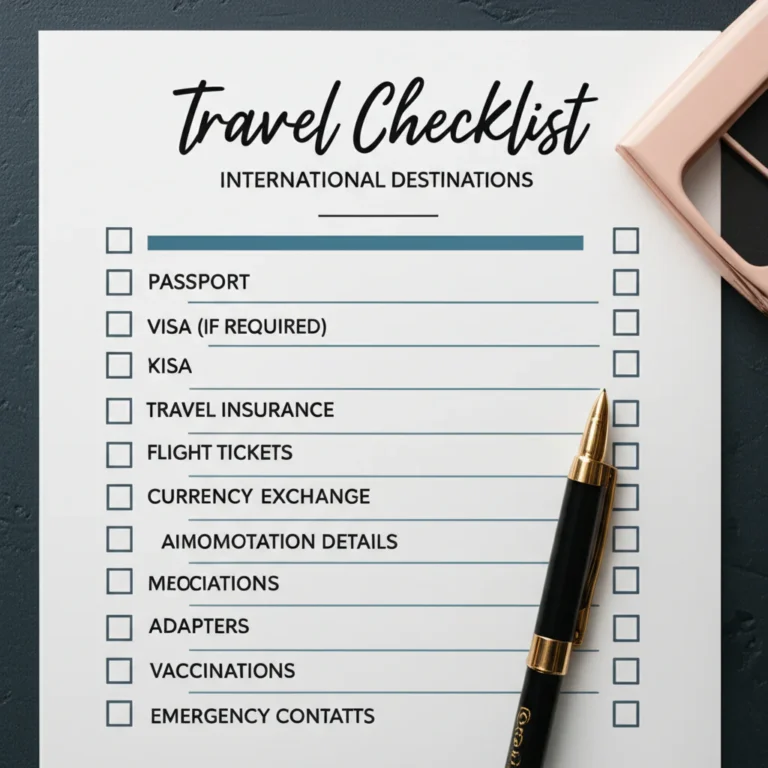
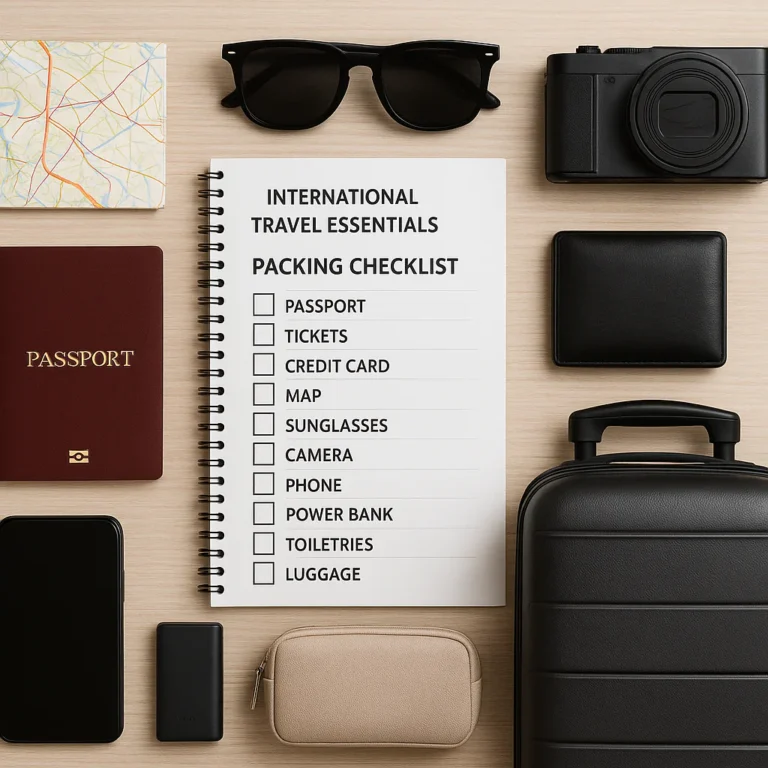
Not every traveler needs all 18. Think of this as a master travel paperwork checklist: choose the documents that match your route, transport, activities, and travel companions.
| Document | Usually needed for | Pack it? |
|---|---|---|
| Passport | International travel | Required for many international journeys; verify destination rules |
| Visa or entry authorization | Some international trips | Check each destination and transit stop |
| Government-issued photo ID | Domestic travel and secondary identification | Carry an accepted form of ID |
| Itinerary and confirmations | Most trips | Keep an offline and paper version |
| Insurance information | Trips with travel or medical coverage | Carry policy and assistance details |
| Onward or return travel proof | Some border or carrier checks | Check destination requirements |
| Accommodation confirmation | Border questions, check-in, or arrival | Useful to have accessible |
| Driving documents | Road trips and rentals | Check local rules and rental terms |
| Child consent and relationship documents | Minors traveling with one parent, a guardian, or another adult | Verify requirements in advance |
| Health and medication records | Certain destinations or medical needs | Carry relevant, current records |
| Activity tickets | Pre-booked events and attractions | Save barcodes offline where possible |
| Emergency contacts | Every trip | Keep a paper copy |
1. Passport and Passport Details
For international travel, your passport is often the key identity and travel document. Check its expiration date, condition, and available blank pages well before departure. Some destinations require a passport to remain valid for a period beyond your planned stay; the exact rule varies, so verify it for every country on your itinerary.
The State Department’s passport travel guidance explains U.S. passport services and travel considerations. If you hold another nationality, check your government’s passport authority and the destination’s official entry rules.
Carry: your valid passport when required for the trip.
Back up: a secure copy of the identification page, stored separately from the passport. A copy can help with reporting a loss or applying for a replacement, but it does not function as a travel passport.
Our practical habit: store a paper copy in a different bag and a protected digital copy in an account you can access without relying on your phone alone. Don’t post passport images publicly or send them through unsecured channels.
2. Travel Visa and Entry Permits
A visa, electronic visa, or electronic travel authorization may be required even when you’re only visiting briefly. Rules can depend on your citizenship, purpose of travel, length of stay, route, and transit airport.
Before booking, confirm:
- Whether your nationality needs a visa or electronic authorization.
- Whether you must apply before departure.
- The allowed stay and number of entries.
- Whether transit through another country requires permission.
- Whether the visa is linked electronically to your passport or must be printed.
- Whether the purpose of travel matches the permission you hold.
Use the destination government’s immigration website or embassy as your primary source. A travel blog can flag questions; it cannot grant entry. The U.S. State Department country information pages are a useful starting point for U.S. travelers.
3. National ID, Driver’s License, and Other Identification
For domestic flights, carry an ID accepted by your airline and relevant airport-security authority. In the United States, check current TSA identification requirements. A driver’s license is common, but it isn’t the only possible form of accepted identification, and rules can change.
For international trips, a national ID may be useful locally but does not automatically replace a passport. A driver’s license is generally not proof of permission to enter another country.
Carry one backup form of ID only if it’s useful for your trip, and keep it separately from your primary document. Avoid carrying a whole wallet’s worth of sensitive cards “just in case”; more documents can mean more to lose.
4. Travel Itinerary and Accommodation Details
A clear itinerary makes arrivals smoother and gives your emergency contact a practical snapshot of your plans. Include:
- Flight, train, bus, ferry, or cruise details.
- Dates, locations, and transfer times.
- Accommodation names, addresses, and phone numbers.
- Tour meeting points and local transport arrangements.
- Emergency and travel-insurance contact information.
Save the itinerary offline and print a compact copy. Share it with someone you trust, particularly for long trips or remote adventures. Generali also recommends carrying both paper and digital versions in its travel documents checklist.
5. Flight Tickets and Boarding Passes
Most airlines issue electronic tickets, and many accept mobile boarding passes. Still, save your booking reference, flight details, and boarding pass offline; print them if you prefer a backup or expect limited connectivity.
A ticket receipt is not always the same as a boarding pass. Follow the airline’s check-in instructions and confirm that the name on the booking matches the travel document you’ll use. For airline-specific rules, use the carrier’s official website rather than relying only on a third-party itinerary email.
6. Travel Insurance Certificate and Policy Details
If you buy travel insurance, carry the policy certificate and the details you’d need to request help:
- Policy or certificate number.
- Emergency assistance phone number.
- Medical and evacuation coverage details.
- Claims instructions.
- Coverage dates and any relevant exclusions.
Don’t assume every policy covers every activity or disruption. Review the policy wording for exclusions, pre-existing-condition rules, adventure-sport limits, and claim requirements. The U.S. Department of State’s travel insurance guidance explains why travelers should understand coverage before leaving.
A photo of the insurance card is handy, but write the assistance number somewhere you can reach without logging into the insurer’s app.
7. Proof of Onward or Return Travel
Some destinations or carriers may ask for evidence that you plan to leave within the conditions of your entry permission. That may mean a return ticket, onward booking, or other documentation—but requirements vary.
Check the destination’s official immigration guidance and your airline’s rules before departure. Keep the relevant confirmation accessible and make sure the dates align with your permitted stay. Don’t buy a ticket solely because a social-media post says a border officer might ask for it; first verify the actual requirement.
8. Hotel, Rental, and Host Confirmations
Save your accommodation confirmation with the address, check-in instructions, and a contact number. If you’re staying with friends or family, keep their full address and contact details handy; some arrival forms or border questions may ask where you’ll stay.
For holiday rentals, save the host’s instructions offline. We once watched a traveler circle a quiet apartment block looking for the “front desk” of a building that had no front desk, no sign, and a host whose Wi-Fi password was apparently the only thing online. Address plus arrival instructions beats wishful roaming.
9. Driver’s License and International Driving Permit
If you plan to drive abroad, check whether your home-country license is accepted and whether you need an International Driving Permit (IDP). An IDP is generally a translation document and should be carried alongside your valid driver’s license; it is not a standalone license.
The American Automobile Association (AAA) provides information on U.S. International Driving Permits. Travelers from other countries should check their national automobile association and the destination’s rules. Confirm the rental company’s requirements too—local law and rental policy may not be identical.
10. Vehicle Rental and Road Documents
For a rental car or road trip, confirm what the driver and vehicle must carry. Requirements may include:
- Driver’s license and, where required, IDP.
- Rental agreement and roadside-assistance details.
- Insurance documentation.
- Vehicle registration or ownership papers for a privately owned car.
- Local toll, emissions, or road-access permits.
- Emergency contact information for the rental company.
Ask the rental provider about cross-border travel, additional drivers, age restrictions, and required proof of coverage before collecting the keys. Keep the agreement accessible, but don’t leave sensitive personal documents in a parked vehicle.
11. Children’s Birth Certificates and Consent Letters
Children need travel documents that match the route and the rules of the countries involved. A minor may need an individual passport for international travel. A birth certificate can help establish a child’s relationship to a parent or guardian, but it is not a substitute for a passport or other required travel document.
If a child travels with one parent, a guardian, or an adult who is not a parent, consider carrying a signed consent letter with the trip details and contact information for the absent parent or legal guardian. Custody orders or guardianship papers may also be relevant. Requirements vary, so check with the destination’s embassy, border authority, and carrier before departure. The Government of Canada’s guidance for children travelling abroad offers a helpful example of why consent documentation can matter.
For urgent health decisions, a separate child medical-consent form may be useful when a temporary caregiver is responsible. Ask your child’s healthcare provider or legal adviser what is appropriate for your circumstances.
12. Vaccination Certificates and Health Records
Some destinations require proof of specific vaccinations or other health documentation. Requirements depend on your route and may change, so check official destination guidance and the CDC Travelers’ Health destination pages.
Carry relevant records when they’re required or useful for care, and keep a copy separate from the original. Don’t assume a COVID-19 certificate is universally required—or universally irrelevant. Check current rules for your destination, airline, cruise, and any transit countries.
13. Prescription and Medication Documentation
If you take prescription medication, bring enough for the trip plus a reasonable delay buffer, subject to destination rules. Keep medicine in its original labeled packaging where practical, and carry a prescription copy or clinician’s letter if the drug may attract questions or needs explanation.
Before travel, confirm:
- Whether the medication is legal in the destination.
- Whether quantity limits or import permits apply.
- Whether controlled substances have special documentation rules.
- Whether the medicine needs temperature-controlled storage.
The International Narcotics Control Board’s country regulations database can help identify restrictions on controlled medicines. Confirm details with the destination’s official authority; medication rules can be strict, and “it’s prescribed at home” may not settle the question abroad.
14. Event, Tour, and Attraction Tickets
Save tickets for concerts, museums, guided tours, sports, and timed attractions. Keep the booking confirmation and any entry instructions, including the name on the ticket, arrival window, and meeting point.
Take screenshots or download tickets for offline access, but protect barcodes from public sharing. A screenshot of a ticket is useful only if the venue accepts it, so check the organizer’s instructions.
15. Student, Senior, or Membership Cards
A student, senior, professional, or membership card may help confirm eligibility for discounts or services. Carry it only if you expect to use it, and check that the provider accepts your card type and current status.
These are useful extras, not substitutes for government-issued travel identification. If the discount matters to your itinerary, save the terms or booking confirmation too.
16. Emergency Contacts and Important Addresses
Write down key numbers and addresses in a format that doesn’t depend on your phone:
- A trusted contact at home.
- Accommodation and transport providers.
- Travel-insurance assistance.
- Your bank or card issuer’s emergency number.
- Local emergency services.
- Your country’s nearest embassy or consulate.
The U.S. State Department’s embassy and consulate directory helps U.S. travelers find official locations abroad. Other travelers should use their own foreign ministry’s directory. If traveling internationally from the United States, consider enrolling in the Smart Traveler Enrollment Program (STEP) for travel alerts and a way to share trip information with the nearest U.S. embassy or consulate.
17. Financial and Customs Documents
Carry payment cards you actually expect to use and know how to contact the issuer if one is lost. Depending on your trip, you may also need customs declarations, receipts for high-value goods, proof of funds, or permits for restricted items.
Check the destination’s customs rules before packing food, plants, animal products, medicines, or valuable equipment. For U.S. travelers returning home, the U.S. Customs and Border Protection travel guidance explains declaration and entry requirements.
18. Work, Study, or Residency Documents
Longer stays and non-tourism trips can require additional paperwork. Depending on your purpose, consider carrying:
- Work, study, or residence visa and supporting documents.
- Admission letter, employment letter, or assignment details.
- Proof of accommodation and funds, if required.
- Health insurance evidence.
- Local registration or permit documents.
- Tax or residency records relevant to your situation.
Digital nomads should verify that their immigration permission covers their actual work arrangements. A tourist entry permission may not authorize remote work in every destination. Check official immigration guidance rather than assuming that laptop work is invisible to border rules.
🌍 Documents for International vs. Domestic Travel
The paperwork difference is bigger than “passport versus no passport.” International travel can involve entry permission, transit rules, health requirements, customs, and proof of travel plans. Domestic travel usually has fewer border formalities, but airlines and other carriers still set identification requirements.
| Situation | Documents to check |
|---|---|
| Domestic flight | Accepted photo ID, booking, boarding pass |
| International flight | Passport, visa or authorization, itinerary, onward travel if required |
| Connecting internationally | Transit visa or transit entry rules for every connection |
| Driving abroad | Valid home license, IDP if required, rental and insurance documents |
| Traveling with a minor | Child’s travel ID, consent or custody documents where relevant |
| Extended stay | Visa, employment or study documents, insurance, proof of accommodation |
| Cruise or multi-country trip | Passport or accepted cruise documents, visas, port-entry rules |
International Travel Document Requirements
Check each country you enter and each country where you transit. A connection can have rules of its own, especially if you must clear immigration, change airports, collect bags, or leave the international transit area.
Use official destination guidance, the airline, and relevant embassy or immigration websites. Requirements can differ by nationality even on the same flight. For a quick orientation, the State Department country pages are useful for U.S. travelers, but the destination government is the authority on its entry rules.
Domestic Flights and Land Travel ID Rules
For domestic air travel, confirm accepted identification with the relevant airport-security agency and carrier. In the United States, use the TSA’s current ID guidance. For rail, bus, and ferry travel, check the operator’s identification requirements; rules are not always identical to airline rules.
For travel outside the United States, verify domestic transport rules with the local carrier and government authority. A document accepted one route may not be accepted on another.
👨 👩 👧 Travel Documents for Families, Minors, and Special Circumstances
Family travel adds paperwork because the person holding a document and the person responsible for that traveler may not be the same. Check requirements well ahead of time, particularly if a child travels with one parent, a guardian, a coach, or a relative.
Children and separated parents
Consider carrying:
- The child’s own required passport or ID.
- Birth certificate or other proof of relationship, if useful for the route.
- Consent letter from an absent parent or guardian, where appropriate.
- Custody, adoption, or guardianship documents where relevant.
- Child medical-consent details and health-insurance information.
There is no single universal consent-letter rule for every route. Check with the countries involved and the airline, and seek legal advice if custody arrangements are complicated.
Traveling with pets
Pet travel can require a veterinary health certificate, vaccination record, microchip details, import permit, or treatment records. Rules vary significantly by destination and may involve waiting periods, so begin with the destination’s official animal-import authority. For U.S. entry and animal-health requirements, consult the CDC’s pet travel guidance.
Medical, accessibility, and legal needs
Travelers with medical conditions or accessibility needs may benefit from carrying a concise medical summary, relevant prescriptions, insurance details, and contact information for care providers. Keep sensitive records secure and share only what’s necessary.
If you have legal or financial responsibilities at home, arrange access to relevant documents with a trusted person rather than carrying a full estate-planning file everywhere. The right level of preparation depends on your situation; ask a qualified professional for legal or medical guidance.
🛂 Entry Rules, Passport Validity, and Transit Requirements
A destination’s entry rules may depend on your passport nationality, travel purpose, arrival date, length of stay, and route. Some countries require a minimum period of passport validity beyond arrival or departure; others may require blank pages, a visa, an electronic authorization, proof of onward travel, or evidence of accommodation.
Use this step-by-step check:
- List every country on your route, including transit stops.
- Check official entry and exit requirements for your nationality.
- Confirm passport validity and page requirements.
- Check visa or electronic authorization timing and application rules.
- Review carrier rules for document checks at boarding.
- Recheck shortly before departure in case guidance has changed.
Don’t rely on a friend’s recent trip as proof that the rules are unchanged. Their nationality, route, or travel purpose may differ from yours.
The first YouTube video embedded above, “Preparing Travel Documents for International Travel: Tips that will Ensure you have a Smooth Trip,” by Ben Thoennes Dream Vacations, offers a short additional overview of preparing for an international trip. Treat it as a helpful planning companion, then verify specific requirements with official sources.
📱 Paper Copies, Digital Documents, and Secure Storage
Digital copies are convenient; paper copies are dependable when your battery, signal, or login is not. Carry both formats for the documents you may need quickly, and store backups separately from originals.
| Storage option | Strength | Limitation |
|---|---|---|
| Phone wallet or files app | Fast access | Device can be lost, damaged, or out of power |
| Secure cloud storage | Can be reached from another device | Needs account access and, sometimes, internet |
| Printed copy | Works offline | Can be lost or expose sensitive information |
| Trusted person at home | Separate recovery option | They need current, accessible copies |
| Travel checklist app | Helps track what is packed or pending | A checklist is not a secure document vault unless its features and privacy controls support that use |
A practical backup routine
- Scan or photograph important documents clearly.
- Store files in a protected account with a strong, unique password.
- Enable multi-factor authentication where available.
- Download essential documents for offline access.
- Print copies of key confirmations and emergency contacts.
- Keep copies apart from the originals.
- Tell a trusted person how to help if you lose access.
Avoid emailing passport scans to yourself without considering account security. Don’t save sensitive images in a public or shared photo album. A travel checklist app can remind you to prepare documents, but use a secure storage service for confidential scans unless the app clearly provides suitable security and privacy protections.
🔐 How to Protect Your Travel Documents from Loss or Theft
Good document security is mostly about reducing single points of failure.
- Keep your passport in a secure, accessible place—not loose in an open bag.
- Carry only the cards and documents you need that day.
- Store copies separately from originals.
- Use a hotel safe when appropriate, but keep a backup copy elsewhere.
- Avoid showing sensitive document details in crowded public spaces.
- Use screen locks and strong account security on devices holding digital copies.
- Keep emergency contacts on paper, away from your phone.
- Don’t leave a passport in a parked vehicle.
We use a simple split: primary documents on us, one paper backup in separate luggage, and a secure digital copy available independently. The goal isn’t to make documents impossible to lose; it’s to make one lost bag less likely to derail the whole trip.
🚨 What to Do If Your Passport or Documents Are Lost
If a passport, visa, or other important document disappears, act promptly and keep a record of what you do.
- Check nearby locations and contact the airline, hotel, venue, or transport provider.
- Report theft to local police if appropriate, and keep the report details.
- Contact your country’s embassy or consulate for instructions and replacement documents.
- Notify your airline or carrier if the loss may affect boarding.
- Contact your insurer or travel-assistance provider if your plan includes help.
- Protect related accounts if your wallet, phone, or identity documents were stolen.
- Use your backup copies to help confirm identity and reconstruct travel details.
For U.S. citizens abroad, the State Department’s emergency passport information explains how to report a lost or stolen passport. Other travelers should contact their own government’s consular service. A copy may make the process easier, but the embassy or consulate will tell you what original evidence and forms are needed.
🧳 When to Pack and How to Organize Your Travel Paperwork
Work backward from departure day. Passports, visas, pet paperwork, and special permits can take time; leave the last-minute scramble to finding the charger, not proving you can enter the country.
A step-by-step document plan
When you book
- Check passport expiration and visa requirements.
- Confirm child, pet, medical, and driving requirements.
- Make a list of documents that need applications, appointments, or professional help.
Several weeks before departure
- Apply for required visas or authorizations.
- Arrange any required health or pet certificates.
- Confirm that names and dates match across bookings and documents.
A few days before departure
- Download tickets and confirmations for offline access.
- Print your itinerary, emergency contacts, and key policy details.
- Share your travel plan with a trusted person.
The night before
- Check that originals are packed in your carry-on or secure personal item.
- Put backup copies in a separate location.
- Confirm your phone can access saved files without Wi-Fi.
A checklist app can make this repeatable. Travel Checklist™’s Travel Smoothly with Checklist App approach is to turn the “I’ll remember that” items into boxes you can actually tick. Keep the app’s checklist focused on preparation; use a suitably secure tool for sensitive document storage.
❌ Common Travel Document Mistakes to Avoid
| Mistake | Better move |
|---|---|
| Assuming every country follows the same passport-validity rule | Check each destination’s official requirements |
| Treating a phone screenshot as a required original | Carry the original document when rules require it |
| Checking only the final destination | Check transit countries and airport connections too |
| Keeping every copy in the same bag | Separate backups from originals |
| Assuming an online ticket always works offline | Download or print key confirmations |
| Assuming a child’s birth certificate is enough for every trip | Confirm the child’s required travel ID and any consent documents |
| Packing medication without checking import rules | Verify legality and quantity limits with official sources |
| Relying only on an app or cloud account | Keep paper contacts and essential offline files |
| Waiting until departure week to check requirements | Start early, especially for visas, pets, and minors |
| Carrying unnecessary sensitive documents | Pack only what you need and store the rest securely |
The competing advice on copies can sound contradictory. One source may say to carry copies; another emphasizes originals. Both are right when applied to different jobs: originals satisfy requirements where authorities demand them, while copies support recovery and provide a fallback. A photocopy can help you explain what went missing; it usually cannot replace the missing passport at a border.