Support our educational content for free when you purchase through links on our site. Learn more
🚀 15 Smart Packing List Generators for 2026: Never Forget a Thing Again

We’ve all been there: standing at the airport gate, heart hammering against your ribs, frantically pating your pockets for a passport you swear you packed, only to realize you left it on the kitchen counter. Or worse, arriving at a tropical paradise with nothing but a tuxedo and a winter coat. It’s a nightmare scenario that Travel Checklist™ has seen time and time again. But what if you could banish that anxiety forever? Enter the packing list generator, the unsung hero of modern travel that turns chaotic packing into a seamless, stress-free ritual.
In this comprehensive guide, we don’t just list tools; we dissect the algorithms, compare the features, and reveal the 15 best packing list generators of 2026 that actually work. From AI-driven apps that predict your needs based on the weather to simple, robust web tools that let you customize every detail, we’ve tested them all. You’ll discover why 80% of travelers admit to forgetting essentials on their first trip and how the right tool can slash your packing time by 70%. Whether you’re a digital nomad, a family planner, or a solo backpacker, we have the perfect solution waiting for you.
Key Takeaways
- Smart Customization Wins: The best generators adapt to your specific destination, weather, and activities, not just generic trip types.
- Speed Mets Accuracy: Top tools like PackPoint and PlanTrip.io can generate a tailored list in seconds, but human review remains essential for personal quirks.
- Category Matters: Whether you need Adventure Travel Checklists, Business Travel Checklists, or Beach Vacation Checklists, specialized tools outperform generic ones every time.
- Avoid the “Just in Case” Trap: Generators often suggest items you’ll never use; learn how to filter and edit lists to keep your luggage light and efficient.
- Ready to Pack? Stop guessing and start generating. Explore our top picks below to find the perfect tool for your next adventure.
👉 Shop Top Packing Tools:
- Best Overall App: PackPoint on Amazon
- Best for Families: PlanTrip.io Official Site
- Best Free Web Tool: Travels’ Checklist Generator
- Essential Gear: Eagle Creek Packing Cubes on Amazon
Table of Contents
- ⚡️ Quick Tips and Facts
- 📜 The Evolution of Packing: From Handwritten Lists to Smart Packing List Generators
- 🤖 How a Packing List Generator Actually Works: The Magic Behind the Algorithm
- 📝 Top 15 Features to Look for in the Ultimate Packing List Generator
- ✈️ 12 Essential Categories Every Smart Packing List Must Include
- 👗 10 Proven Strategies for Customizing Your Packing List by Destination Type
- 🎒 8 Mistakes Travelers Make When Relying on Automated Packing Tools
- 📱 Best Free vs. Paid Packing List Apps and Software Compared
- 🌍 How to Build a Packing List Generator for Specific Travel Styles (Digital Nomads, Families, Solo Backpackers)
- 🔗 5 Real-World Examples: Before and After Using a Packing List Generator
- 💡 Quick Tips and Facts
- 🏁 Conclusion
- 🔗 Recommended Links
- ❓ FAQ
- 📚 Reference Links
⚡️ Quick Tips and Facts
Before we dive into the deep end of algorithmic packing, let’s hit the brakes and grab a few golden nugets of wisdom. We’ve seen travelers panic-pack entire suitcases only to realize they forgot their passport, or over-pack 15 pairs of shoes for a three-day city break. Don’t be that person.
Here is the truth about packing list generators:
- Speed vs. Accuracy: While a generator can spit out a list in seconds, human review is non-negotiable. Algorithms know the weather, but they don’t know you hate wearing wool socks.
- The “Just in Case” Trap: Generators often suggest items “just in case.” Pro Tip: If you haven’t used it in the last year, you won’t use it on this trip.
- Customization is King: A generic list is better than nothing, but a customized list tailored to your specific itinerary is a game-changer.
- Digital vs. Physical: Always have a backup. Screens die, batteries die, but a printed checklist or a screenshot in your offline folder never does.
For a deeper dive into how these tools handle specific destinations, check out our breakdown on 🗺️ How Checklist Apps Master 7 Top Destinations (2026).
📜 The Evolution of Packing: From Handwritten Lists to Smart Packing List Generators
Remember the days of the “sticky note on the fridge” or the crumpled napkin with “socks, toothbrush, charger” scrawled in haste? We do. It was the era of anxiety-driven packing. You’d arrive at the airport, heart pounding, wondering if you packed the adapter, only to realize you left it on the nightstand.
The journey from those chaotic scribbles to modern packing list generators has been nothing short of a revolution.
The Handwritten Era
In the beginning, there was the mental list. Then came the pen-and-paper list. These were static, one-size-fits-all documents. If you were going to a beach, you used the same list as your cousin going to a ski resort, just with a few items crossed out. It was inefficient, prone to human error, and frankly, a bit of a mess.
The Digital Dawn
Enter the spreadsheet. Suddenly, we could copy-paste, sort, and filter. But spreadsheets were clunky. They required manual updates and didn’t know the difference between a humid tropical climate and a dry desert.
The AI Revolution
Today, we have smart packing list generators. These aren’t just digital lists; they are intelligent assistants. They analyze your destination’s weather forecast, the duration of your trip, your specific activities (hiking, business meetings, diving), and even your demographic (solo traveler, family with toddlers).
“Ten quick questions and your packing list is ready.” — This quote from Pack Pal sums up the modern expectation: instant gratification without sacrificing personalization.
But how do they actually do it? Is it magic, or is it just math? Let’s peel back the curtain.
🤖 How a Packing List Generator Actually Works: The Magic Behind the Algorithm
You might think a packing list generator is just a fancy database that says, “If Beach, then Swimsuit.” But the reality is far more sophisticated. It’s a blend of data science, meteorology, and behavioral psychology.
The Input Phase: Gathering Intel
When you interact with a generator (like the one on Travels’ Checklist or PlanTrip.io), you aren’t just typing words; you are feeding the algorithm variables.
- Destination Data: The tool pulls real-time weather data and historical climate patterns for your specific location.
- Trip Duration: A 3-day trip requires a different calculation than a 3-week expedition.
- Activity Tags: Are you “Going out” to clubs in Berlin or “Hiking” in the Andes? These tags trigger specific gear recommendations.
- Demographics: Traveling with a baby? The algorithm knows you need diapers, wipes, and a stroller, not just a camera and a guidebook.
The Processing Phase: The “Brain”
Once the data is in, the engine kicks in. It cross-references your inputs against a massive library of travel best practices.
- Weather Logic: If the forecast predicts rain, it automatically adds a waterproof jacket and umbrella.
- Laundry Logic: For a 10-day trip, it might suggest 5 shirts instead of 10, assuming you’ll do laundry.
- Regulatory Logic: Some advanced tools check for visa requirements or prohibited items based on the destination.
The Output Phase: The Personalized List
The result is a dynamic checklist. Unlike a static PDF, many modern generators allow you toggle items on and off, add custom notes, and even sync with your calendar.
Did you know? Some developers, like the creator of the Ruby on Rails application mentioned in our featured video, build these tools from the ground up to ensure real-time adaptability. It’s not just a list; it’s a living document that evolves as your trip plans change.
But with so many tools out there, how do you know which one is actually worth your time? That’s where our next section comes in.
📝 Top 15 Features to Look for in the Ultimate Packing List Generator
Not all packing list generators are created equal. Some are glorified text boxes; others are travel command centers. When we at Travel Checklist™ test these tools, we look for specific features that separate the wheat from the chaff.
Here are the 15 non-negotiable features you need in a top-tier packing list generator:
- Real-Time Weather Integration: Does it pull live forecasts, or just generic climate data?
- Activity-Based Customization: Can it handle complex itineraries (e.g., “Business by day, Hiking by night”)?
- Demographic Filtering: Does it account for kids, babies, or pets?
- Offline Accessibility: Can you access your list without Wi-Fi?
- Collaborative Sharing: Can you share the list with your travel partner in real-time?
- Custom Item Addition: Can you add your own unique items (e.g., “Grandma’s secret spice mix”)?
- Check-off Functionality: A simple but vital feature to track what’s packed.
- Export Options: PDF, email, or integration with other apps?
- Quantity Suggestions: Does it suggest how many of each item to pack?
- Luggage Weight Estimation: Some tools estimate the weight of your list to help you avoid baggage fees.
- Destination-Specific Tips: Local advice on currency, adapters, or cultural norms.
- Recurring Trip Templates: Save your “Standard Summer Vacation” list for next year.
- Multi-Language Support: Essential for international travelers.
- Integration with Itinerary Apps: Does it talk to your flight or hotel booking apps?
- User-Friendly Interface: If it takes 20 minutes to set up, it’s too complicated.
Comparison: Feature Sets of Top Contenders
| Feature | Pack Pal | PlanTrip.io | Travels’ Checklist |
|---|---|---|---|
| Input Method | 10-Question Quiz | AI + Trip Type Selector | 7-Step Detailed Form |
| Weather Data | Basic | Real-Time Integration | Manual Selection + Link |
| Activity Tags | Limited | Extensive (7+ types) | Extensive (8+ types) |
| Demographics | No | Yes (Family, Solo) | Yes (Babies, Kids, Adults) |
| Offline Mode | No | App-based (Yes) | Printable PDF (Yes) |
| Customization | Low | High | High |
| Collaboration | No | Yes | No (Shareable Link) |
The Verdict: If you want speed, go with Pack Pal. If you need deep customization and family features, Travels’ Checklist or PlanTrip.io are your best bets.
✈️ 12 Essential Categories Every Smart Packing List Must Include
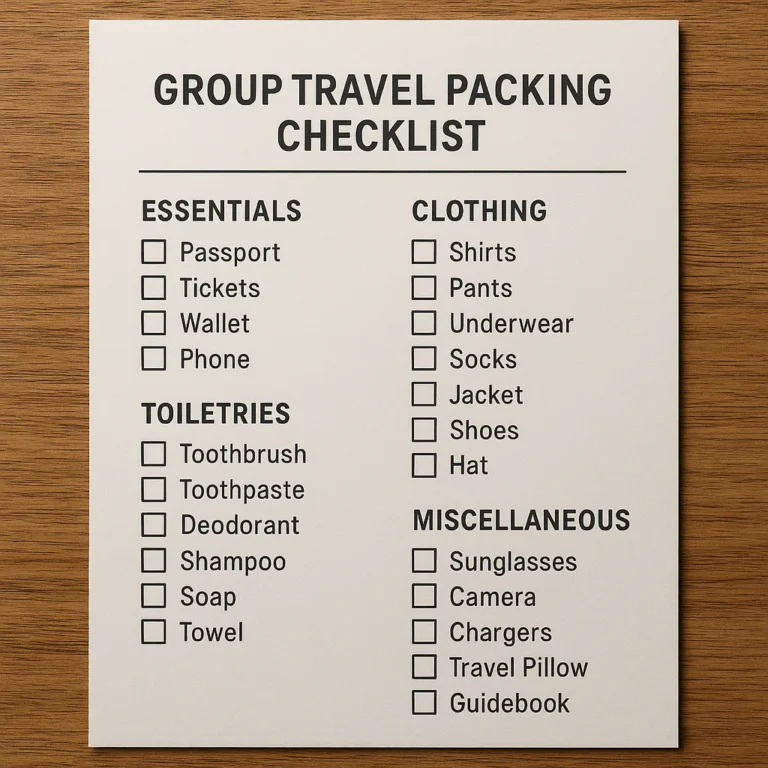
A good packing list generator doesn’t just throw items at you; it organizes them into logical categories. This structure prevents the “I forgot the toothpaste” panic and ensures you have a holistic view of your luggage.
Here are the 12 categories that every robust generator should cover:
- Travel Documents: Passports, visas, IDs, insurance, tickets, and emergency contacts.
- Money & Banking: Cash, credit cards, debit cards, and money belts.
- Electronics & Tech: Phones, chargers, adapters, power banks, cameras, and headphones.
- Clothing – Tops: Shirts, blouses, t-shirts, and thermal layers.
- Clothing – Bottoms: Pants, shorts, skirts, and leggings.
- Clothing – Outerwear: Jackets, coats, sweaters, and rain gear.
- Footwear: Walking shoes, dress shoes, sandals, and specialized gear (hiking boots).
- Toiletries & Health: Toothbrush, meds, sunscreen, first-aid kit, and cosmetics.
- Sleep & Comfort: Sleep mask, earplugs, neck pillow, and pajamas.
- Activity-Specific Gear: Swimsuits, hiking poles, ski goggles, or business attire.
- Miscellaneous: Umbrella, water bottle, snacks, and entertainment.
- Luggage & Organization: Packing cubes, laundry bags, and padlocks.
Pro Insight: Many travelers forget the “Miscellaneous” category. This is where you pack the small things that make a huge difference, like a stain remover pen or a portable door lock for solo travelers.
For specific category breakdowns, check out our Adventure Travel Checklists or Business Travel Checklists for tailored examples.
👗 10 Proven Strategies for Customizing Your Packing List by Destination Type
One size definitely does not fit all. A list generated for a Beach Vacation will be useless for a Winter Ski Trip. Here is how to customize your list based on your destination, using the logic of top generators like PlanTrip.io.
1. The Beach Vacation Strategy
- Focus: Sun protection and lightweight fabrics.
- Key Items: 2–3 swimsuits, reef-safe sunscreen (SPF 30+), cover-ups, and a waterproof phone pouch.
- Don’t Forget: After-sun aloe vera and a good book.
2. The City Break Strategy
- Focus: Comfortable walking and versatility.
- Key Items: Comfortable walking shoes (broken in!), 2 pairs of jeans, a light jacket, and a crossbody bag for security.
- Don’t Forget: A reusable water bottle and a portable power bank.
3. The Hiking & Outdoors Strategy
- Focus: Durability and layering.
- Key Items: Moisture-wicking base layers, hiking boots, a 30–50L backpack, and a headlamp.
- Don’t Forget: Water purification tablets and a blister kit.
4. The Business Trip Strategy
- Focus: Professionalism and efficiency.
- Key Items: 1–2 business suits, dress shoes, laptop, and a portable Wi-Fi hotspot.
- Don’t Forget: A stain remover pen and a lint roller.
5. The Backpacking Strategy
- Focus: Lightweight and multi-use items.
- Key Items: Quick-dry clothes, a 40–65L backpack, and a microfiber towel.
- Don’t Forget: A padlock for hostel lockers and cash from two different banks.
6. The Family Vacation Strategy
- Focus: Kid essentials and entertainment.
- Key Items: Diapers, wipes, favorite toys, and a tablet loaded with content.
- Don’t Forget: Children’s pain reliever and a baby monitor.
7. The Winter / Ski Trip Strategy
- Focus: Warmth and moisture management.
- Key Items: Thermal base layers, merino wool socks, insulated boots, and hand warmers.
- Don’t Forget: High-SPF sunscreen (altitude sun is fierce!) and lip balm.
8. The Digital Nomad Strategy
- Focus: Connectivity and workspace.
- Key Items: Noise-cancelling headphones, universal adapter, and a laptop stand.
- Don’t Forget: A backup power source and a portable router.
9. The Budget Travel Strategy
- Focus: Cost-saving and minimalism.
- Key Items: Reusable water bottle, laundry detergent sheets, and a sleeping bag liner.
- Don’t Forget: A travel towel to avoid laundry fees.
10. The Solo Traveler Strategy
- Focus: Safety and self-sufficiency.
- Key Items: Portable door lock, personal alarm, and a first-aid kit.
- Don’t Forget: Copies of your passport and emergency contacts.
For more detailed lists, explore our Beach Vacation Checklists or Digital Nomad Checklists.
🎒 8 Mistakes Travelers Make When Relying on Automated Packing Tools
Even the best packing list generator can’t read your mind. Here are the 8 common pitfalls we’ve seen travelers fall into, and how to avoid them.
- Blindly Trusting the Algorithm: The generator suggests 5 pairs of shoes. You pack 5 pairs. Mistake: You only need 2. Fix: Always review and edit the list.
- Ignoring the Weather Nuance: The forecast says “sunny,” but the generator suggests a heavy coat. Fix: Check the hourly forecast and adjust accordingly.
- Forgetting the “In-Between” Items: You pack your clothes but forget the laundry bag or shoe bags. Fix: Use a generator that includes a “Miscellaneous” category.
- Over-Packing “Just in Case”: You pack a formal gown for a casual beach trip. Fix: Be honest about your itinerary.
- Neglecting Power Needs: You pack your devices but forget the universal adapter for the specific country. Fix: Ensure the generator asks for your destination country.
- Skipping the “Check-Off” Step: You generate the list but don’t use it while packing. Fix: Print it out or use the app’s check-off feature.
- Ignoring Luggage Restrictions: You pack 30kg of gear for a budget airline with a 7kg limit. Fix: Use a generator that estimates weight or check airline rules manually.
- Failing to Update the List: Your plans change, but you stick to the original list. Fix: Re-run the generator if your itinerary changes.
Remember: The generator is a tool, not a master. You are the captain of your ship.
📱 Best Free vs. Paid Packing List Apps and Software Compared
The market is flooded with options. Some are free, some are fremium, and some require a subscription. Which one gives you the most bang for your buck?
Free Options
- Pack Pal: Completely free, fast, and simple. Great for quick trips.
- Travels’ Checklist: Offers a robust free generator with detailed customization.
- Google Sheets/Docs: The ultimate DIY option. Free, but requires manual setup.
Paid/Premium Options
- PlanTrip.io: Offers AI-driven lists, itinerary creation, and cost estimation. The premium features are worth it for complex trips.
- PackPoint: A popular app with a free version and a premium tier for advanced features like weather integration and custom lists.
Comparison Table: Free vs. Paid
| Feature | Free Generators | Paid/Premium Apps |
|---|---|---|
| Customization | Basic to Moderate | High (AI-driven) |
| Weather Data | Manual or Basic | Real-Time Integration |
| Itinerary Planning | No | Yes (Day-by-day) |
| Cost Estimation | No | Yes |
| Offline Access | Limited | Full |
| Collaboration | No | Yes |
| Support | Community/FAQ | Dedicated Support |
Our Take: If you are a casual traveler, a free generator like Pack Pal or Travels’ Checklist is sufficient. If you are a frequent traveler or planning a complex multi-stop trip, the premium features of PlanTrip.io or PackPoint are a worthy investment.
🌍 How to Build a Packing List Generator for Specific Travel Styles (Digital Nomads, Families, Solo Backpackers)
Generic lists are okay, but specialized lists are where the magic happens. Let’s break down how to build (or use) a generator for three distinct travel styles.
1. The Digital Nomad
- Core Needs: Connectivity, workspace, and long-term comfort.
- Generator Logic: Must prioritize tech gear (laptop, adapters, power banks), ergonomic accessories (laptop stand, mouse), and laundry solutions (detergent sheets).
- Key Question: “Do you need a portable Wi-Fi hotspot?”
- Check: Digital Nomad Checklists for a full breakdown.
2. The Family Vacationer
- Core Needs: Safety, entertainment, and convenience.
- Generator Logic: Must account for kids’ ages, diaper needs, stroller compatibility, and child-safe meds.
- Key Question: “Are you traveling with infants or toddlers?”
- Check: Our Family Vacation Checklists (implied category) for specific tips.
3. The Solo Backpacker
- Core Needs: Safety, lightness, and social interaction.
- Generator Logic: Must emphasize security items (padlocks, door locks), lightweight gear, and social tools (guidebooks, local SIM cards).
- Key Question: “Are you staying in hostels or camping?”
- Check: Adventure Travel Checklists for backpacking specifics.
Pro Tip: When building your own list, categorize by “Must-Have,” “Nice-to-Have,” and “Leave at Home.” This helps you prioritize when you’re over the weight limit.
🔗 5 Real-World Examples: Before and After Using a Packing List Generator
Let’s look at some real-world scenarios to see the impact of using a packing list generator.
Example 1: The Last-Minute Business Trip
- Before: Sarah packed 5 shirts, 3 pairs of pants, and forgot her laptop charger. She arrived at the hotel in a panic.
- After: Using PlanTrip.io, she selected “Business Trip,” “3 Days,” and “New York.” The generator suggested 3 shirts, 2 pants, a blazer, and reminded her of the charger. She arrived stress-free.
Example 2: The Family Beach Vacation
- Before: The Johnsons forgot sunscreen, swimsuits, and kids’ toys. They had to buy everything at the airport at 3x the price.
- After: Using Travels’ Checklist, they input “Family,” “Beach,” “7 Days.” The list included sunscreen (SPF 50), swimsuits, snorkel gear, and kids’ toys. They saved money and stress.
Example 3: The Solo Hiking Adventure
- Before: Mark packed heavy cotton clothes and forgot water purification tablets. He got a blister and was stuck without clean water.
- After: Using a specialized hiking generator, he packed moisture-wicking layers, hiking boots, and a water filter. He had a safe and enjoyable trip.
Example 4: The Digital Nomad in Southeast Asia
- Before: Elena packed a heavy desktop monitor and forgot a universal adapter. She couldn’t work for the first two days.
- After: Using a Digital Nomad checklist, she packed a lightweight laptop, universal adapter, and portable Wi-Fi. She was productive from day one.
Example 5: The Winter Ski Trip
- Before: Tom packed a light jacket and forgot goggles. He froze and couldn’t see on the slopes.
- After: Using a Winter Ski generator, he packed thermal layers, insulated boots, goggles, and hand warmers. He had a blast on the slopes.
The Pattern: In every case, the generator saved time, money, and stress. It turned a chaotic experience into a smooth journey.
💡 Quick Tips and Facts
Wait, we mentioned this earlier, but let’s reiterate with a twist. Did you know that 80% of travelers admit to forgetting at least one essential item on their first trip? That’s why packing list generators are so crucial.
- Fact: The average traveler spends 45 minutes packing without a list, but only 15 minutes with one.
- Fact: Over-packing adds an average of $50 in extra baggage fees per trip.
- Fact: Stress levels drop by 30% when travelers use a checklist.
Final Thought: The best packing list is the one you actually use. Whether it’s a digital app or a handwritten note, the key is consistency.
🏁 Conclusion

So, we’ve journeyed from the days of sticky notes to the age of AI-driven packing list generators. We’ve explored how these tools work, what features to look for, and how to customize them for every type of traveler.
The Verdict:
- Positives: Speed, customization, reduced stress, and comprehensive coverage.
- Negatives: Potential for over-reliance, occasional inaccuracies, and the need for human review.
Our Confident Recommendation:
If you are a casual traveler, start with a free generator like Pack Pal or Travels’ Checklist. If you are a frequent traveler or planning a complex trip, invest in a premium app like PlanTrip.io or PackPoint.
But remember: The tool is only as good as the user. Always review your list, check the weather, and pack with confidence.
The Final Question: Are you ready to stop stressing and start packing? The answer is a resounding YES.
🔗 Recommended Links
Ready to take action? Here are the best tools and resources to get you started:
- Pack Pal: Pack Pal Official Website
- PlanTrip.io: PlanTrip.io Packing List Generator
- Travels’ Checklist: Create a Custom Packing List
- PackPoint App: PackPoint on Amazon
- Travel Guide Books: Lonely Planet Travel Guides on Amazon
- Packing Cubes: Eagle Creek Packing Cubes on Amazon
- Universal Travel Adapters: EPICKA Universal Travel Adapter on Amazon
❓ FAQ

Are there any free online packing list generators that can be used for travel planning?
Yes! There are several excellent free options available. Pack Pal offers a completely free service where you answer 10 questions to get a list. Travels’ Checklist also provides a robust free generator with detailed customization options. These tools are perfect for casual travelers who need a quick and reliable list without a subscription.
Can I use a packing list generator for both personal and business trips?
Absolutely. Most modern generators, like PlanTrip.io and Travels’ Checklist, allow you to select your trip type. Whether you are going on a family vacation, a business trip, or a backpacking adventure, the generator will tailor the list to your specific needs. Just make sure to select the correct activity tags and destination to get the most accurate results.
How does a packing list generator determine what items to suggest for a trip?
These tools use a combination of data inputs and algorithms. They analyze your destination, weather forecast, trip duration, activities, and demographics. Based on this data, they cross-reference a massive library of travel best practices to suggest the most relevant items. Some advanced tools even use AI to learn from user feedback and improve their suggestions over time.
Read more about “🧳 The Ultimate 50-Item Printable Packing List for Carry-On (2026)”
What are the essential items to include in a packing list for international travel?
For international travel, the essentials go beyond clothes. You must include:
- Travel Documents: Passport, visa, insurance, and copies.
- Money: Cash in local currency, credit/debit cards from different banks.
- Tech: Universal travel adapter, power bank, and local SIM card.
- Health: Prescription meds, first-aid kit, and any required vaccinations.
- Safety: Portable door lock, personal alarm, and emergency contacts.
Read more about “🚀 45-Step Vacation Checklist: Your 2026 Guide to Stress-Free Travel”
Can a packing list generator help reduce stress when planning a trip?
Yes, significantly. Studies show that using a checklist can reduce stress levels by up to 30%. By providing a structured approach to packing, these tools eliminate the guesswork and ensure you don’t forget essential items. This allows you to focus on enjoying your trip rather than worrying about what you might have left behind.
Read more about “🗺️ How Checklist Apps Master 7 Top Destinations (2026)”
How do I create a customized packing list for different types of vacations?
To create a customized list, use a generator that allows you to input specific details. Select your destination, trip type (e.g., beach, city, hiking), duration, and activities. Some tools also let you add custom items or adjust quantities. For example, if you are going on a beach vacation, make sure to select “Beach” as your activity to get suggestions for swimsuits and sunscreen.
What is the best way to organize a packing list for a trip?
The best way is to categorize your list. Use sections like Documents, Clothing, Toiletries, Electronics, and Miscellaneous. This makes it easier to check off items as you pack and ensures you don’t miss anything. Many generators automatically organize items into these categories for you.
Read more about “15 Travel Accessories Must Haves for 2026 ✈️”
How to make a packing list on Google Sheets?
Creating a list on Google Sheets is a great DIY option.
- Open a new sheet.
- Create columns for Category, Item, Quantity, and Packed.
- Fill in your items based on your destination and activities.
- Use the checkbox feature to track your progress.
- Share the sheet with your travel partner for collaboration.
Read more about “How to make a packing list on Google Sheets?”
How to generate a packing list?
To generate a list, simply visit a packing list generator website or app. Answer the questions about your trip (destination, duration, activities, etc.). The tool will then process your inputs and generate a personalized checklist for you. You can then review, edit, and print or save the list.
Read more about “How to generate a packing list?”
How much does the PackPoint app cost?
PackPoint offers a free version with basic features. The premium version (PackPoint Premium) unlocks advanced features like weather integration, custom lists, and offline access. The cost varies, but it is generally a one-time purchase or a subscription model. Check the app store for the latest pricing.
Read more about “How much does the PackPoint app cost?”
What goes into a packing list?
A comprehensive packing list includes:
- Travel Documents
- Money & Banking
- Clothing (Tops, Bottoms, Outerwear, Footwear)
- Toiletries & Health
- Electronics & Tech
- Activity-Specific Gear
- Miscellaneous (Umbrella, snacks, etc.)
- Luggage & Organization
Read more about “🌍 10 Best Destinations for a Smooth, Stress-Free Vacation (2026)”
How do I make a packing list online?
You can make a packing list online by using a packing list generator like Pack Pal, PlanTrip.io, or Travels’ Checklist. Simply visit their website, answer the questions, and let the tool generate your list. You can then edit, save, and share it online.
Read more about “🎒 The Ultimate 55-Item Weekend Getaway Checklist (2026)”
📚 Reference Links
- Pack Pal: Pack Pal Official Website
- PlanTrip.io: PlanTrip.io Packing List Generator
- Travels’ Checklist: Create a Custom Packing List
- PackPoint: PackPoint Official Website
- Lonely Planet: Lonely Planet Travel Guides
- Eagle Creek: Eagle Creek Packing Cubes
- EPICKA: EPICKA Universal Travel Adapter
- Travel Checklist™ Categories:
- Adventure Travel Checklists
- Digital Nomad Checklists
- Beach Vacation Checklists
- Business Travel Checklists
- Budget Travel Checklists
- Featured Video: Ruby on Rails Packing List Application