Support our educational content for free when you purchase through links on our site. Learn more
13 Travel Checklist Mistakes That Can Derail Your Trip 🧳

The most common mistakes people make when creating a travel checklist are starting too late, relying on a generic packing list, and forgetting to tailor it to their destination, activities, and real needs. A useful checklist covers more than what goes in your suitcase: it also tracks documents, medication, bookings, and the tasks that make home ready for your return.
We once packed everything for a short trip except the prescription glasses sitting beside the bed. The suitcase was impressively prepared; the restaurant menus were not. Now we include a quick check of everyday essentials and keep important items in our carry-on, alongside a final review of airline rules and official destination requirements.
Key Takeaways
- Start early: Handle documents, entry requirements, medication, and other time-sensitive tasks well before departure.
- Customize every list: Match your packing checklist to the destination, weather, activities, travelers, and accommodation.
- Keep essentials accessible: Put travel documents, medication, valuables, and necessary electronics in your personal item.
- Avoid overpacking and overcomplicating: Use clear categories, practical priorities, and a realistic plan for “just in case” items.
- Treat the checklist as a process: Review it before departure, assign shared tasks, and update reusable lists after each trip.
Table of Contents
- ⚡️ Quick Tips and Facts
- 🧭 Why a Travel Checklist Matters
- 🧳 How Travel Checklists Have Changed
- ❌ Common Travel Checklist Mistakes to Avoid
- 1. Starting Too Late
- 2. Copying a Generic Packing List Without Customizing It
- 3. Forgeting the Destination, Season, and Weather
- 4. Packing for “What If” Scenarios
- 5. Listing Items Without Checking What You Already Own
- 6. Ignoring Baggage Limits and Carry-On Rules
- 7. Forgeting Travel Documents and Entry Requirements
- 8. Overlooking Medication, Health, and Accessibility Needs
- 9. Packing Valuables and Essentials in Checked Luggage
- 10. Forgeting Chargers, Adapters, and Offline Access
- 11. Making a Checklist That’s Too Complicated
- 12. Failing to Assign Tasks When Traveling With Others
- 13. Treating the Checklist as Finished Once You Pack
- 📝 What to Include in a Complete Travel Checklist
- Travel Documents and Important Information
- Clothing, Shoes, and Toiletries
- Health, Safety, and Emergency Essentials
- Electronics, Connectivity, and Entertainment
- Home, Pet, and Pre-Departure Tasks
- 🌦️ Tailor Your Checklist to the Trip
- International Trips and Long-Haul Flights
- Family Travel and Trips With Children
- Business Travel and Work Essentials
- Road Trips, Camping, and Outdoor Adventures
- Accessible Travel and Special Requirements
- ✅ A Simple System for Building a Better Travel Checklist
- Choose a Format: App, Spreadsheet, or Printable List
- Sort Tasks by When They Need to Happen
- Use Categories, Checkboxes, and Clear Labels
- Review, Reuse, and Update Your Master List
- 🔎 Last-Minute Checklist Review Before You Leave
- Conclusion
- Recommended Links
- FAQ
- What should every travel checklist include?
- When should I start making a travel checklist?
- How do I avoid overpacking?
- Should I use a travel checklist app or a printable list?
- How can I make a checklist for an international trip?
- How often should I update my travel checklist?
- Reference Links
⚡️ Quick Tips and Facts
- Build your checklist around the trip, not a generic packing template. A beach weekend, an overseas work trip, and a campervan adventure have very different needs.
- Use separate lists for separate jobs: packing, documents, health, home prep, and departure checks. A single mega-list can bury the one item you really needed.
- Start early, then revisit the list. Check entry rules, airline baggage requirements, and the weather close to departure; these details can change.
- Put essentials where you can reach them. Keep your passport, medication, phone, and key travel documents in your personal item, not in checked luggage.
- A checklist is a memory aid, not a substitute for action. Give time-sensitive tasks a date or reminder, then mark them complete.
- Add the often-forgoten basics—chargers, prescriptions, glasses, and travel documents—with our guide to items people often forget on a travel checklist.
- Use a checklist app if it suits your habits. Travel Checklist™ helps organize trip tasks and packing lists; paper works just as well if you prefer to see and tick off each item by hand. The best system is the one you will actually use. 📝
- For outdoor trips, use a trip-specific list from our Adventure Travel Checklists or Backpacking Checklists.
| Quick fact | Why it matters |
|---|---|
| Airline cabin-bag rules vary | Check your airline’s current carry-on baggage rules before packing restricted items. |
| Travel documents have different requirements by destination | Verify passport and entry information with official sources such as the U.S. State Department’s country information. |
| Medicines may be regulated differently abroad | Check destination-specific rules and carry prescriptions in their original packaging; see the CDC’s advice for traveling with medication. |
| Forecasts are useful, but not infallible | Recheck local weather before departure and pack for the activities you have planned—not every imaginable scenario. |
🧭 Why a Travel Checklist Matters
A good travel checklist does more than remind you to pack socks. It helps you manage packing, documents, bookings, health needs, and the last-minute jobs at home without relying on a tired brain to remember everything at once.
We learned this the hard way on a short trip when our carefully packed bags sailed through the door while a pair of prescription glasses stayed behind on the bedside table. The clothes were fine. The itinerary was fine. Reading the restaurant menu? Less fine. A checklist would not have made the glasses teleport into the suitcase, but it would have prompted us to check off “everyday essentials” before leaving.
That is the point: a checklist turns recurring tasks into visible steps. It is especially useful when you have several people, multiple bags, special equipment, or travel arrangements to coordinate. The CDC’s travel planning guidance also recommends considering health needs and destination risks as part of trip preparation—not as an afterthought at the airport.
A checklist reduces memory load, not every kind of travel stress
Checklists are helpful for tasks that are easy to forget and simple to verify:
- Passport packed and valid
- Medication in your carry-on
- Flight check-in completed
- Pet care arranged
- Stove and windows checked before departure
They are less helpful when the list becomes so long that it is difficult to scan. A 200-item list that treats a passport and a spare tote bag as equally urgent is technically comprehensive—and practically exhausting.
Keep high-consequence tasks visible. Passport validity, entry requirements, essential medication, and transport arrangements deserve their own category or a clear priority label.
One giant list can become its own mistake
In a camping-focused account, Jenn Grover’s list-of-lists approach emphasizes separate lists for food, camper and vehicle equipment, activities, personal gear, and pets. That makes sense: a list for a tow vehicle has little reason to share space with a list for refrigerated groceries.
The lesson is not that everyone needs dozens of lists. It is that categories should match the way you travel. A city-break traveler might need “documents,” “carry-on,” and “home before leaving.” A camper might need all of those plus vehicle checks, food storage, and campsite equipment.
🧳 How Travel Checklists Have Changed
The old checklist lived on paper beside the front door. Today it may live in an app, a shared note, a spreadsheet, or a printed page tucked into a passport holder. The format has changed; the job has not: help people remember, coordinate, and act.
A digital list can be easy to update and share. Paper has the advantage of being visible without a charged phone or a stable signal. Some travelers use both: an app for planning and a printed essentials list as backup. There is no universal winner, despite what the people trying to sell you a “perfect productivity system” might say.
What a modern checklist should do
| Checklist feature | Benefit | Watch-out |
|---|---|---|
| Reusable templates | Saves time for repeat trips | Review each copy; last trip’s weather and plans may not apply |
| Categories | Makes lists easier to scan | Too many categories can create extra admin |
| Reminders and due dates | Helps surface time-sensitive tasks | A notification you routinely dismiss is decorative |
| Shared access | Lets travel companions divide tasks | Confirm who owns each task to avoid “I thought you packed it” |
| Offline access or printed backup | Keeps essential information available without service | Keep sensitive personal details protected |
A general task-management lesson applies here: Restoring Order’s guide to task management warns that reminders can get scattered or hidden, and that a to-do list only helps when people act on it. Their phrase, “A To Do list is only as good as your discipline to take action!” is especially apt when your “book airport transfer” task has been sitting untouched for three weeks.
Use technology as a helper, not as the only safety net
A phone can hold boarding passes, maps, and confirmations. It can also run out of battery, break, or lose service. Keep copies of essential travel information in a secure, accessible backup. For international travel, check the U.S. State Department’s travel document guidance and the appropriate official authority for your citizenship and destination.
❌ Common Travel Checklist Mistakes to Avoid
A travel checklist is supposed to make preparation calmer. These mistakes can turn it into a cluttered document you ignore—or a list that confidently helps you pack the wrong things. Here are the pitfalls we see most often.
1. Starting Too Late
Leaving the entire list until the night before means there may be no time to replace an expired passport, refill a prescription, arrange a pet sitter, or apply for a required travel document.
Start when you book the trip, even if the first version is rough. Add long-lead tasks first:
- Check passport validity and entry requirements.
- Confirm visas or other required documents.
- Review health recommendations and medication rules.
- Arrange pet, plant, or home care.
- Check whether you need a travel adapter or specialist equipment.
The CDC recommends planning ahead for travel health needs, and the U.S. State Department’s passport and international travel planning page is a useful starting point for U.S. travelers. Requirements depend on your nationality and destination, so verify them with official sources rather than an old forum post.
2. Copying a Generic Packing List Without Customizing It
A generic list is a starting point, not a travel oracle. It may recommend winter layers for a humid island, omit a required work uniform, or assume you are staying somewhere with laundry.
Before adopting a template, ask:
- What will we actually do?
- What will the accommodation provide?
- Can we buy or borrow nonessential items at the destination?
- Are there cultural, dress, health, or accessibility considerations?
- Who is responsible for each shared item?
If you are heading out with a camper or trailer, the vehicle-specific lists in Jenn Grover’s packing-list approach are a useful counterpoint to the one-size-fits-all template. A list that separates vehicle gear from personal supplies is easier to adapt than one enormous inventory.
3. Forgeting the Destination, Season, and Weather
“Pack for the season” sounds obvious until the forecast shifts, your itinerary crosses climates, or your trip includes both air-conditioned museums and a cold evening outdoors.
Check the forecast about a week out, then review it again shortly before leaving. Pack for the forecast and planned activities, with a modest contingency—not for every possible weather event. The National Weather Service provides official forecasts for the United States; use the relevant national meteorological service elsewhere.
A helpful rule: for each activity, choose clothing that can work in more than one outfit. That lightweight layer may earn its place; four “just in case” jackets probably will not.
4. Packing for “What If” Scenarios
We once packed enough “backup” clothes for a three-day trip to outfit a small theater production. The bag was heavy; the itinerary was not dramatic enough to justify it.
To reduce overpacking:
- List the planned activities.
- Match clothing and equipment to those activities.
- Choose items that can be reused or layered.
- Remove items that solve the same problem.
- Leave room for a realistic contingency, such as one extra layer or a change of clothes.
The first video’s planning advice, linked at #featured-video, recommends laying out what you think you need and trying to cut it down. Treat that as a useful editing exercise, not a literal rule to halve every packing list. A traveler with medical equipment or specialized outdoor gear should not cut essential items simply to hit a packing target.
For lighter packing inspiration, explore our Budget Travel Checklists and Backpacking Checklists.
5. Listing Items Without Checking What You Already Own
A checklist can reveal what to pack; it cannot tell you whether the travel adapter is still in the drawer where you last left it. Add a gather and verify step before packing:
- Collect the items in one place.
- Test chargers and batteries.
- Check the condition of shoes, bags, and rain gear.
- Confirm medication quantities and expiry dates.
- Refill toiletries you have nearly used up.
This small rehearsal catches the difference between “on the list” and “ready to go.”
6. Ignoring Baggage Limits and Carry-On Rules
Airlines do not all use identical baggage policies. Cabin-bag dimensions, weight limits, and rules for restricted items vary by carrier, route, and ticket type. Check your airline’s current information before you pack, and consult the IATA passenger guidance for safety rules around items such as batteries and dangerous goods.
Create two list categories:
- Carry-on/personal item: documents, valuables, essential medication, electronics, and a change of clothes when appropriate.
- Checked baggage: permitted clothing and nonessential items you can manage without during transit.
Never assume a container or item is allowed because it was accepted on a different airline or trip. Check the rules that apply to your itinerary.
7. Forgeting Travel Documents and Entry Requirements
“Passport packed” is not the same as “passport valid for this trip.” Travelers should check document validity, visa requirements, transit rules, and any destination-specific entry requirements well in advance.
Use official sources:
- U.S. travelers can begin with the State Department’s country information pages.
- Check the relevant government immigration or border authority for your destination.
- Confirm airline document requirements for your route.
Keep digital copies as a backup, but do not rely solely on a phone screenshot. Store them securely and keep the original documents accessible.
8. Overlooking Medication, Health, and Accessibility Needs
A checklist should cover more than sunscreen and plasters. Consider prescription medication, glasses or contact lenses, mobility aids, medical devices, allergy needs, and destination-specific health advice.
The CDC advises travelers to plan for medicines abroad. Regulations can differ between countries, so check the rules for every destination and transit stop. Keep essential medication in your carry-on when permitted, and bring the prescription or supporting documentation recommended by your clinician and destination authorities.
For accessibility, list the practical details that make the trip workable:
- Mobility equipment and charging accessories
- Accommodation or transport arrangements
- Medical documentation or emergency contacts
- Extra time for transfers or boarding
- A backup plan for equipment problems
Ask the airline, hotel, or tour provider directly about your specific requirements. A generic packing template cannot confirm that a step-free route or suitable room is actually booked.
9. Packing Valuables and Essentials in Checked Luggage
Checked bags can be delayed or misplaced. Keep the items you cannot easily replace—or cannot safely go without—in your personal item, subject to security and airline rules:
- Passport and travel documents
- Essential medication and medical equipment
- Wallet, keys, and valuable items
- Phone and necessary charging gear
- A small set of essentials for an overnight delay
The U.S. Transportation Security Administration’s What Can I Bring tool helps U.S. travelers check security rules. Other countries have their own security authorities, so verify requirements where you depart.
10. Forgeting Chargers, Adapters, and Offline Access
“Phone” and “charger” should be separate checklist items. So should the charging cable, power adapter, and any region-specific plug adapter. Test the combination before departure; a cable that charges only when bent at a suspicious angle is not a reliable travel companion.
Download what you may need offline:
- Boarding passes, where your airline supports them
- Hotel and transport confirmations
- Maps or directions
- Translation or travel apps
- Emergency contact information
Check device compatibility and battery rules before flying. The IATA guidance for passengers covers baggage and dangerous-goods considerations, including batteries.
11. Making a Checklist That’s Too Complicated
A checklist should make tasks easier to see, not make the planning itself feel like a second job. If every item requires a paragraph, or if your list has more nested categories than your suitcase has pockets, simplify.
Try these edits:
- Use short, action-based items: “Confirm airport transfer,” not “Think about transport.”
- Group similar items, but keep urgent tasks visible.
- Remove items that do not apply to this trip.
- Separate “pack” from “do before leaving.”
- Use a priority label for essentials and deadlines.
For more ideas on keeping recurring tasks manageable, see Restoring Order’s favorite task-management methods. Their point about matching a system to your habits is practical: a beautifully organized app is not useful if you never open it.
12. Failing to Assign Tasks When Traveling With Others
Shared trips create a classic packing mystery: everyone assumed someone else brought the sunscreen.
For shared essentials, assign one owner:
| Shared item or task | Assigned to | Confirmed |
|---|---|---|
| Travel documents or booking details | Named traveler | ☐ |
| First-aid supplies | Named traveler | ☐ |
| Child or pet supplies | Named traveler | ☐ |
| Airport or station transfer | Named traveler | ☐ |
| Shared chargers or adapters | Named traveler | ☐ |
For families, give each person a small personal checklist as well. Children can help check off simple items, while an adult handles documents, medication, and safety-critical tasks.
13. Treating the Checklist as Finished Once You Pack
Packing is only one stage. A useful travel checklist also includes the work that happens before and on departure day:
- Check in for flights or confirm transport
- Download tickets and confirmations
- Arrange home, plant, or pet care
- Clear perishables and take out rubbish
- Secure doors and windows
- Confirm that essential items are in the correct bag
Jenn Grover’s list-of-lists article distinguishes packing from home preparation and vehicle checks. That distinction matters: a packed suitcase does not confirm the house is ready, or that a trailer is safe tow.
For road trips and camping, follow the manufacturer’s instructions and applicable safety guidance for your vehicle and equipment. A packing checklist is not a substitute for proper tire, hitch, or vehicle checks.
📝 What to Include in a Complete Travel Checklist
A complete list is not a list with the most items. It is a list that covers the real requirements of your trip without burying them. Use these categories as a menu, then remove anything irrelevant.
Travel Documents and Important Information
- Passport or other accepted identification
- Visa or entry documents, if required
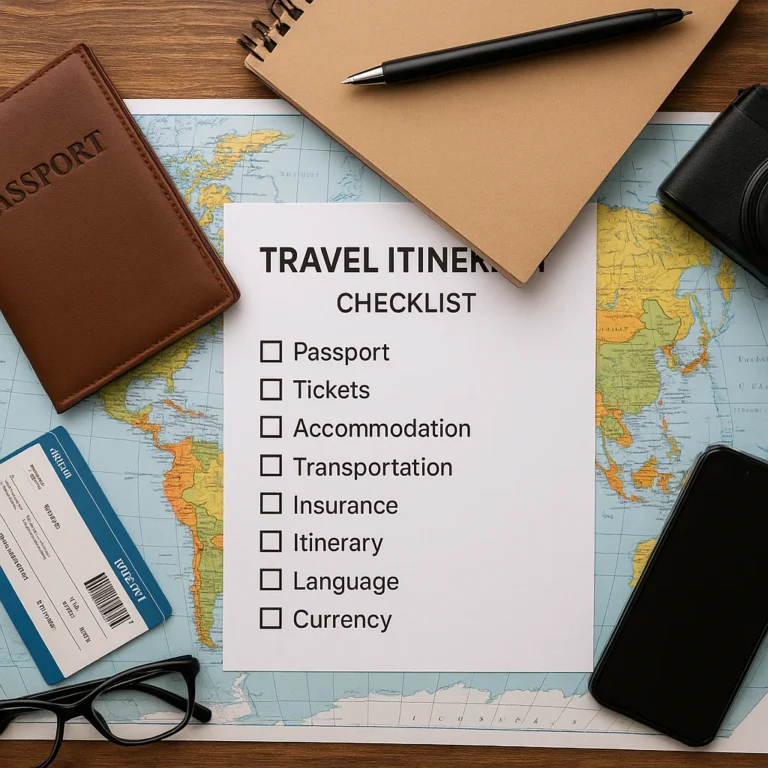
- Tickets, booking confirmations, and itinerary
- Travel insurance details and emergency contacts
- Driver’s license and vehicle documents, if needed
- Copies or secure backups of important documents
- Payment cards and a backup payment method
For international journeys, verify requirements with official government sources. U.S. travelers can consult the State Department’s international travel information; travelers of other nationalities should check their own government’s advice.
Clothing, Shoes, and Toiletries
- Clothing matched to weather and planned activities
- Comfortable walking shoes and activity-specific footwear
- Sleepwear and underwear
- Weather protection, such as a rain layer or sun hat
- Toiletries and personal-care products
- Laundry supplies if the trip or accommodation calls for them
For a beach holiday, our Beach Vacation Checklists can help you think beyond swimsuits. For hiking or other outdoor trips, use the more targeted Adventure Travel Checklists.
Health, Safety, and Emergency Essentials
- Prescription medication and any required documentation
- Glasses, contact lenses, hearing aids, or medical devices
- Basic first-aid supplies appropriate to the trip
- Allergy or dietary essentials
- Emergency contact information
- Travel insurance information, if purchased
- Sun and insect protection appropriate to the destination
The CDC’s travel health resources are a reliable starting point for destination health information. Consult a qualified health professional for personal medical advice.
Electronics, Connectivity, and Entertainment
- Phone, charger, and cables
- Plug adapter or compatible power accessory, if needed
- Headphones
- Camera and accessories, if relevant
- Power bank, subject to airline rules
- Offline maps, tickets, and reading material
Do not add gadgets just because they are easy to list. Ask whether each one supports a specific trip need. A camera without its battery charger is a hobby in the form of a paperweight.
Home, Pet, and Pre-Departure Tasks
Home checklist:
- Arrange mail, deliveries, and plant care
- Set heating or cooling appropriately
- Secure doors and windows
- Turn off or unplug appliances where safe and appropriate
- Dispose of perishable food and rubbish
Pet checklist:
- Food, bowls, leash, carrier, and bedding
- Medication and veterinary information
- Care arrangements and emergency contact details
- A familiar toy or comfort item, if appropriate
Separate these tasks from packing so they do not disappear under “socks.” For a camper or tow vehicle, create an additional equipment and departure-check list that follows the manufacturer’s guidance.
🌦️ Tailor Your Checklist to the Trip
The most common checklist error is treating different journeys as identical. A weekend in one city may need only a compact list. A multi-stop trip with children, medical needs, or camping equipment needs more structure.
| Trip type | Add to your checklist | Common trap |
|---|---|---|
| International trip | Entry documents, medication rules, offline copies, plug compatibility | Assuming a passport alone covers entry requirements |
| Family trip | Child-specific clothing, medication, snacks, comfort items, shared-task owners | Packing everyone’s things without assigning responsibility |
| Business trip | Work clothing, chargers, documents, presentation backups | Packing leisure items but forgetting a work-critical accessory |
| Road trip or camping | Vehicle-specific gear, safety checks, food storage, campsite equipment | Mixing personal packing with vehicle readiness |
| Accessible trip | Equipment, confirmed arrangements, extra transfer time, backup contacts | Assuming a general hotel or transport description meets your needs |
International Trips and Long-Haul Flights
Add a document and health review early. Confirm passport validity, visa and transit requirements, local medication rules, and any relevant health advice. Pack critical medication and essential comfort items where you can access them during the journey.
For U.S. travelers, use the State Department’s country information pages and the CDC’s destination-specific travel advice. Always verify current requirements with the relevant authorities.
Family Travel and Trips With Children
Children’s needs change quickly, so build in a short “age and activity check” rather than copying last year’s list.
Consider:
- Clothing, sleep items, and comfort objects
- Snacks and refillable water bottles, subject to security rules
- Medication and health information
- Entertainment for transit and downtime
- A change of clothes in an accessible bag
- Clear ownership for each child’s documents and supplies
Older children can tick off their own personal items. Adults should retain responsibility for travel documents, medication, and transport arrangements.
Business Travel and Work Essentials
Business travel needs a dedicated work section. Check:
- Laptop, charger, and any required adapters
- Work identification and meeting information
- Presentation files stored offline or backed up
- Professional clothing and appropriate footwear
- Headphones or other meeting accessories
- A reliable way to access work accounts securely
Do a short equipment test before leaving. “Laptop packed” is not the same as “presentation opens.”
Road Trips, Camping, and Outdoor Adventures
Outdoor travel benefits from separate personal, food, activity, and vehicle lists. That is one of the most useful ideas in Jenn Grover’s camper checklist approach: the gear you need depends on your rig and how you camp.
Create a list for:
- Vehicle and towing equipment
- Camping shelter and sleeping gear
- Food and food storage
- Hiking, water, or activity equipment
- Pet supplies, if applicable
- Pre-departure vehicle and campsite checks
Use our Adventure Travel Checklists or Backpacking Checklists to build a trip-specific foundation. For outdoor safety, consult the relevant land manager or park authority for current conditions and rules.
Accessible Travel and Special Requirements
Put arrangements—not just equipment—on the list. Note whom you need to contact, what was confirmed, and when to check again.
For example:
- Request or reconfirm assistance with the airline or station.
- Confirm room access and bathroom features directly with the property.
- Check transport options at each connection.
- Pack device chargers, spare parts, and supporting documents.
- Add emergency contacts and a plan for equipment failure.
Specific needs vary, so confirm details with each provider rather than relying on generic descriptions.
✅ A Simple System for Building a Better Travel Checklist
You do not need a productivity makeover. You need a list that fits your trip and your habits. Here is the method we use.
Choose a Format: App, Spreadsheet, or Printable List
| Format | Works well when… | Watch-out |
|---|---|---|
| Checklist app | You want reusable lists, reminders, or shared tasks | Make sure you can access key information when offline |
| Spreadsheet | You want customizable categories or a trip overview | It can become unwieldy on a phone |
| Printed checklist | You like visual, hands-on checking or want a backup | You must update and reprint changed information |
| Shared notes app | Your group already uses one regularly | Tasks can be missed if ownership and deadlines are unclear |
Travel Checklist™ is one option for organizing travel tasks and packing lists. Choose it—or any other system—because it makes your process easier, not because a feature list looks impressive.
Sort Tasks by When They Need to Happen
A checklist becomes more useful when it has a timeline. Use four simple stages:
- When you book: check documents, entry rules, health needs, and any arrangements with long lead times.
- About a week before: review the itinerary, weather, packing needs, and home or pet arrangements.
- Two or three days before: gather and test equipment, confirm transport, and download essential information.
- The day before and day of travel: check in, pack remaining essentials, and complete the home departure check.
The first video’s advice, linked at #featured-video, follows a similar advance-preparation approach. Its useful reminder is to check updated conditions before packing; a forecast from the week you booked is not a reliable substitute for one close to departure.
Use Categories, Checkboxes, and Clear Labels
Use a handful of categories with short, verifiable actions:
- Documents: passport in personal item
- Health: medication packed in carry-on
- Packing: weather layer added
- Bookings: airport transfer confirmed
- Home: rubbish removed and doors secured
Avoid vague tasks such as “get ready.” They are difficult to complete because nobody can tell what “done” means.
Review, Reuse, and Update Your Master List
After each trip, make a quick note:
- What did we forget?
- What did we pack but never use?
- What should be added for this destination or activity?
- Which reminders were useful—and which did we ignore?
- Did everyone understand who owned each task?
Keep a reusable base list, then copy and adapt it for each trip. Do not let the master list become a museum of every item you have ever packed. A list should evolve with your travel habits, not preserve every old mistake in amber.
🔎 Last-Minute Checklist Review Before You Leave
Give yourself a few quiet minutes at the door. The goal is not to repack the whole house; it is to verify the high-consequence items and confirm the home is ready.
The final check
- ☐ Passport or required identification
- ☐ Tickets, itinerary, and essential booking details
- ☐ Wallet, keys, and phone
- ☐ Medication and medical essentials
- ☐ Phone charger and required adapters
- ☐ Carry-on contains valuables and items you may need in transit
- ☐ Check-in and transport arrangements confirmed
- ☐ Home, pet, and plant tasks completed
- ☐ Weather and any last-minute travel advisories checked
For flight security, check the rules from the departure airport’s relevant authority, such as the TSA’s What Can I Bring tool in the United States. For international entry rules, use official government sources.
And what happened to the forgotten glasses from our short trip? We now keep a small “daily essentials” check at the end of the list: glasses, medication, wallet, phone, keys. It is not glamorous. It is, however, far more useful than packing a fourth backup sweater.