Support our educational content for free when you purchase through links on our site. Learn more
Family Travel Checklist with Kids: 10 Essentials 🧳

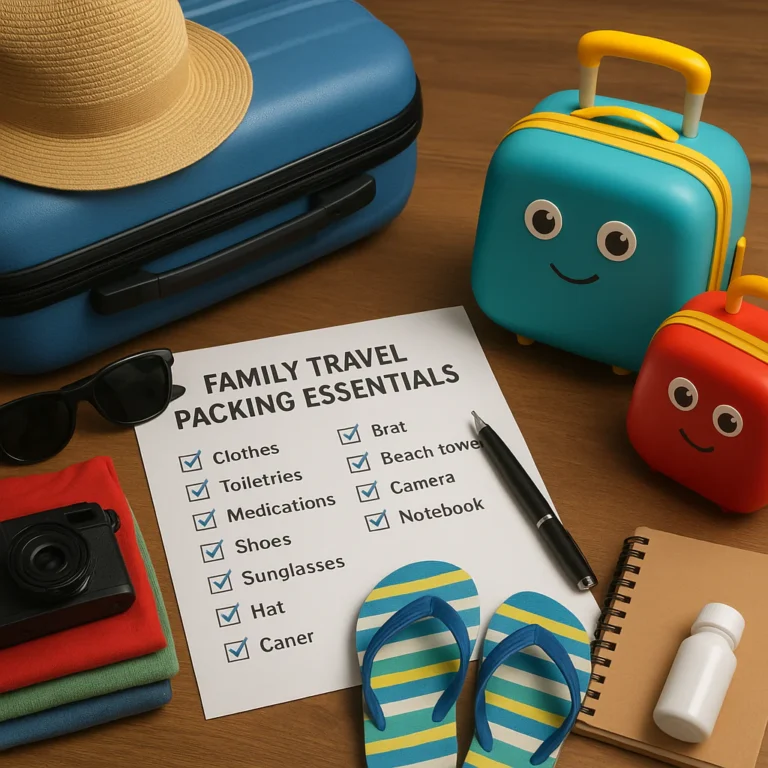
A Family travel checklist with kids works best when it’s tailored to your destination, your children’s ages, and what you can easily get along the way. Start with travel documents, essential medication, weather-ready clothes, and a well-stocked carry-on; then add only the gear your plans actually need.
We’ve learned that the missing item is rarely the fancy gadget. It’s usually the spare shirt buried under everyone’s luggage, the charger left plugged into the hotel wall, or the beloved stuffed animal that has somehow become the trip’s most important passenger. A shared checklist helps your family pack together, avoid duplicates, and leave home with fewer last-minute surprises.
Key Takeaways
- Customize the list to your trip: Consider the weather, itinerary, children’s ages, and laundry access.
- Keep essentials in your carry-on: Pack documents, medication, snacks, and a spare outfit where you can reach them.
- Organize by person and category: Color-coded bags, packing cubes, and a shared checklist can make family packing easier.
- Pack for babies based on their routine: Plan for diapers, feeding, changing, sleep, and any essential equipment.
- Use a checklist as a guide, not a mandate: Borrow, buy, or skip items depending on your destination and needs.
Table of Contents
- ⚡️ Quick Tips and Facts
- 🧳 Why a Family Travel Checklist Makes Trips Easier
- What to Pack Depends on Your Family and Destination
- How to Use This Family Vacation Packing Checklist
- 🗓️ Plan Ahead: Family Travel Prep Before You Pack
- Check Travel Documents, Entry Rules, and Insurance
- Choose Luggage and Organize Each Family Member’s Gear
- Prepare Your Home Before Leaving
- ✅ The Complete Family Travel Checklist with Kids
- 1. Travel Documents and Important Information
- 2. Clothing and Weather-Ready Layers
- 3. Shoes, Socks, and Accessories
- 4. Toiletries and Personal Care
- 5. First-Aid Kit, Medications, and Health Essentials
- 6. Electronics, Chargers, and Travel Tech
- 7. Snacks, Drinks, and Mealtime Supplies
- 8. Entertainment and Screen-Free Activities
- 9. Comfort, Sleep, and In-Transit Essentials
- 10. Laundry, Organization, and Handy Extras
- 👶 Baby Travel Checklist: Packing for Infants and Todlers
- Diapers, Wipes, and Changing Supplies
- Feding, Bottles, and Baby Food
- Stroller, Carrier, Car Seat, and Sleep Gear
- ✈️ What to Pack in a Family Carry-On
- The Kids’ In-Flight and Road-Trip Bag
- Spare Clothes, Snacks, and Emergency Supplies
- 🚗 Family Road Trip Checklist
- Car Safety, Comfort, and Navigation
- Road-Trip Stops, Snacks, and Motion Sickness
- 🌍 Destination-Specific Family Packing Tips
- Beach and Pool Vacation Essentials
- Camping and Outdoor Adventure Gear
- Cold-Weather and Ski Trip Clothing
- International Travel and Long-Haul Flight Tips
- 🎒 Minimalist Family Packing: What You Can Leave at Home
- Pack Light Without Forgeting the Essentials
- What to Borrow, Buy There, or Skip
- 🖨️ Printable Family Vacation Packing Checklist
- Quick Packing Checklist by Family Member
- Last-Minute Doorway Checklist
- Save or Share This Family Travel Checklist
- 💡 Family Packing Tips from Trips We’ve Taken
- Conclusion
- Recommended Links
- FAQ
- What should I pack for a family trip with kids?
- How do I pack efficiently for a family vacation?
- What should go in a child’s carry-on bag?
- How many outfits should kids bring for a week-long trip?
- What should I pack for a baby when traveling?
- How can I keep kids entertained during travel?
- What family travel essentials are easy to forget?
- Reference Links
⚡️ Quick Tips and Facts
Planning a family getaway? Our first rule: pack for the trip you’re taking, not every trip that could possibly happen. For more child-specific planning ideas, see our guide to travel checklist items for families with children.
| Family travel fact | Practical takeaway |
|---|---|
| There’s no universal packing list. Weather, length of stay, laundry access, ages, and activities all change what you need. | Start with the checklist below, then remove anything your itinerary doesn’t call for. |
| A carry-on needs a small emergency wardrobe. Delays, spills, and lost luggage can turn a clean shirt into a hero. | Keep a change of clothes for each child, essential medication, and a few snacks in the bag you can reach. |
| Packing cubes organize more reliably than they compress. One traveler in the featured family packing video says, “I personally don’t think that they save space, but that’s not why I use them.” | Use cubes to separate people, outfits, or clean and dirty clothes, not as magical suitcase shrink rays. |
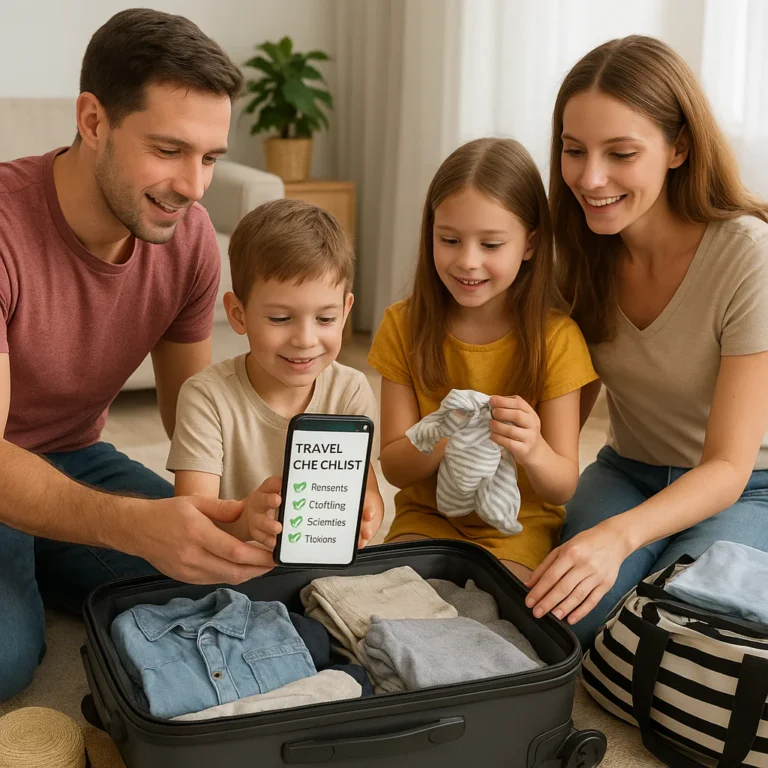
| Kids can help pack. A picture checklist lets younger children participate before they can read every item. | Give each child a simple job: choose activities, check off socks, or match their color-coded bag. |
| A checklist works best when shared. A family member may have packed the swimwear already; a shared list helps everyone see that. | Use the Travel Checklist app or another shared list, and assign one person to confirm essentials. |
| Pack a modest, destination-appropriate medical kit. You can often buy routine supplies locally, but replacing a personal prescription may be harder. | Bring prescribed medicines in their original packaging and check destination rules with official authorities. |
| Laundry changes the outfit math. A washer, sink, or laundry service can make a smaller wardrobe practical. | For many trips, plan a few mix-and-match outfits person and adjust for weather, spills, and laundry access. |
Our five-minute packing triage:
✅ Documents and prescriptions
✅ Clothes suited to the forecast
✅ One comfort item per child
✅ Snacks, water bottles, and travel-day entertainment
✅ A small buffer for the unpredictable (because children are wonderfully creative with yogurt)
🧳 Why a Family Travel Checklist Makes Trips Easier
A family packing checklist isn’t about bringing more. It’s about making fewer rushed decisions while someone is asking where their other shoe went.
On family trips, the same essentials tend to split across bags, people, and responsibilities. One parent may pack the sunscreen while another is already hunting for it. A shared checklist gives everyone one place to see what’s done, what’s missing, and who’s handling it. That’s the basic idea behind Cozi’s shared vacation checklist and the Travel Checklist app.
What to Pack Depends on Your Family and Destination
Before adding an item to your suitcase, ask whether it fits your destination, activities, travel style, and access to essentials. A family staying in one beach apartment with laundry nearby needs a different list from a family moving between mountain lodges.
| Trip factor | What it changes | Example |
|---|---|---|
| Trip length | Clothing quantities and laundry planning | A weekend usually needs fewer backup outfits than a three-week trip. |
| Weather | Layers, footwear, sun protection, and rain gear | A city forecast can change quickly; pack layers rather than one bulky “just in case” outfit. |
| Accommodation | Towels, toiletries, laundry supplies, and sleep equipment | Check whether your hotel provides a cot, towels, or a washing machine. |
| Children’s ages | Feeding, hygiene, entertainment, and safety needs | Babies need a changing and feeding plan; older kids may carry their own day bag. |
| Getting around | Luggage size and mobility equipment | Trains, cobled streets, rental cars, and long walks all affect stroller and suitcase choices. |
| Medical needs | Prescriptions, devices, and contingency planning | Confirm that needed medication is legal and available at your destination. |
Our travelers have packed for family road trips where the car could swallow an extra bag and for train journeys where every suitcase had to be lifted onto a platform. The right list is the one that matches the least convenient part of your itinerary, not just the prettiest hotel photo.
How to Use This Family Vacation Packing Checklist
Use the list as a menu, not a commandment. You do not need every item.
- Add trip details. Write down dates, destinations, weather, planned activities, and laundry access.
- Make one master list. Group items by category, then assign each person or bag.
- Personalize the quantities. A toddler who gets carsick may need more spare clothes; a teenager may need their own headphones.
- Pack shared items once. Sunscreen, a first-aid kit, and chargers often belong in a family bag rather than every suitcase.
- Check restrictions. Review your airline’s baggage rules and your destination’s official guidance for medication, child safety equipment, and entry documents.
- Do a final check before leaving. Confirm documents, medication, phones, keys, and the items you cannot easily replace.
For a step-by-step app workflow, create categories such as “carry-on,” “checked luggage,” “baby bag,” and “last-minute.” Mark tasks as they’re packed and share the list with the adults traveling. If you’re planning an active trip, our adventure travel checklists may also help tailor the gear list.
🗓️ Plan Ahead: Family Travel Prep Before You Pack
Packing day is a poor time to discover that a passport is expired or the hotel doesn’t provide a cot. A little preparation turns a sprawling to-do list into a few calm decisions.
Check Travel Documents, Entry Rules, and Insurance
Requirements depend on your citizenship, route, and destination. Check official sources for every traveler, including children, rather than relying on a social media post from someone whose trip was five years ago.
- Confirm passports or other accepted identification are valid for the trip.
- Check entry, transit, and visa requirements on the official government sites for your destination.
- Confirm whether children need individual travel documents or additional consent paperwork for your circumstances.
- Save flight, rail, accommodation, and rental-car confirmations offline.
- Keep copies of essential documents separately from the originals, and store digital copies securely.
- Review travel insurance coverage, exclusions, medical access, and emergency contacts.
- Check your airline’s rules for child seats, strollers, infant items, and cabin baggage.
For U.S. travelers, the U.S. Department of State’s international travel guidance and country information pages are useful starting points. For current U.S. passport requirements, use the State Department’s passport guidance. Travelers from other countries should consult their own government’s official travel advice.
Practical tip: Keep a printed emergency contact card in a child’s day bag if they’re old enough to carry one, and teach them whom to approach if separated. Don’t put sensitive personal details where they’re visible to strangers.
Choose Luggage and Organize Each Family Member’s Gear
The best family luggage is the luggage your family can actually carry, lift, and keep track of. One family of four in the featured video assigns each child a different bag color and uses packing cubes to organize personal belongings. That system won’t make a suitcase lighter, but it can make “Whose backpack is this?” a much shorter mystery.
| Organization method | Best for | Watch-out |
|---|---|---|
| Color-coded bags or cubes | Families with several similar-looking bags | Pick colors kids can recognize quickly. |
| Packing cubes | Separating people, outfits, or clean and dirty clothes | They organize; they don’t necessarily reduce packed volume. |
| Small zip bags | Keeping leaks, snacks, or damp items contained | Follow airport liquid and food screening rules. |
| Shared checklist app | Coordinating adults and older children | Sync or save critical details offline where possible. |
| Laundry bags | Keeping worn clothes separate on the return trip | Don’t let wet swimwear sit sealed for long. |
You can compare packing cube sets from Eagle Creek, Bagail, or REI. Choose durable zippers and sizes that fit your luggage, rather than buying a set with more pieces than you’ll use.
- One bag, one owner: Give older children responsibility for a small backpack they can carry themselves.
- One color, one person: Apply the same color to their cube, water bottle, and bag tag.
- One family essentials pouch: Keep shared medicines, plasters, and a charging cable together.
- One last-minute section: Add toothbrushes, sleepwear, and devices only after they’re used on the final morning.
Prepare Your Home Before Leaving
A checklist can cover more than suitcases. Add home tasks to the same plan so the family doesn’t remember the cat’s feeding instructions halfway to the airport.
- Arrange pet care, plant watering, and mail collection.
- Share emergency contacts and house access instructions with your sitter.
- Set timers or lights as appropriate, and secure doors and windows.
- Take out rubbish and clear perishable food from the fridge.
- Check that the stove, taps, and nonessential appliances are off.
- Charge devices and download tickets, maps, and entertainment before departure.
- Add reminders for laundry, medication refills, and final shopping.
Cozi’s family checklist guidance also recommends using a family calendar for pre-trip tasks. We like this because “someone should do it” is not the same thing as a named person doing it.
✅ The Complete Family Travel Checklist with Kids
The lists below are intentionally broad. Select what fits your trip, then set quantities based on laundry, weather, and your children’s needs. Keep fragile, important, or urgent items in the carry-on rather than trusting them to checked luggage.
1. Travel Documents and Important Information
- Passports, visas, or other required identification
- Child travel documents and any required consent paperwork
- Boarding passes, train tickets, and activity confirmations
- Accommodation and rental-car reservations
- Travel insurance policy details
- Emergency contacts and relevant medical information
- Copies of prescriptions and medical-device instructions
- Cards, cash, and a secure payment backup
- Offline copies of tickets, reservations, and directions
- Luggage tags with appropriate contact information
Check official requirements well before travel: U.S. passport guidance, TSA security screening information, and your airline’s own baggage and child-equipment policies are more dependable than assumptions.
2. Clothing and Weather-Ready Layers
A practical baseline for a trip with laundry access is a small rotation of mix-and-match outfits, plus a spare outfit in each child’s carry-on. The right number changes with age, spills, climate, and how often you can wash clothes.
- Tops and bottoms that mix easily
- Underwear and socks
- Pajamas
- A sweater, fleece, or other warm layer
- Rain jacket or compact rainwear where needed
- Sun hat and warm hat when appropriate
- Swimwear and cover-up for pool or beach trips
- Activewear or special clothing for planned activities
- One comfortable travel outfit
- Spare clothes for children in the day bag
Local Passport Family’s packing approach describes packing three to five outfits person and rewearing or washing clothes when practical. By contrast, Cozi’s checklist suggests planning casual outfits around travel days, with a dressier option as needed. Neither number is a universal rule: choose fewer when you can wash and rewear; bring more when your itinerary makes laundry difficult or your children need frequent changes.
3. Shoes, Socks, and Accessories
Shoes take up space quickly, so plan around activities instead of packing every pair a child owns.
- Comfortable walking shoes, already broken in
- Sandals or water shoes for warm-weather plans
- Waterproof shoes or boots when the destination calls for them
- Socks that suit the shoes and climate
- Sunglasses and protective hats
- Belts or activity-specific accessories
- Gloves, scarves, or thermal layers in cold weather
For many trips, one everyday pair plus one activity-specific pair person is enough. Add a third only when the itinerary truly needs it. Blisters do not care that the backup shoes matched the dinner outfit.
4. Toiletries and Personal Care
- Toothbrushes, toothpaste, and floss
- Shampoo, conditioner, and soap
- Hairbrush or comb and hair ties
- Deodorant and skin-care basics
- Sunscreen and lip protection
- Hand sanitizer and tissues
- Contact lenses, glasses, and cleaning supplies
- Personal hygiene products
- Nail clippers and small grooming items
- Wet wipes, useful for little kids and suspiciously sticky big kids
- A small bag for leaks or wet items
Use travel-size containers for products you need, but check current airline rules for carry-on liquids before packing. The TSA’s liquids guidance is the appropriate reference for U.S. airport screening; rules differ elsewhere. For sun protection, follow guidance from the American Academy of Dermatology and pack a product appropriate for your family.
5. First-Aid Kit, Medications, and Health Essentials
Build a small kit around your family’s actual health needs. A personal prescription is not interchangeable with a generic item from a travel list.
- Prescription medicines and any necessary medical devices
- Children’s medicines recommended by your clinician
- Bandages and basic wound-care supplies
- Thermometer
- Any allergy-management supplies your family uses
- Motion-sickness supplies appropriate for the child’s age and medical advice
- Insect repellent suitable for the destination and age
- Sunscreen and after-sun care
- A list of allergies, conditions, and emergency contacts
- Copies of prescriptions or medical documentation if useful
Before travel, discuss age-specific medicines with a qualified health professional and check destination restrictions. The CDC’s Travelers’ Health guidance offers destination health information, while the CDC Yellow Book provides travel-health guidance for clinicians and travelers. Do not rely on a packing blog to decide medication doses.
6. Electronics, Chargers, and Travel Tech
- Phones and chargers
- Power bank suitable for your devices and airline rules
- Headphones for adults and child-sized headphones for kids
- Tablet or e-reader, if you use one
- Device chargers and a cable for each essential device
- Plug adapter or voltage converter if required
- Camera and charging equipment, if needed
- Offline maps, tickets, and entertainment
- A small cable organizer
For international travel, a plug adapter changes the shape of a plug; a voltage converter addresses electrical compatibility. They are not the same thing. Check the voltage requirements printed on your devices and consult a reliable source such as the U.S. Department of Energy’s international travel electrical guidance.
Don’t forget to check the airline’s rules for power banks and spare lithium batteries. Keep essential electronics and batteries in the cabin when required by your carrier.
7. Snacks, Drinks, and Mealtime Supplies
A hungry child can turn a peaceful boarding area into an urgent negotiation. Pack familiar snacks, especially for delays or long transfers.
- Shelf-stable snacks your children already eat
- Reusable water bottles
- Baby feeding supplies, if needed
- Bibs and child-friendly utensils, if useful
- Spill-resistant snack containers
- A small supply of wipes and napkins
- Food for dietary needs or limited-access routes
Bring bottles empty through security where required, then refill after screening; check the rules for your airport and route. For screening specifics in the United States, consult TSA’s guidance for food and traveling with children. Rules for infant feeding items may differ from ordinary liquids, so verify before departure.
8. Entertainment and Screen-Free Activities
- Picture books, chapter books, or e-readers
- Coloring or activity books and pencils
- Small toys, puzzles, or card games
- Downloaded shows, films, or audiobooks
- Headphones that fit comfortably
- A favorite small comfort toy
- A new-to-them activity for a long travel day
- A simple travel journal for older children
Pack activities in stages rather than presenting the entire bag at once. We like a small rotation: one familiar choice, one quiet activity, and one surprise item. For more outdoor and activity-focused trip planning, browse our adventure travel checklists.
9. Comfort, Sleep, and In-Transit Essentials
- A favorite stuffed animal or sleep comforter
- Travel blanket or lightweight layer
- Child-sized travel pillow, if your child will use it
- Nightlight or familiar bedtime item
- Eye mask or earplugs for older children, if appropriate
- Extra clothes and a bag for wet or soiled items
- Wet wipes and tissues
- A small pack of comfort snacks
- A stroller or carrier if it fits your plans and destination
Bring the comfort object your child truly relies on, not a suitcase full of substitutes. If it’s ireplaceable, keep it in a carry-on and make a quick “comfort item check” before leaving each hotel.
10. Laundry, Organization, and Handy Extras
- Packing cubes or labeled bags
- Laundry bag for worn clothes
- Compact stain-removal supplies
- A few resealable bags for snacks or damp items
- Small shopping bag for rubbish or wet gear
- Reusable tote for groceries and day trips
- Laundry detergent suitable for your travel plans
- Travel-sized sewing or repair items, if useful
- A printed copy or offline version of your checklist
Laundry products can help families pack fewer clothes, but first confirm whether your accommodation has laundry facilities. HeySunday’s family vacation packing list also highlights laundry planning and bags for wet or dirty clothing. For longer, independent trips, see our backpacking checklists.
👶 Baby Travel Checklist: Packing for Infants and Todlers
Baby gear depends heavily on age, feeding style, sleep arrangements, and whether you can buy supplies at your destination. Check with your airline, accommodation, and car-seat provider before assuming equipment is available or accepted.
Diapers, Wipes, and Changing Supplies
- Diapers for the journey and any stretch without easy shops
- Wipes and changing mat
- Barrier cream, if used
- Diaper bags or resealable bags
- Spare baby clothes in the carry-on
- Hand sanitizer for caregivers
- A change of top for the adult most likely to be holding the baby
A useful approach is to carry enough for the journey plus a reasonable delay buffer, then buy more locally if your route allows. Families moving between remote places may choose a larger supply; families staying in one city may prefer to travel lighter.
Feding, Bottles, and Baby Food
- Bottles, nipples, and cleaning supplies, if needed
- Formula or expressed milk as required
- Breast pump and pump accessories, if used
- Bibs, burp cloths, and feeding spons
- Baby food and snacks appropriate to the child
- Reusable food containers
- A familiar cup or bottle
Airport screening rules vary by country and route. In the United States, consult TSA’s guidance for traveling with children before packing breast milk, formula, or baby food. For international flights, confirm requirements with both the departure and transit airports.
Stroller, Carrier, Car Seat, and Sleep Gear
- Lightweight stroller or baby carrier, depending on the itinerary
- Car seat appropriate for the child and vehicle
- Sunshade or rain cover if useful
- Portable sleep items your child depends on
- Pacifiers or soothing items, if used
- Travel crib only if accommodation does not provide a suitable option
A stroller is convenient in airports and city walks, but it can be awkward on stairs and crowded transport. A baby carrier frees your hands, but can feel tiring over a long day. Choose based on your route, not on a universal “best baby travel gear” list. Check child passenger safety guidance from the National Highway Traffic Safety Administration and verify local rules at your destination.
✈️ What to Pack in a Family Carry-On
Your carry-on is the family’s backup plan with shoulder straps. It should hold essentials you cannot afford to lose access to during a delay or baggage mishap.
The Kids’ In-Flight and Road-Trip Bag
Give each child a manageable bag with:
- One activity they can use independently
- Headphones and a charged device, if you allow screens
- A snack and empty water bottle
- Tissues and wipes
- A light layer
- A small comfort item
- A simple card with caregiver contact details, for children old enough to use it
In the featured video, one family assigns children different backpack colors and packs books, activity materials, fidget toys, tablets, headphones, and chargers for an eight-and-a-half-hour flight. Their approach is useful for long journeys, but you can scale it down for a shorter trip.
Spare Clothes, Snacks, and Emergency Supplies
Keep these within reach:
- A spare outfit for each child, especially babies and toddlers
- A spare top for an adult traveling with a baby
- Prescribed medication and essential health items
- A few familiar snacks
- Wipes, tissues, and a small bag for dirty clothing
- Charging cable and power bank, subject to carrier rules
- Travel documents and the day’s itinerary
Don’t pack every spare in the overhead bin if your child needs it during takeoff or a car seat ride. Put the immediate-use items in a small pouch under the seat.
🚗 Family Road Trip Checklist
Road trips give you more control over luggage but require a different kind of planning: car safety, rest stops, and keeping everyone comfortable for longer stretches.
Car Safety, Comfort, and Navigation
- Correct child restraint for each child and vehicle
- Confirmed rental-car arrangements, if applicable
- Phone mount and charging cable
- Offline maps or navigation backup
- First-aid essentials and prescribed medicines
- Water bottles and snacks
- Sunglasses, sunshades, or weather gear as needed
- A small rubbish bag and wipes
- Emergency roadside contact information
Before departure, confirm that a car seat fits the vehicle and is appropriate for the child. See the NHTSA car-seat guidance, and check local laws wherever you’ll be driving.
Road-Trip Stops, Snacks, and Motion Sickness
Plan regular opportunities to get out, stretch, eat, and use the bathroom. Keep a small “quick stop” kit accessible instead of burying wipes and snacks under the luggage.
- Pack familiar food that won’t create a crumb avalanche.
- Offer water during breaks and keep a spare bag for rubbish.
- Use motion-sickness medication only according to professional advice and product directions.
- Keep spare clothes and cleanup supplies near the top of the car.
- Download entertainment before losing mobile reception.
- Give children a simple trip map or stop-counting activity.
Our road-trip rule: the car should not be packed like a closet. Keep the safety equipment accessible, protect the driver’s view, and avoid loose items that could become hazards.
🌍 Destination-Specific Family Packing Tips
The destination can change the whole list. Start with the itinerary, check the forecast close to departure, and add gear only when it has a clear job.
Beach and Pool Vacation Essentials
- Swimsuits and sun-protective clothing
- Sun hats and sunglasses
- Sunscreen suited to your family
- Sandals or water shoes
- Reusable water bottles
- Wet bags or separate bags for damp clothes
- Beach toys only if you’ll use them
- A lightweight towel if your accommodation won’t provide one
For more destination-specific ideas, see our beach vacation checklists. Follow sun-protection recommendations from the American Academy of Dermatology, and check local beach and water-safety advice.
Camping and Outdoor Adventure Gear
- Weather-appropriate layers and sturdy footwear
- Headlamps or flashlights
- Insect protection appropriate for the destination
- Refillable water containers
- Sun protection
- Child-specific safety gear for planned activities
- First-aid supplies and prescribed medication
- Sleep equipment confirmed with your campsite or accommodation
Don’t pack specialist equipment without checking whether the operator provides it or whether it meets local safety standards. Browse our adventure travel checklists for activity-specific planning.
Cold-Weather and Ski Trip Clothing
- Thermal base layers
- Warm socks and gloves
- Insulating mid-layers
- Waterproof outerwear and trousers
- Hats, neck warmers, and suitable boots
- Sunscreen and sunglasses for bright snow conditions
- Spare dry layers for children
Layers are usually more flexible than one very bulky garment. Check equipment rental options and your lodging’s drying facilities before packing a full set of specialist gear for every family member.
International Travel and Long-Haul Flight Tips
- Confirm travel documents and entry requirements
- Check transit rules and airline policies
- Pack a plug adapter suited to the destination
- Download offline maps, translation tools, and tickets
- Keep essential medication and a change of clothes in your carry-on
- Prepare for time-zone changes with flexible sleep expectations
- Confirm that child safety equipment works with the local transport plan
The U.S. Department of State provides destination information for U.S. travelers. Families based elsewhere should use their own government’s official guidance. For active or extended trips, our backpacking and digital nomad checklists can help with longer-stay planning.
🎒 Minimalist Family Packing: What You Can Leave at Home
Packing light can make transfers easier, but minimal packing should never mean skipping health, safety, or essential comfort needs. The goal is to avoid hauling items that are easy to replace or unlikely to be used.
Pack Light Without Forgeting the Essentials
- Choose a color-cordinated capsule wardrobe. Pick clothing that works in several combinations.
- Limit shoes. Bring comfortable everyday footwear and only the activity-specific pair you need.
- Plan one laundry point. A wash during the trip can reduce clothing volume.
- Share family supplies. One sunscreen and one basic first-aid kit may be enough for everyone.
- Keep entertainment small. A few versatile activities can go further than a bag of toys.
- Pack an accessible backup. Keep a spare outfit, medication, and travel essentials in the carry-on.
A family featured by Local Passport Family describes taking a streamlined setup on trips ranging from several days to several weeks. That’s helpful evidence that light packing can work for some families, not a promise that every family should bring the same number of bags. Age, laundry access, climate, and medical needs matter more than someone else’s luggage count.
What to Borrow, Buy There, or Skip
| Consider borrowing or buying at your destination | Bring from home | Usually skip unless your plans require it |
|---|---|---|
| Basic toiletries, if shops are accessible | Prescription medicine and essential devices | Multiple “just in case” outfits for every person |
| Diapers or wipes, if your brand needs are flexible | Special dietary or medical supplies | Toys that can’t be used independently |
| Beach toys or umbrellas, depending on location | A child’s necessary comfort item | Extra shoes without a clear purpose |
| Common laundry supplies | Any item hard to replace locally | Full-size products you use only once |
For families on a tighter travel budget, our budget travel checklists can help identify what to bring, borrow, or book ahead.
🖨️ Printable Family Vacation Packing Checklist
A printable checklist is useful when family members prefer paper, when you want a visual list for a child, or when phone batteries are not part of the plan. You can also make a digital version in the Travel Checklist app and share it with your travel group.
Quick Packing Checklist by Family Member
For each adult
- Travel documents and payment cards
- Clothes, footwear, and personal toiletries
- Essential medication
- Phone, charger, and headphones
- Day bag and activity-specific items
For each child
- Clothes, pajamas, underwear, and weather layers
- Shoes suited to the itinerary
- Toiletries and health items
- Comfort item and travel activities
- Refillable water bottle and snacks
- Spare outfit in the carry-on
For a baby
- Diapers, wipes, and changing supplies
- Feeding supplies and age-appropriate food
- Spare clothes and burp cloths
- Sleep and soothing essentials
- Stroller, carrier, or car seat if needed
For the whole family
- Reservations and emergency information
- Shared first-aid supplies
- Sunscreen and insect repellent as needed
- Chargers and travel adapters
- Laundry and wet-clothing bags
- Home and pet-care arrangements
Last-Minute Doorway Checklist
Before locking the door, check:
- ✅ Passports, tickets, and essential documents
- ✅ Prescription medicine and medical equipment
- ✅ Phone, wallet, keys, and chargers
- ✅ Child comfort items
- ✅ Snacks and water bottles
- ✅ Windows, appliances, rubbish, and pet-care plan
- ✅ Every bag has an owner and is ready to carry
One adult checks the list; another checks the people. It sounds obvious, but people are notoriously easy to leave waiting beside the shoe rack.
Save or Share This Family Travel Checklist
Save this page, copy the sections relevant to your trip, or create a shared list in the Travel Checklist app. For younger children, make a picture-based list and let them check off simple tasks. For older kids, assign a category they’re responsible for, such as entertainment or their own day bag.
The best list is short enough to use and detailed enough to prevent avoidable surprises. If the checklist itself becomes another suitcase-sized burden, trim it.
💡 Family Packing Tips from Trips We’ve Taken
Travelers don’t all agree on the ideal packing method, and that’s a good thing: what works on a direct flight can fail spectacularly on a multi-stop rail trip.
- For children who like to help: Use color-coded bags or picture checklists. In the featured video, a family gives each child a distinct bag color and uses clothing dividers and packing cubes to make belongings easy to identify.
- For frequent hotel changes: Keep daily essentials in a small, reachable pouch rather than unpacking every cube at each stop.
- For laundry access: Pack a smaller clothing rotation and plan when you’ll wash. Local Passport Family’s three-to-five-outfit approach is a useful starting point, not a universal quota.
- For airport journeys: Keep liquids and snacks organized, but follow current security rules. The featured video describes using clear bags after airport staff requested snacks to be screened; screening practices can vary, so check your airport’s official guidance.
- For family coordination: Cozi recommends a shared list so family members can see updates and avoid duplicating tasks. That approach is especially useful when several adults are packing for the same trip.
- For babies and toddlers: Prioritize the items that are difficult to replace or essential to your child’s routine. Bring enough diapers and feeding supplies for the journey and delays; decide the rest based on local availability.
- For everyone: Leave a little space. A suitcase packed to the last inch is a packing cube with a grudge.
Our most reliable habit is a final “one person, one bag, one check” sweep: every traveler knows what they own, the adult in charge verifies shared essentials, and the carry-on gets checked separately from the main luggage. That simple routine catches the toothbrushes, medicine, and favorite stuffed rabbit before they vanish into the back of the car.