Support our educational content for free when you purchase through links on our site. Learn more
12 Volunteer Travel Destinations & Checklists 🌍

The best volunteer travel destinations are the ones where local partners lead meaningful work, your skills fit the role, and you can prepare safely with a destination-specific checklist. This guide compares 12 places to consider and lays out the essential pre-departure steps, from checking visa rules and travel health advice to packing for your actual project.
We’ve learned that a compelling wildlife photo or a promise to “help the community” isn’t enough to judge a placement. Before booking, ask who leads the work, what volunteers do day to day, and how the organization protects people and animals. A little homework can make the difference between arriving ready to contribute and discovering that your hiking boots, paperwork, or expectations are all wrong.
Key Takeaways
- Choose ethical, locally led volunteer work: Check supervision, safeguarding, project goals, and how fees are used.
- Compare destinations by project fit and practical needs: Climate, transport, health preparation, and entry rules can vary widely—even within one country.
- Use a pre-departure checklist with deadlines: Confirm your passport, visa or permit, insurance, health guidance, flights, accommodation, and arrival contact.
- Pack for the placement, not just the destination: Ask about work clothing, safety gear, laundry, local customs, and what the host actually supplies.
- Plan for real-world surprises: Save emergency contacts offline, confirm what happens if a flight is delayed, and keep a contingency fund.
- Respect local leadership and boundaries: Volunteer responsibly, follow cultural guidance, and avoid tasks beyond your qualifications.
Table of Contents
- ⚡️ Quick Tips and Facts
- 🌍 Volunteer Travel: What It Is and How It Works
- Volunteer abroad vs. voluntourism: choosing ethical, community-led work
- How to assess a program’s impact, safety, and transparency
- 🧭 How to Choose a Volunteer Program, Destination, and Travel Dates
- Match your skills and interests to a meaningful project
- Compare program fees, accommodation, meals, and local support
- Questions to ask volunteer organizations before you apply
- 🗺️ 12 Volunteer Travel Destinations to Consider
- 1. Costa Rica: wildlife conservation and community projects
- 2. Ecuador: Amazon conservation and sustainable farming
- 3. Peru: education, conservation, and community support
- 4. Guatemala: youth programs and environmental volunteering
- 5. Ghana: community development and public health projects
- 6. Kenya: conservation and locally led community work
- 7. Tanzania: wildlife protection and education projects
- 8. South Africa: marine conservation and animal welfare
- 9. Nepal: education, conservation, and rural community projects
- 10. India: community initiatives and environmental programs
- 11. Thailand: ethical conservation and community projects
- 12. Fiji: marine conservation and island community programs
- 📝 Your Volunteer Travel Pre-Departure Checklist
- 6–12 weeks before departure: documents, vaccinations, and bookings
- 2–6 weeks before departure: training, money, and practical details
- The final week: packing, check-ins, and home preparation
- Departure-day checklist: airport, arrival, and emergency contacts
- 🛂 Passports, Visas, Entry Rules, and Volunteer Work Permits
- 💉 Travel Health, Vaccinations, and Medical Preparation
- 🛡️ Travel Insurance, Safety, and Emergency Planning
- 🎒 What to Pack for a Volunteer Trip Abroad
- Clothing, work gear, and destination-specific essentials
- First-aid kit, medications, and personal care items
- Useful items to bring—and what to leave at home
- 💳 Budgeting for Volunteer Travel: Flights, Fees, and Spending Money
- ✈️ Booking Flights and Planning Your Arrival
- 🤝 Cultural Etiquette, Language, and Responsible Voluntering
- 📵 Staying Connected: Phones, Internet, and Important Documents
- 🌱 Sustainable Travel and Low-Impact Voluntering
- 🏠 Coming Home: Reflection, Follow-Up, and Staying Involved
- Conclusion
- 🔗 Recommended Links
- ❓ FAQ
- How far in advance should I plan a volunteer trip abroad?
- Do I need experience or special qualifications to volunteer overseas?
- How can I tell if a volunteer program is ethical?
- What should I put on my volunteer travel checklist?
- Can I volunteer abroad on a tourist visa?
- Is volunteer travel safe for solo travelers?
- 📚 Reference Links
⚡️ Quick Tips and Facts
Planning a volunteer trip abroad takes more than finding a project with a compelling story. You’ll also need to check whether the work is ethical, confirm entry and health requirements, understand what your fee actually covers, and build a practical volunteer travel pre-departure checklist.
For inspiration, browse our guide to top travel destinations, then use the checklist approach: break a big trip into small, assigned tasks with deadlines. Future-you, rushing to the airport, will be grateful.
| Before you go | What to check | Why it matters |
|---|---|---|
| Choose a project | Local leadership, clear responsibilities, community feedback | A good project meets a real need and doesn’t treat the community as a backdrop |
| Check entry rules | Passport validity, visa, work or volunteer permission | Volunteer work may be treated differently from tourism; rules depend on your nationality and activity |
| Review health guidance | Vaccines, medicines, local risks, insurance | Health requirements vary by destination and your own medical history |
| Read the fee breakdown | Accommodation, meals, transport, support, exclusions | A program fee rarely covers every travel expense |
| Prepare documents | Passport, insurance details, emergency contacts, required checks | Keep secure digital copies and know what must be submitted before arrival |
| Pack for the actual work | Climate, dress expectations, safety gear, laundry access | The right packing list depends on your placement, not just the destination |
| Confirm arrival logistics | Airport, pickup window, first-night stay, local contact | Landing in the right city on the wrong day can turn “welcome orientation” into “where is everyone?” |
Quick facts to keep in mind
- Volunteer placements can range from short-term community projects to longer skilled assignments. Duration, eligibility, and start dates are program-specific.
- Organizations may ask for a criminal background check, proof of insurance, references, health information, or relevant qualifications.
- Do not assume a tourist visa allows volunteer work. Check the official immigration guidance for your destination and ask the program provider what activities you’ll perform.
- Health advice should be tailored to your destination and personal circumstances. Start with a travel-health professional and the CDC Travelers’ Health destination pages.
- We recommend building one checklist for documents and deadlines, one for packing, and one for arrival-day logistics. That way, “passport scanned” doesn’t get buried between “buy mosquito repellent” and “ask whether towels are provided.” 🧳
🌍 Volunteer Travel: What It Is and How It Works
Volunteer travel combines a trip with organized service, such as environmental conservation, community projects, education, or skilled professional support. Programs vary considerably: some are locally run and deeply collaborative; others are commercial packages with limited transparency. The label alone tells you very little.
A useful rule from our team: look at who defines the project, who benefits, and what volunteers are actually qualified to do. We’ve found that a thoughtful placement may involve less dramatic “hands-on” activity than you expect. Listening, supporting local staff, and completing routine tasks can be more valuable than arriving with a grand rescue plan.
The Go Overseas planning guide emphasizes matching projects to existing skills and researching providers, while GoAbroad’s internship preparation guide offers transferable advice about preparation, finances, documents, and cultural adjustment. These sources cover different kinds of overseas experiences, so treat their general planning advice as a starting point—not a substitute for the rules of your specific program.
Volunteer abroad vs. voluntourism: choosing ethical, community-led work
“Voluntourism” is often used critically when travel experiences prioritize visitor satisfaction over local needs. The distinction isn’t simply whether you pay a fee or stay for a week. The key questions are about accountability, continuity, local leadership, and appropriate volunteer responsibilities.
| Better signs ✅ | Warning signs ❌ |
|---|---|
| Local partners help define goals and supervise volunteers | The provider speaks for a community but offers little evidence of local decision-making |
| Tasks match your training and experience | You’re promised unsupervised work involving children, patients, or wildlife |
| The organization explains how fees are used | Fees and project costs are vague or hard to separate |
| The project has a plan beyond your visit | The project seems to depend on a steady stream of short-term visitors |
| Children and vulnerable people are protected through appropriate safeguarding | Visitors are encouraged to take or post identifiable photos without clear consent |
| The provider discusses limitations and realistic outcomes | Marketing promises that one short stay will “save” a community or species |
Particular care is warranted with orphanage volunteering. UNICEF explains concerns about the institutionalization of children and the risks associated with orphanage tourism in its guidance on children’s rights and residential care. For wildlife projects, check whether animal interactions are based on welfare and conservation principles, not photo opportunities or entertainment.
We once reviewed a placement whose brochure promised volunteers could “teach anything.” That sounded flexible until we asked who developed lesson plans and supervised the classroom. The answer changed our view: an ethical program should be able to explain what volunteers may do, what they may not do, and who remains responsible.
How to assess a program’s impact, safety, and transparency
Before you commit, ask the organization for specific information—not just inspiring photos.
- Ask who leads the work. Find out which local organization hosts volunteers and who makes day-to-day decisions.
- Request a role description. Confirm your schedule, tasks, supervision, physical demands, and required skills.
- Check safeguarding. Ask about background checks, child-protection policies, photography rules, and reporting concerns.
- Understand the fee. Request an itemized list of inclusions and exclusions, plus an explanation of how fees support the placement.
- Look for independent feedback. Read recent former-volunteer reviews, and ask whether you can speak with alumni.
- Check emergency support. Get a local contact, after-hours procedure, evacuation plan, and clear details about insurance expectations.
- Confirm outcomes realistically. Ask how the project measures progress and what happens when volunteers are not present.
Consumer reviews help you understand the experience, but they are not a substitute for evidence about community impact. A glowing review might tell you the food was excellent; it cannot, by itself, establish whether the project is needed or responsibly run.
🧭 How to Choose a Volunteer Program, Destination, and Travel Dates
Start with the work, not the postcard. A destination may beautiful and still be a poor match for your skills, budget, schedule, or comfort level. Conversely, a less-famous location may offer a more appropriate and well-supported role.
The right choice usually comes down to four things:
- Purpose: What issue or project area genuinely interests you?
- Fit: What can you contribute responsibly with your experience and available time?
- Support: Who trains, supervises, and assists volunteers?
- Practicality: Can you meet the program’s schedule, entry rules, health needs, and total budget?
For more trip-planning inspiration, see our Adventure Travel Checklists and Backpacking Checklists.
Match your skills and interests to a meaningful project
Common project areas include conservation, sustainable agriculture, community development, education support, and public-health projects. But “interested in healthcare” does not mean you’re qualified to provide clinical care. Ask what the role allows and how local professionals supervise it.
| Your experience or interest | Possible fit | Questions to ask |
|---|---|---|
| Teaching or youth work | Classroom support, tutoring, youth activities | What qualifications are required? Who designs lessons and supervises? |
| Biology, ecology, or outdoor skills | Habitat monitoring, restoration, conservation support | Is the work based on an established conservation plan? What training is provided? |
| Construction or trade experience | Repairs or building projects | Are local tradespeople leading the work? Are tools and protective equipment supplied? |
| Public health training | Health education or appropriately supervised support | What credentials are required? Does the role avoid replacing licensed local staff? |
| Farm or gardening experience | Community agriculture, organic farming | What is grown, who uses it, and how does the project support local growers? |
| No specialized experience | Practical support roles and structured learning placements | Are duties clearly defined and safe for newcomers? |
A provider that tells you “no experience required” should still explain your training, boundaries, and supervision. No experience required does not mean no responsibilities.
Compare program fees, accommodation, meals, and local support
Compare the whole experience—not just the advertised program fee. One organization may include meals and local transportation; another may charge separately or expect you to arrange them.
| Cost or service | Confirm before booking |
|---|---|
| Program fee | What does it fund? Is there a registration fee or payment schedule? |
| Accommodation | Dorm, homestay, guesthouse, or self-arranged? What are the room and bathroom arrangements? |
| Meals | How many meals are included? Can dietary needs be accommodated? |
| Local transportation | Is daily transport to the placement included? How long is the commute? |
| Airport pickup | Which airport, dates, arrival times, and luggage rules apply? |
| Insurance | Is any insurance included, or must you purchase your own? What coverage is required? |
| Orientation and training | What topics are covered, and when does training take place? |
| Optional activities | Are excursions optional? Are they organized by the provider or local partners? |
| Cancellation and changes | What happens if you cancel, arrive late, or the project schedule changes? |
Red flag: a low advertised fee that leaves accommodation, transport, meals, and support unexplained. Also a red flag: a high fee presented as proof of impact. Ask for details either way.
Questions to ask volunteer organizations before you apply
Copy these questions into your travel-planning checklist:
- Who is the local partner, and how are they involved in program decisions?
- What tasks will I perform on a typical day?
- What training, qualifications, or background checks are required?
- Who supervises volunteers at the placement?
- What costs are included, and what should I budget separately?
- What visa or work authorization applies to my planned activities?
- What are the accommodation, meal, transport, and arrival arrangements?
- What insurance is mandatory, and what coverage must it include?
- What emergency support is available in-country?
- How does the project protect children, adults at risk, animals, and volunteer privacy?
- Can I speak with a recent volunteer or local project representative?
- What happens if weather, holidays, or local needs change the project schedule?
A trustworthy provider should welcome reasonable questions. If answers are evasive before you pay, they are unlikely to become clearer after you arrive.
🗺️ 12 Volunteer Travel Destinations to Consider
These destinations offer a range of possible project areas, but no country is automatically an ethical or suitable choice. Programs and entry rules change; verify the current details with the local partner, official immigration sources, and your travel-health provider.
Use this list to start researching—not to assume that every advertised project in a destination is equally responsible.
| Destination | Possible project themes | Pre-departure detail to investigate |
|---|---|---|
| Costa Rica | Conservation, environmental education, community programs | Climate by region, wildlife rules, transport to remote sites |
| Ecuador | Habitat conservation, agriculture, community initiatives | Altitude, regional travel advice, local-language expectations |
| Peru | Conservation, education support, community projects | Altitude, distances, and seasonal access |
| Guatemala | Environmental work, community programs, youth support | Safety guidance by region, transport, language needs |
| Ghana | Community development, education support, health projects | Role qualifications, local supervision, entry requirements |
| Kenya | Conservation, community initiatives, education support | Project location, wildlife safety, regional travel advisories |
| Tanzania | Conservation, education support, community projects | Local transport, seasonal conditions, scope of volunteer duties |
| South Africa | Environmental projects, conservation, community programs | Placement location, local travel safety, entry and health guidance |
| Nepal | Conservation, community initiatives, education support | Altitude, trekking conditions, travel time to placement |
| India | Community initiatives, agriculture, environmental programs | Regional climate, local customs, project safeguarding |
| Thailand | Conservation and community projects | Visa rules, heat and rainy seasons, animal-welfare standards |
| Fiji | Marine conservation, island community programs | Boat transfers, marine conditions, remote medical access |
1. Costa Rica: wildlife conservation and community projects
Costa Rica is often considered for environmental education and conservation placements. Before signing up, ask whether the project has permits where required, how wildlife is handled, and whether volunteers observe, collect data, restore habitat, or assist with routine tasks. Those details tell you far more than an adorable animal photo.
Check local travel conditions and health recommendations using official Costa Rica tourism information and the CDC destination guidance.
2. Ecuador: Amazon conservation and sustainable farming
Ecuador’s varied landscapes can mean very different travel conditions between a city, the Andes, and the Amazon region. Ask about transport, accommodation, altitude changes, work conditions, and whether a placement involves remote travel.
For official visitor information and travel planning, consult Ecuador Travel and verify health advice through the CDC Ecuador page.
3. Peru: education, conservation, and community support
Peru’s destinations range from coastal cities to high-altitude communities and rainforest regions. A project in one setting may require very different clothing, fitness, acclimatization, and transport planning from another. Ask for the exact placement location, not just the country.
Check official destination information at Peru Travel and current health guidance from the CDC.
4. Guatemala: youth programs and environmental volunteering
Possible placements include community initiatives and environmental work. For youth-related projects, look carefully at safeguarding policies and whether volunteers are supporting locally qualified staff. For environmental work, ask how the project’s goals are decided and measured.
Review regional travel guidance and health advice before choosing dates; official sources include Guatemala’s tourism authority and the CDC Guatemala page.
5. Ghana: community development and public health projects
Ghana-based listings may include education support, community development, and health-related work. For medical or public-health placements, ask about credentials, local supervision, and the exact limits of volunteer involvement. Never take on clinical duties beyond your training and legal authorization.
Start with official visitor information from the Ghana Tourism Authority and health guidance from the CDC.
6. Kenya: conservation and locally led community work
Conservation projects can involve outdoor work, wildlife observation, habitat maintenance, or community engagement. Find out whether the project is connected to established local conservation efforts and what safety briefings are provided. Ask how volunteers travel between accommodation and the site, especially if the project is remote.
Check official destination information through Magical Kenya and current health recommendations from the CDC.
7. Tanzania: wildlife protection and education projects
Tanzania placements may be urban, rural, coastal, or conservation-focused. Don’t assume a program near a famous park is authorized to conduct wildlife research or direct animal care. Ask who owns the project, what your role involves, and which permits or professional oversight apply.
Use Tanzania’s official tourism portal and the CDC Tanzania travel page to guide your research.
8. South Africa: marine conservation and animal welfare
Look for programs with clear animal-welfare standards or conservation goals, professional supervision, and transparent expectations. Ask whether activities are observation-based, fieldwork, or direct animal contact—and whether the latter is justified by a genuine welfare need.
Check visitor information at South African Tourism and review the CDC destination guidance.
9. Nepal: education, conservation, and rural community projects
Nepal’s geography makes travel time, elevation, weather, and access especially important. Ask how far the placement is from medical services, what transport is included, and whether your itinerary includes high-altitude travel. Build flexibility into your schedule.
Review Nepal Tourism Board information and the CDC Nepal page.
10. India: community initiatives and environmental programs
India is exceptionally diverse, so a country-level description is not enough to prepare you. Confirm the state and city or village, the expected dress and conduct, local transport, accommodation arrangements, and the project’s safeguarding practices.
Use Incredible India for destination research and consult the CDC India travel guidance.
11. Thailand: ethical conservation and community projects
Thailand offers many types of volunteer listings, but programs involving animals deserve especially careful review. Ask whether animals can retreat from visitors, what handling is permitted, and whether the organization prioritizes welfare over close-contact experiences.
As one specific example, IVHQ’s Elephant Welfare Volunteer Project in Chiang Mai describes work such as learning about elephant care with mahouts, helping maintain areas, and accompanying elephants in a forest setting. The provider says its placement includes preparation resources and in-country support, but you should independently check current entry rules, insurance conditions, project suitability, and the details of your own booking. Testimonials can offer useful personal perspectives, but they are not independent evidence of animal-welfare outcomes.
Thailand’s climate and conditions vary by season and region. Consult the Tourism Authority of Thailand and the CDC Thailand page. For trip ideas beyond your placement, see our Beach Vacation Checklists.
12. Fiji: marine conservation and island community programs
Fiji-based projects may involve marine environments or community initiatives, but island travel can require extra planning. Ask about boat transfers, weather-related schedule changes, internet access, laundry, local medical facilities, and what happens if transport is disrupted.
Check official visitor resources at Tourism Fiji and current health advice from the CDC Fiji page.
📝 Your Volunteer Travel Pre-Departure Checklist
A countdown checklist turns a fuzzy “I should probably prepare” into clear, manageable steps. Adjust the timing to your destination and provider; some tasks need more lead time, and program-specific instructions take priority.
6–12 weeks before departure: documents, vaccinations, and bookings
- Confirm the program and dates. Get written confirmation of the placement, arrival instructions, accommodation, and what your fee includes.
- Check your passport. Confirm it is valid for the period required by your destination and has sufficient blank pages. Requirements vary, so use official government guidance.
- Check visa and work rules. Contact the destination’s official immigration service or embassy and clarify whether your volunteer duties require a particular visa or permit.
- Arrange a travel-health appointment. Share your itinerary, length of stay, activities, and medical history with a qualified clinician. The CDC Yellow Book provides professional travel-health guidance.
- Check insurance requirements. Confirm medical care, emergency evacuation, repatriation, and any activity-specific exclusions.
- Book transport after checking program logistics. Confirm the correct airport, arrival window, pickup arrangements, and any required arrival day.
- Start required screening early. Background checks, reference letters, or certificates can take time.
2–6 weeks before departure: training, money, and practical details
- Complete provider training and submit requested documents through the organization’s secure system.
- Review emergency procedures, local contacts, placement address, and transportation details.
- Make a realistic budget for food outside the program, laundry, local transport, phone access, free-time activities, and emergencies.
- Ask your bank about international card use and carry a backup payment method stored separately.
- Check phone roaming, eSIM, or local SIM options; confirm your device is unlocked if you plan to use another carrier.
- Learn basic greetings and practical phrases. A translation app is handy, but a polite “hello” in the local language is even better.
- Ask the program about dress expectations, power outlets, laundry access, drinking water, and items you should not bring.
- Save scanned copies of important documents securely and leave a copy of your itinerary with someone you trust.
The final week: packing, check-ins, and home preparation
- Reconfirm your flight, airport pickup, accommodation, and the name or number of your arrival contact.
- Check current entry requirements and travel-health advice again; rules and advisories can change.
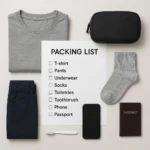
- Pack only for the work and weather you expect. Leave space for practical items, not a suitcase full of “just in case” outfits.
- Put prescription medication in its original packaging, with prescriptions or medical documentation where appropriate.
- Set up offline access to your itinerary, travel documents, and emergency numbers.
- Tell your bank and mobile provider about travel if needed.
- Arrange home responsibilities: bills, pets, medication refills, and any mail or plant-care arrangements.
- Check airline baggage rules directly with your carrier. A backpack that fits last year’s rules may not fit this year’s sizer. ✈️
Departure-day checklist: airport, arrival, and emergency contacts
Before leaving home, make sure you have:
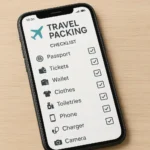
- Passport and any required visa or entry documentation
- Flight details and onward-travel information if required
- Program confirmation and arrival instructions
- Travel-insurance policy and emergency assistance number
- Local coordinator and airport-pickup contact details
- Prescription medication and essential medical information
- A charged phone, charging cable, and a backup way to access key documents
- Emergency contacts both on paper and saved offline
- A small amount of appropriate local currency, if practical
Step by step: arrival
- Connect to Wi-Fi or activate your mobile service.
- Message your contact as agreed, especially if your flight is delayed.
- Use only the confirmed pickup arrangement or a reputable transport option.
- Tell your program contact when you arrive at accommodation.
- Review the next day’s schedule, local safety guidance, and how to ask for help.
One provider-specific example shows why personalized instructions matter: IVHQ describes a central volunteer platform with a program guide, project packing information, arrival details, document submission, and emergency contacts. In the featured video, the emphasis is on using that hub to complete a tailored checklist rather than relying on a generic packing list. That kind of structured support can be useful—but always verify what applies to your own destination, nationality, dates, and project.
🛂 Passports, Visas, Entry Rules, and Volunteer Work Permits
Immigration rules depend on your nationality, destination, length of stay, and the work you will do. Do not assume that “unpaid” automatically means “allowed as a tourist.” Some countries distinguish tourism, volunteering, internships, charity work, and employment in different ways.
Use this order of operations:
- Check the official immigration website or embassy for your destination.
- Describe the actual volunteer duties—not just the program’s marketing label.
- Ask the provider what authorization it expects you to hold and why.
- Confirm passport validity, blank-page rules, onward-ticket requirements, and permitted stay.
- Save copies of approvals and supporting documents where you can access them offline.
- Recheck rules shortly before departure.
For U.S. citizens, the U.S. Department of State’s country information pages provide destination-specific entry information. Other travelers should consult their own government’s travel and consular services. Visa services can assist with applications, but official immigration authorities are the final source for entry rules.
💉 Travel Health, Vaccinations, and Medical Preparation
Health preparation should be tailored to the person and itinerary—not copied from a stranger’s packing list. A city placement, a rural project, and a remote conservation site may involve different health considerations within the same country.
Before you travel
- Book a travel-health consultation well ahead of departure, especially if vaccines or a medication plan may be needed.
- Share your full itinerary, including stopovers, rural stays, altitude, work setting, and trip length.
- Ask about routine immunizations, destination-specific vaccines, mosquito-borne illness prevention, food and water precautions, and medication availability.
- Carry necessary prescriptions in original packaging and ask your clinician whether you need documentation.
- Confirm how to access medical care from the placement and whether your insurance covers emergency evacuation.
The CDC Yellow Book is a reliable reference for clinicians and travelers; the CDC Travelers’ Health pages provide destination guidance. For U.K. travelers, TravelHealthPro is another reputable resource. Guidance can change, and a website cannot replace personalized medical advice.
A practical travel-health kit
Pack items that are appropriate for your medical needs and allowed through customs:
- Regular prescription medication, plus a sensible travel contingency where prescribed
- Copies of prescriptions or a medication list
- Basic wound-care supplies and hand sanitizer
- Any personal allergy or asthma medication
- Insect repellent and sun protection suitable for the destination
- Rehydration supplies if recommended by your clinician
- Glasses or contact-lens supplies, with a spare pair if needed
Don’t donate or share medication, and don’t bring clinical supplies for patient care unless the host organization specifically requests them and you understand the rules. A former volunteer’s anecdote about arriving without gloves or sanitizer is a useful reminder to ask about project supplies—but it does not justify doing medical work outside your training or the placement’s safety procedures.
🛡️ Travel Insurance, Safety, and Emergency Planning
Your policy should match the trip you are actually taking. Standard travel insurance may exclude certain activities, pre-existing conditions, work settings, or remote-area evacuation. Read the policy wording, not just the summary page.
| Coverage to review | Questions to answer |
|---|---|
| Emergency medical care | Are medical treatment and hospital expenses covered overseas? |
| Medical evacuation | Is evacuation covered from the placement location, including remote areas? |
| Repatriation | What support is available if you need to return home for medical reasons? |
| Activities and work | Are your volunteer duties and any recreational activities included? |
| Trip interruption | Are delays, cancellations, or an early return covered? |
| Baggage and equipment | What limits, exclusions, and documentation requirements apply? |
| Existing conditions | Do you need to declare a condition or arrange additional coverage? |
The U.S. Department of State’s travel insurance guidance explains why travelers should review overseas medical coverage. Depending on your nationality, local government advice may differ; your insurer’s policy documents determine your coverage.
For additional safety:
- Save your insurer’s emergency number and local coordinator’s contact.
- Agree on a check-in plan with family or friends.
- Know the nearest clinic or hospital and the transport plan for reaching it.
- Store passport and insurance copies separately from the originals.
- Tell the provider about relevant medical or accessibility needs before arrival.
- Consider enrolling in an official traveler-alert service where available. U.S. citizens can use the Department of State’s Smart Traveler Enrollment Program (STEP).
🎒 What to Pack for a Volunteer Trip Abroad
Your volunteer travel packing list should be based on project tasks, climate, local customs, accommodation, and laundry access. We once overpacked for a short trip and still forgot the one item that mattered most: work-appropriate footwear. The lesson? Pack for the workday first, sightseeing second.
Clothing, work gear, and destination-specific essentials
- Lightweight, modest clothing suited to local expectations
- A few work outfits you don’t mind getting dusty or stained
- Comfortable closed-toe shoes if the project requires them
- Sandals or casual shoes for downtime
- Rain layer, sun hat, and warm layer as the forecast requires
- Swimwear only if suitable for the destination and program setting
- Reusable water bottle, if appropriate and safe for local water arrangements
- A small daypack for transport to the placement
Ask whether the program supplies protective equipment. Don’t substitute fashion shoes for required safety footwear or assume the host will provide every piece of gear.
First-aid kit, medications, and personal care items
- Prescription medications and supporting documentation
- Basic bandages and personal first-aid items
- Sunscreen and insect repellent for the local conditions
- Hand sanitizer and personal hygiene products
- Any glasses, hearing aids, or accessibility items you rely on
- Travel towel if accommodation does not provide one
- Laundry soap or a compact laundry bag if facilities are limited
Check airline rules and local import restrictions before packing medications, batteries, or other controlled items.
Useful items to bring—and what to leave at home
| Useful ✅ | Think twice ❌ |
|---|---|
| Copies of documents, stored securely | Valuables you don’t need for the placement |
| Headlamp for remote or low-light settings | Large donations you haven’t cleared with the project |
| Universal adapter matched to your destination | Work tools that may be restricted or unsuitable |
| Lightweight notebook and pen | Clothing that ignores local dress expectations |
| Small daypack and laundry bag | Unapproved medication or clinical supplies |
| Earplugs for shared accommodation | Expensive jewelry or conspicuous electronics |
Ask before bringing donations. Local organizations may have specific needs, procurement rules, and storage limits. A box of supplies that nobody requested can become an extra task for already busy staff.
💳 Budgeting for Volunteer Travel: Flights, Fees, and Spending Money
Treat a program fee as one line in a full-trip budget. The exact total depends on destination, trip length, airfare, personal habits, insurance, and what the provider includes. We’re deliberately avoiding sample prices here because they date quickly and can give false confidence.
| Budget category | Include |
|---|---|
| Program | Registration, placement, orientation, and any required deposits |
| Transportation | International flights, airport transfers, and local travel |
| Entry documents | Visa, permit, passport renewal, or document services if applicable |
| Health preparation | Consultation, medication, vaccines, or other recommended care |
| Insurance | Medical, evacuation, interruption, and activity coverage |
| Accommodation and meals | Any nights or meals not included in the program |
| Daily spending | Laundry, snacks, phone service, and personal items |
| Free time | Local activities and transport on evenings or days off |
| Contingency | A reserve for delays, replacement essentials, or unexpected travel changes |
Before paying, compare what the provider includes with what you would need to arrange yourself. Some programs include accommodation and daily placement transport; others offer less bundled support. Ask for the fee schedule, refund terms, and payment deadlines in writing.
For ways to keep the rest of your trip manageable, browse our Budget Travel Checklists and Backpacking Checklists. Fundraising can help, but be clear about what donations support and follow the fundraising platform’s current terms.
✈️ Booking Flights and Planning Your Arrival
Do not book flights solely because the program start date is listed online. First confirm the correct arrival airport, pickup window, orientation day, and first-night accommodation. A flight landing after a provider’s pickup window may leave you arranging your own transport.
Arrival-planning steps
- Get your dates and arrival instructions in writing from the organization.
- Confirm the airport code, pickup times, and any required arrival day.
- Ask what to do if your flight is delayed or your baggage is missing.
- Check baggage rules with the airline and leave room for work essentials.
- Keep the accommodation address and local contact accessible offline.
- Confirm whether your return transfer is included or needs separate planning.
- Avoid tight connections where a missed flight could affect mandatory orientation.
If you are comparing flights, use comparison sites as a starting point, then check the airline’s baggage, change, and cancellation terms before booking. The cheapest itinerary is not necessarily the best deal if it requires a long, unprotected connection or arrives after pickup has ended.
🤝 Cultural Etiquette, Language, and Responsible Voluntering
You don’t need to know everything about a culture before arriving. You do need to arrive ready to listen, learn, and adapt. Ask the local team about greetings, clothing, photography, religious customs, and expectations around privacy.
- Learn a few everyday phrases in the local language.
- Ask before photographing people, homes, workplaces, or children.
- Dress for the setting and follow local guidance.
- Avoid making promises on behalf of the project.
- Don’t distribute gifts, food, or money without checking with local staff.
- Be punctual, but stay flexible if local schedules shift.
- Treat feedback as part of the work—not as a personal insult.
- Share stories respectfully and avoid presenting yourself as a rescuer.
Culture shock is not a failure. It can be a normal response to unfamiliar routines, communication styles, food, and expectations. GoAbroad’s internship guide recommends arriving with a plan and preparing for cultural differences; we’d add one more: leave room for the plan to change once you understand the local context.
For longer remote-work extensions before or after a placement, our Digital Nomad Checklists can help with connectivity and work setup.
📵 Staying Connected: Phones, Internet, and Important Documents
Reliable connectivity is useful, but don’t build your emergency plan around having perfect Wi-Fi. Ask the program what coverage is like at accommodation and placement sites, whether local SIMs or eSIMs work with your phone, and which communication method local coordinators use.
Set up a simple communications plan
- Check whether your phone is carrier-unlocked.
- Compare your home provider’s roaming options with local SIM or eSIM service.
- Save local contacts with country codes.
- Download offline maps, translation tools, and boarding passes where available.
- Keep a paper copy of key numbers and your accommodation address.
- Tell someone at home your itinerary and when to expect check-ins.
- Store document copies in a secure location, separate from your physical passport.
Avoid sending passport scans through unverified channels. If a provider asks for sensitive documents, confirm the submission platform and ask how the information is stored and protected.
🌱 Sustainable Travel and Low-Impact Voluntering
Responsible volunteer travel considers the impact of the project and the journey. Choose community-led work, limit unnecessary waste, follow local conservation rules, and use local businesses where appropriate. For wildlife projects, avoid interactions that encourage handling or performance unless qualified local experts can explain why the activity meets welfare standards.
Practical ways to reduce your footprint:
- Bring a refillable bottle where safe drinking-water arrangements allow.
- Follow local rules for waste, wildlife, and natural areas.
- Ask before sharing photos or stories about people and communities.
- Respect local staff’s expertise and project boundaries.
- Support local services without treating spending as a substitute for responsible volunteering.
- Consider how far you travel, how you get there, and whether your trip length suits the work.
A short visit can still be worthwhile when the role is appropriately designed—but more time is not automatically better. Ask what duration the project can usefully support and why.
🏠 Coming Home: Reflection, Follow-Up, and Staying Involved
The trip’s end is a good time to ask what you learned, what the project actually needed, and whether there’s a useful way to stay involved. Keep notes about your tasks, training, and contributions; those details are more informative than a résumé line that simply says “voluntered abroad.”
Before sharing photos or stories, check consent and the organization’s privacy guidance. If you want to support the project later, ask local staff what would be genuinely helpful—sometimes it’s a donation, sometimes practical professional support, and sometimes the best follow-up is simply not making more work for them.
The most meaningful souvenir may be a clearer understanding of your role: not the hero of someone else’s story, but a prepared visitor who showed up, listened, and did the work responsibly.