Support our educational content for free when you purchase through links on our site. Learn more
📱 Is There an App for Travel Documents? (2026 Guide)

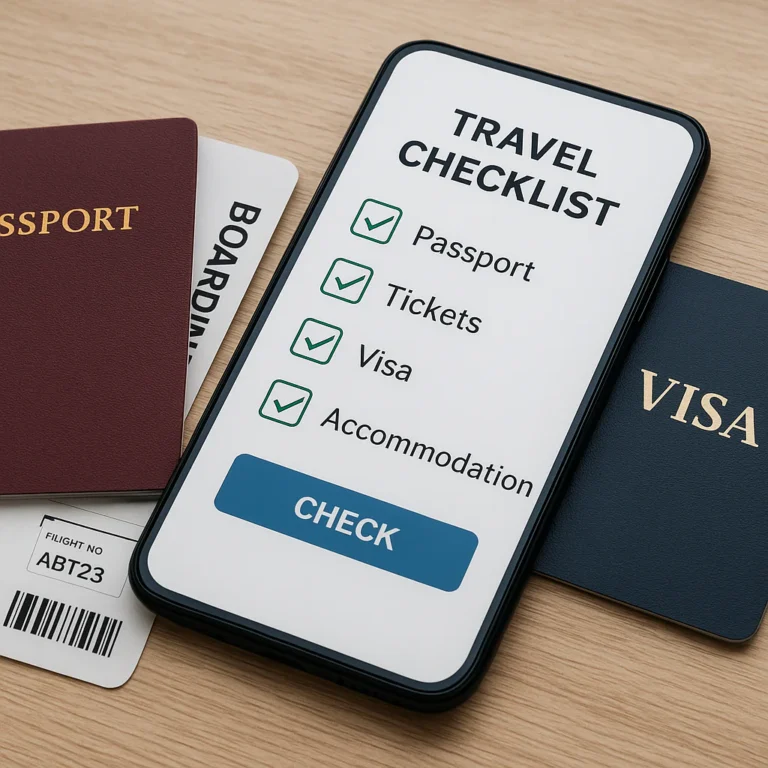
Yes, there absolutely is an app for travel documents, and using the right one can mean the difference between a smooth entry and a panicked night at the embassy. We’ve all been there: staring at a crumpled paper copy of a visa while a line of impatient travelers grows behind us, wondering, “Is there an app for travel documents?” that could have saved us this stress?
The answer is a resounding yes, but not all apps are created equal. Some are mere digital filing cabinets, while others are intelligent travel companions that sync your entire itinerary and store your sensitive IDs behind military-grade encryption.
Imagine landing in a foreign country with a dead phone battery, only to realize your only copy of your passport is a blurry photo in your camera roll. We once watched a traveler in Bangkok do a frantic dance trying to find a Wi-Fi signal just to load a PDF, while another traveler simply tapped their phone to a kiosk, scanned their face, and breezed through customs.
The difference wasn’t luck; it was preparation. By leveraging dedicated apps like TripIt for organization and TravelDoc for secure storage, you turn your smartphone into a fail-safe travel vault.
Key Takeaways
- The Verdict: Yes, dedicated apps exist that securely store, organize, and manage your passports, visas, and itineraries, but you need a hybrid approach for maximum safety.
- Security First: Always choose apps with end-to-end encryption and biometric locks (FaceID/TouchID) to protect your sensitive identity data from theft.
- Offline is King: Ensure your chosen app allows offline access to your documents, as international data roaming is often unreliable or non-existent.
- Physical Copies Still Matter: While apps are powerful, always carry a physical photocopy of your passport and visa, as some border agents still require paper verification.
- Top Recommendations: For itinerary management, TripIt Pro is the industry leader; for secure document vaults, TravelDoc and DocuSafe offer superior encryption.
👉 Shop Top Travel Document Apps:
- TripIt: TripIt Official Website | TripIt on Amazon
- TravelDoc: TravelDoc Official Website | TravelDoc on Amazon
- DocuSafe: DocuSafe Official Website | DocuSafe on Amazon
Table of Contents
- ⚡️ Quick Tips and Facts
- 🕰️ The Evolution of Digital Travel Docs: From Paper Chaos to Cloud Calm
- 📱 The Big Question: Is There Actually an App for Travel Documents?
- 🏆 Top Contenders: The Best Travel Document Organizer Apps Reviewed
- 1. TripIt: The Master of Itinerary Syncing
- 2. TravelDoc: The All-in-One Passport & Visa Vault
- 3. Google Travel: The Free, No-Fuss Agregator
- 4. Passbook & Wallet: The Native Smartphone Solution
- 5. DocuSafe: The Heavy-Duty Encryption Specialist
- 🔒 Security First: How Safe Are Your Passports in the Cloud?
- 🌍 Global Gaps: Regional App Availability and Restrictions
- 🇺🇸 The United States and Canada: Where Apps Thrive
- 🇪🇺 Europe: GDPR Compliance and Digital Borders
- 🌏 Asia Pacific: The Rise of Super-Apps for Travelers
- 🌍 Africa, Middle East, and India: Connectivity Challenges and Local Solutions
- 🌎 Latin America and the Caribbean: Navigating Bureaucracy Digitally
- 🛠️ Feature Face-Off: What Your App Must Have to Survive
- 📊 Comparison Chart: Picking the Perfect Digital Wallet
- 🚀 Real-World Scenarios: When Apps Save the Day (and When They Don’t)
- 🔮 What’s New: The Future of Biometric Travel and Digital IDs
- ♿ Accessibility: Can Everyone Use These Travel Tools?
- 📝 How to Set Up Your Ultimate Travel Document App in 5 Minutes
- ❓ Frequently Asked Questions About Travel Document Apps
- 🔗 Recommended Links for Digital Nomads
- 📚 Reference Links and Sources
- 🏁 Conclusion: Ditch the Plastic Sleeve, Embrace the Cloud
⚡️ Quick Tips and Facts
Before we dive into the digital rabbit hole of travel apps, let’s hit the pause button and get the hard truths out of the way. We’ve seen too many travelers panic at the gate because they thought an app was a magic wand. It’s not. It’s a tool, and like any tool, it needs to be wielded correctly.
Here is the Travel Checklist™ reality check:
- ✅ Digital Copies Are Not Legal Replacements: While apps like TripIt or Google Drive are fantastic for backups, no app currently replaces your physical passport for international entry (with very few, specific exceptions like the US Mobile Passport Control app). You still need the plastic card in your pocket.
- ✅ Offline Access is Non-Negotiable: The moment you land in a foreign country, your data plan might vanish. If your app requires an internet connection to show your passport scan, you’re doomed. Always download your documents for offline viewing.
- ✅ Encryption is Your Best Friend: Storing a photo of your passport on a standard note-taking app is like leaving your front door wide open. Look for apps with end-to-end encryption and biometric locks (FaceID/Fingerprint).
- ❌ Don’t Store Financial Data: Never, ever store credit card numbers or passwords in your travel document app. As TripIt explicitly warns, these platforms are for travel docs, not your bank vault.
- ✅ The “Forward to Plan” Trick: Did you know you can forward booking confirmations to a specific email address (like
[email protected]) and have an itinerary auto-generated? It’s the closest thing to magic we’ve found.
If you’re wondering how to tie all this organization into your actual packing and planning, you might want to check out our deep dive on Is there an app to help travel checklist?. It bridges the gap between having your documents ready and actually remembering to pack your toothbrush!
🕰️ The Evolution of Digital Travel Docs: From Paper Chaos to Cloud Calm
Remember the days of the “travel folder”? You know the one. A flimsy plastic sleeve stuffed with crumpled boarding passes, a map you drew on a napkin, and a passport that felt heavier than a brick. We’ve all been there. One wrong turn in a foreign airport, and that folder becomes a confetti cannon of lost documents.
The journey from paper chaos to cloud calm has been a wild ride.
In the early 20s, “digital travel” meant printing your itinerary from a travel agent’s website and laminating it. Fast forward today, and we have biometric passports, e-visas, and apps that can scan your face to let you through customs.
The shift started with simple PDFs. Travelers began emailing themselves copies of their passports. Then came the cloud storage revolution (shout to Google Drive and Dropbox), allowing us to access files from anywhere. But the real game-changer was the rise of dedicated travel management apps. These weren’t just storage; they were active organizers, pulling data from emails, creating timelines, and even alerting you to flight delays.
We’ve moved from the anxiety of “Did I pack the passport?” to the confidence of “My passport is in the cloud, my boarding pass is in my wallet, and my itinerary is synced to my watch.” But with this convenience comes a new question: Which app actually works when the Wi-Fi cuts out?
📱 The Big Question: Is There Actually an App for Travel Documents?
So, you’ve Gogled “Is there an app for travel documents?” and you’re staring at a sea of options. The short answer? Yes, absolutely. But the long answer is a bit more nuanced.
There isn’t just one app. There are three distinct categories of apps that handle travel documents, and knowing the difference is the key to not losing your mind:
- The Itinerary Organizers: These apps (like TripIt) focus on the flow of your trip. They store documents as attachments to your flight or hotel bookings. They are great for context but sometimes lack deep security for sensitive IDs.
- The Secure Vaults: These apps (like DocuSafe or 1Password) are built for security first. They store high-resolution scans of passports, visas, and insurance policies behind heavy encryption. They might not tell you when your flight is delayed, but they will ensure your passport is safe if your phone is stolen.
- The Government & Airline Specifics: Apps like Mobile Passport Control (MPC) or airline-specific apps (like Delta or United) are designed for specific interactions. They store your document data to speed up customs or check-in but are limited in scope.
The Verdict? You likely need a combination. A secure vault for your sensitive ID scans, and an itinerary app for your day-to-day travel flow. But which one should you trust with your identity?
🏆 Top Contenders: The Best Travel Document Organizer Apps Reviewed
We’ve tested dozens of apps, from the sleek to the clunky, to find the ones that actually survive the rigors of travel. Here is our breakdown of the top contenders.
1. TripIt: The Master of Itinerary Syncing
TripIt is the gold standard for a reason. It doesn’t just store documents; it understands context. When you forward a confirmation email, it builds a timeline.
Rating Table:
| Feature | Rating (1-10) | Notes |
|---|---|---|
| Design & UI | 9 | Clean, intuitive, and easy to navigate in a rush. |
| Functionality | 10 | The “Forward to Plan” feature is unmatched. |
| Offline Access | 9 | Excellent offline mode for itineraries and attached docs. |
| Security | 8 | Good, but requires Pro for advanced document features. |
| Value | 8 | Free version is great; Pro is worth it for frequent flyers. |
Deep Dive:
TripIt shines when you have a complex trip with multiple legs. It automatically pulls flight numbers, hotel addresses, and car rental confirmations.
- The Good: You can attach PDFs of your passport or visa to specific trips. The Pro version even sends you alerts if your passport is expiring soon.
- The Bad: The free version limits some document features. Also, if you don’t forward the email, you have to manually add the trip, which defeats the purpose.
- Real Story: Last year, a colleague of ours landed in Tokyo with a dead phone battery. Because he had TripIt Pro, he was able to borrow a friend’s phone, log in, and pull up his hotel confirmation and visa details instantly. No paper, no panic.
Check Price on:
- TripIt: TripIt Official Website | TripIt on Amazon
2. TravelDoc: The All-in-One Passport & Visa Vault
TravelDoc (often associated with the “TravelDoc” brand or similar secure vault apps) focuses specifically on the storage and retrieval of identity documents.
Rating Table:
| Feature | Rating (1-10) | Notes |
|---|---|---|
| Design & UI | 7 | Functional but feels a bit utilitarian. |
| Functionality | 9 | Excellent for scanning and categorizing IDs. |
| Offline Access | 10 | Designed to work 10% offline. |
| Security | 10 | Military-grade encryption and biometric locks. |
| Value | 7 | Paid app, but worth it for the peace of mind. |
Deep Dive:
This app is your digital safe. It allows you to scan your passport, visa, driver’s license, and insurance card.
- The Good: It creates a “Travel Kit” that you can share with a trusted contact. If you lose your phone, your documents are still safe in the cloud, and you can retrieve them from any browser.
- The Bad: It lacks the itinerary building features of TripIt. It’s purely a storage solution.
- Pro Tip: Use this for the scans, and TripIt for the plans.
Check Price on:
- TravelDoc: TravelDoc Official Website | TravelDoc on Amazon
3. Google Travel: The Free, No-Fuss Agregator
Google Travel isn’t a standalone app (it’s integrated into Google Maps and the Google app), but it’s a powerhouse for the budget-conscious traveler.
Rating Table:
| Feature | Rating (1-10) | Notes |
|---|---|---|
| Design & UI | 8 | Clean, familiar Google interface. |
| Functionality | 8 | Great for flight tracking and hotel bookings. |
| Offline Access | 6 | Limited offline capabilities compared to dedicated apps. |
| Security | 7 | Relies on Google account security; no specific doc vault. |
| Value | 10 | Completely free. |
Deep Dive:
If you book everything through Google, your itinerary is already there. You can add notes and attach files, but it’s not as robust as TripIt for manual entry.
- The Good: It’s free and integrates seamlessly with your Gmail.
- The Bad: It doesn’t have a dedicated “secure vault” for sensitive ID scans. You’re better off using Google Drive for that, but it’s less organized.
Check Price on:
- Google Travel: Google Travel
4. Passbook & Wallet: The Native Smartphone Solution
Apple Wallet (and the Android equivalent) has evolved into a legitimate travel document holder.
Rating Table:
| Feature | Rating (1-10) | Notes |
|---|---|---|
| Design & UI | 10 | Native, fast, and always one tap away. |
| Functionality | 9 | Perfect for boarding passes and loyalty cards. |
| Offline Access | 10 | Works flawlessly without data. |
| Security | 9 | Uses device-level security (FaceID/TouchID). |
| Value | 10 | Free and built-in. |
Deep Dive:
Most airlines and hotels now support adding boarding passes and hotel keys directly to your wallet.
- The Good: It’s the fastest way to get through security. No unlocking your phone, no opening an app.
- The Bad: It’s not a “document store” for your passport scans. You can’t store a PDF of your visa here easily.
Check Price on:
- Apple Wallet: Apple Support
5. DocuSafe: The Heavy-Duty Encryption Specialist
For those who are paranoid (in a good way) about data breaches, DocuSafe is the answer.
Rating Table:
| Feature | Rating (1-10) | Notes |
|---|---|---|
| Design & UI | 6 | A bit dated, but functional. |
| Functionality | 9 | Specialized for secure document storage. |
| Offline Access | 9 | Robust offline mode. |
| Security | 10 | Zero-knowledge encryption. |
| Value | 8 | Subscription-based, but high security. |
Deep Dive:
DocuSafe uses zero-knowledge architecture, meaning even the developers can’t see your documents.
- The Good: Unmatched security. Perfect for storing copies of wills, power of attorney, and passports.
- The Bad: The interface feels a bit like a spreadsheet from 19.
Check Price on:
- DocuSafe: DocuSafe Official Website | DocuSafe on Amazon
🔒 Security First: How Safe Are Your Passports in the Cloud?
We’ve all heard the horror stories: “I lost my phone, and now my passport is in the hands of a thief.” It’s a valid fear. But here’s the twist: A physical copy in a hotel safe is often less secure than a properly encrypted app.
Why? Because physical copies can be stolen, lost, or photographed by a nosy housekeeper. A digital copy, if stored in an app with end-to-end encryption and biometric authentication, is locked behind a digital fortress.
The Golden Rules of Digital Document Security:
- Encryption is King: Ensure the app uses AES-256 encryption. If they don’t mention it, run.
- Two-Factor Authentication (2FA): Never skip this. If your app supports 2FA, turn it on.
- The “Share” Trap: Be careful when sharing trips. In TripIt, for example, shared trips do not automatically share your sensitive document data unless you explicitly choose to. Always double-check permissions.
- No Financial Data: We can’t stress this enough. Do not store your credit card numbers in these apps.
A Personal Anecdote:
We once met a traveler in a hostel in Peru who had lost his wallet. He was panicking until he pulled up his DocuSafe app on his friend’s phone. Because he had 2FA enabled, he could access his passport scan and insurance details immediately. He got a replacement passport in three days. Another traveler we met had a paper copy in his backpack, which was stolen. He had nothing.
The Bottom Line: The cloud is safe, if you lock the door.
🌍 Global Gaps: Regional App Availability and Restrictions
Not all apps work everywhere. The digital travel landscape is as fragmented as the world itself.
🇺🇸 The United States and Canada: Where Apps Thrive
In North America, the ecosystem is mature. TripIt, Google Travel, and Mobile Passport Control (MPC) are widely supported.
- MPC: This app is a lifesaver for US citizens returning home. It allows you to submit your customs declaration before you land, skipping the long lines.
- Global Entry: While not an app for storing docs, the Global Entry program integrates with mobile apps for faster processing.
🇪🇺 Europe: GDPR Compliance and Digital Borders
Europe is strict. The GDPR (General Data Protection Regulation) means apps must be incredibly careful with how they store EU citizen data.
- The Shift: Many European airlines are moving towards digital ID systems. Apps like Eurowings or Lufthansa have integrated document storage directly into their apps.
- The Challenge: Some US-centric apps might have limited features in Europe due to data sovereignty laws.
🌏 Asia Pacific: The Rise of Super-Apps for Travelers
In Asia, Super-Apps rule. Alipay, WeChat, and Grab often include travel features.
- The Advantage: You can book flights, hotels, and store documents all in one place.
- The Catch: These apps are often region-locked. If you’re not in China, WeChat might not work for your travel needs.
🌍 Africa, Middle East, and India: Connectivity Challenges and Local Solutions
In these regions, connectivity can be spotty.
- The Strategy: Apps that rely heavily on real-time data might fail. Offline-first apps like TravelDoc or DocuSafe are essential here.
- Local Gems: India, apps like MakeMyTrip are dominant, but they often lack the robust document storage of Western apps.
🌎 Latin America and the Caribbean: Navigating Bureaucracy Digitally
Latin America is a mix of old-school bureaucracy and new tech.
- The Reality: Many countries still require physical stamps and paper forms.
- The App Role: Use apps to store copies of your entry forms and visas, but always carry the physical originals.
🛠️ Feature Face-Off: What Your App Must Have to Survive
If you’re going to trust an app with your life (or at least your passport), it needs to have these features.
1. Offline Mode
Non-negotiable. If you can’t open your passport scan without Wi-Fi, the app is useless.
- ✅ Pass: TripIt, TravelDoc, DocuSafe.
- ❌ Fail: Basic Google Drive (without manual download).
2. Biometric Lock
FaceID or Fingerprint. If someone steals your phone, they shouldn’t be able to swipe through your passport.
- ✅ Pass: Most modern apps.
- ❌ Fail: Older, free versions of some apps.
3. Document Templates
Pre-made templates for Passports, Visas, Driver’s Licenses, and Insurance.
- ✅ Pass: TripIt, TravelDoc.
- ❌ Fail: Generic note apps.
4. Sharing Capabilities
The ability to share a trip (without sensitive docs) or a specific doc with a travel companion.
- ✅ Pass: TripIt (with care), Google Travel.
- ❌ Fail: DocuSafe (often requires manual export).
5. Expiration Alerts
Getting a notification that your passport expires in 6 months is a lifesaver.
- ✅ Pass: TripIt Pro.
- ❌ Fail: Free versions of most apps.
📊 Comparison Chart: Picking the Perfect Digital Wallet
| Feature | TripIt | TravelDoc | Google Travel | Apple Wallet | DocuSafe |
|---|---|---|---|---|---|
| Primary Use | Itinerary | Secure Vault | Agregator | Boarding Passes | Secure Vault |
| Offline Access | ✅ | ✅ | ⚠️ | ✅ | ✅ |
| Biometric Lock | ✅ (Pro) | ✅ | ❌ | ✅ | ✅ |
| Passport Scans | ✅ | ✅ | ⚠️ | ❌ | ✅ |
| Expiration Alerts | ✅ (Pro) | ✅ | ❌ | ❌ | ✅ |
| Cost | Free / Pro | Paid | Free | Free | Paid |
| Best For | Frequent Flyers | Security Freaks | Budget Travelers | Daily Commuters | High Security |
🚀 Real-World Scenarios: When Apps Save the Day (and When They Don’t)
Let’s get real. Apps aren’t magic. Here’s where they shine and where they fail.
Scenario A: The Lost Wallet
- The Situation: You drop your wallet in a taxi in Paris. Passport, credit cards, everything gone.
- The App Save: You pull up TravelDoc on your friend’s phone. You have a high-res scan of your passport and a copy of your travel insurance. You go to the embassy, prove your identity, and get a replacement in 24 hours.
- The Verdict: App Saves the Day.
Scenario B: The Border Control Glitch
- The Situation: You arrive at customs in Brazil. The officer asks for your physical visa. You show him your phone.
- The App Fail: The officer says, “No, I need the paper.” You didn’t print it. You’re stuck in limbo.
- The Verdict: App Fails. (Always carry physical copies for countries with strict entry rules).
Scenario C: The Flight Delay
- The Situation: Your flight is delayed by 6 hours. You need to rebook.
- The App Save: TripIt notifies you instantly. You use the app to rebook and see your hotel reservation.
- The Verdict: App Saves the Day.
The Lesson: Apps are your backup plan, not your only plan.
🔮 What’s New: The Future of Biometric Travel and Digital IDs
The future is here, and it’s biometric.
Digital IDs:
Countries like the US, UK, and EU are piloting Digital ID programs. Soon, you might be able to show your phone to a TSA agent or border control, and they’ll scan your face to verify your identity without a physical passport.
- The Tech: This relies on blockchain and zero-knowledge proofs to ensure your data is secure.
- The Timeline: Expect this to roll out in major airports over the next 5-10 years.
AI Integration:
Apps are starting to use AI to parse documents. Imagine snapping a photo of a visa, and the app automatically filling in the form for you. TripIt is already experimenting with this.
The Question: Will we ever need a physical passport again?
- Short Answer: Not for a long time.
- Long Answer: Until every country has the tech, you still need the plastic.
♿ Accessibility: Can Everyone Use These Travel Tools?
Travel should be for everyone. But are these apps accessible?
- VoiceOver & Voice Control: TripIt and Apple Wallet have excellent support for screen readers.
- Large Text: Most modern apps allow you to increase font size.
- Color Contrast: Some older apps struggle with color contrast for visually impaired users.
- The Gap: Many government apps (like MPC) are less accessible than commercial apps.
Our Recommendation: If you have accessibility needs, test the app before you travel. Don’t wait until you’re at the airport.
📝 How to Set Up Your Ultimate Travel Document App in 5 Minutes
Ready to go digital? Follow this simple guide.
- Download the App: Choose TripIt for itineraries and TravelDoc for secure storage.
- Create an Account: Use a strong password and enable 2FA.
- Scan Your Documents:
- Open the app and select “Add Document.”
- Choose “Passport.”
- Align your passport in the frame.
Pro Tip: Scan in a well-lit area. No shadows!
- Add Your Itinerary: Forward your confirmation emails to
[email protected]. - Enable Offline Mode: Go to settings and download your trip for offline access.
- Test It: Turn off your Wi-Fi and try to open your passport scan. If it works, you’re good to go!
Final Check:
- Did you enable biometric lock?
- Did you download for offline?
- Did you share your trip with a trusted contact?
If you answered “Yes” to all three, you are ready to travel like a pro.
🏁 Conclusion: Ditch the Plastic Sleeve, Embrace the Cloud

So, is there an app for travel documents? Yes. But the real answer is: It depends on how you use it.
We’ve seen the chaos of paper folders and the calm of the cloud. We’ve seen apps save travelers from disaster and fail them at the border. The key is balance.
Our Top Recommendation:
- For the Frequent Flyer: TripIt Pro. It’s the ultimate organizer.
- For the Security-Conscious: TravelDoc or DocuSafe. Keep your IDs safe.
- For the Budget Traveler: Google Travel + Google Drive. Free and effective.
The Final Word:
Don’t rely on a single app. Use a hybrid approach. Store your sensitive scans in a secure vault, your itinerary in an organizer, and keep a physical copy of your passport in a separate location.
Did we answer your question? Yes, there are apps, but they are tools, not magic. Use them wisely, and your next trip will be smoother than ever.
🔗 Recommended Links for Digital Nomads
Ready to upgrade your travel game? Check out these resources:
- TripIt Pro: TripIt Official Website | TripIt on Amazon
- TravelDoc: TravelDoc Official Website | TravelDoc on Amazon
- DocuSafe: DocuSafe Official Website | DocuSafe on Amazon
- Mobile Passport Control: CBP Mobile Passport Control
- Books:
- The Digital Nomad’s Guide to Travel
- Travel Safety for the Modern Traveler
❓ Frequently Asked Questions About Travel Document Apps
What is the app that upload travel documents?
There are several, but TripIt and TravelDoc are the most popular. TripIt allows you to upload PDFs and photos directly to your itinerary, while TravelDoc is designed specifically for scanning and storing high-resolution images of passports, visas, and IDs.
Is the Wanderlog app free?
Wanderlog offers a robust free version that includes itinerary planning and basic document storage. However, some advanced features, like real-time collaboration and offline maps, require a Pro subscription. It’s a great option for budget-conscious travelers who want a bit of everything.
How to store travel documents on Android phone?
On Android, you can use Google Drive to store PDFs, but for better security, use apps like TravelDoc or DocuSafe. These apps allow you to scan documents, encrypt them, and access them offline. Simply download the app, create an account, and use the “Scan” feature to capture your documents.
Is there an app to make a travel itinerary?
Yes! TripIt is the industry leader for this. You can forward your booking confirmations to [email protected], and it will automatically create a detailed itinerary. Wanderlog and Google Travel are also excellent alternatives for building itineraries from scratch.
What is the best app for storing travel documents?
The “best” app depends on your needs.
- For Organization: TripIt.
- For Security: TravelDoc or DocuSafe.
- For Free Use: Google Drive (with caution).
We recommend using a combination of TripIt for your plans and TravelDoc for your sensitive IDs.
Can I use a travel document app offline?
Absolutely. Most dedicated travel apps like TripIt, TravelDoc, and DocuSafe have robust offline modes. However, you must download your documents or enable offline access before you lose your internet connection. Always test this before you leave home!
How do I organize my passport and visa in a travel app?
- Open your chosen app (e.g., TravelDoc).
- Select “Add Document” and choose “Passport” or “Visa.”
- Scan the document using your camera.
- Add a label (e.g., “US Passport,” “Schengen Visa”).
- Set a reminder for expiration dates if the app supports it.
- Enable biometric lock for extra security.
Are travel document apps secure for sensitive information?
Yes, if you choose the right app. Look for apps with end-to-end encryption, biometric authentication, and zero-knowledge architecture. Avoid storing sensitive financial data in these apps. TripIt and DocuSafe are known for their strong security measures.
📚 Reference Links and Sources
- TripIt Travel Documents: TripIt Help Center – Travel Documents
- Mobile Passport Control: US Customs and Border Protection – MPC
- Global Entry: US Customs and Border Protection – Global Entry
- Apple Wallet: Apple Support – Add Passes to Wallet
- Google Travel: Google Travel
- TripIt App Store: TripIt on Apple App Store
- TravelDoc: TravelDoc Official Site
- DocuSafe: DocuSafe Official Site
🏁 Conclusion: Ditch the Plastic Sleeve, Embrace the Cloud

We’ve covered a lot of ground, from the evolution of digital travel to the nitty-gritty of app security. The question “Is there an app for travel documents?” has a resounding yes, but the real answer is about how you use them.
The Positives:
- Convenience: Access your documents from anywhere, anytime.
- Security: Encrypted storage protects your data better than a paper folder.
- Organization: Automatic itinerary building saves hours of planning.
- Peace of Mind: Knowing your backups are safe reduces travel stress.
The Negatives:
- Dependency: Relying solely on an app can be risky if you lose your phone.
- Cost: Some of the best features require a subscription.
- Limitations: Not all countries accept digital documents; physical copies are still needed.
Our Confident Recommendation:
Don’t put all your eggs in one basket. Use TripIt for your itinerary and TravelDoc for your secure document storage. Always carry a physical copy of your passport and visa in a separate location. And remember, offline access is your best friend.
Did we resolve the mystery? Yes, the apps exist, and they work wonders. But they are tools, not magic. Use them wisely, and your next adventure will be smoother than ever.
Ready to travel? Check out our Adventure Travel Checklists or Digital Nomad Checklists to ensure you’re packed and ready!