Support our educational content for free when you purchase through links on our site. Learn more
🌍 12 Ways to Customize Your International Travel Checklist (2026)

To customize your travel checklist for different international trips, you must stop using a generic list and instead build a modular system that layers destination-specific risks, climate needs, and activity gear onto a core foundation of non-negotiable documents and health items. The answer to how can I customize my travel checklist for different types of international trips lies in treating your packing list like a dynamic app: keep the “base code” (passport, meds, money) constant, but swap out the “plugins” (hiking boots vs. formal wear, malaria meds vs. sunscreen) based on your specific itinerary.
We learned this the hard way when we tried to hike the Inca Trail with a “Beach Vacation” checklist. We showed up with flip-flops and a sarong, only to realize were three days from Cusco with no thermal layers or rain gear. That trip taught us that context is king; a checklist for a business trip to London looks nothing like a backpacking list for Vietnam.
Did you know that over 180 countries require your passport to be valid for at least six months beyond your entry date? Missing this single detail can turn your dream vacation into a nightmare before you even board the plane. By tailoring your list to the specific demands of your destination, you eliminate the stress of forgetting essentials and the burden of carrying unnecessary weight.
Key Takeaways
- Build a Modular Master List: Separate your checklist into a Core Foundation (documents, money, meds) and Custom Layers (climate, activity, culture) to easily adapt for any destination.
- Prioritize Destination-Specific Risks: Customize your medical kit and gear based on local threats, such as adding malaria prophylaxis for tropical zones or altitude sickness meds for high elevations.
- Match Gear to Trip Type: A luxury city break requires formal attire and minimal luggage, while an adventure trek demands moisture-wicking fabrics and heavy-duty boots.
- Verify Entry Protocols Early: Always check visa requirements, voltage standards, and restricted medications for your specific country before packing.
- Use Digital Tools: Leverage apps like the Travel Checklist App to create, save, and duplicate customized lists for future trips.
Table of Contents
- ⚡️ Quick Tips and Facts
- 🌍 The Evolution of the Global Traveler: Why One Size Never Fits All
- 🎒 The Core Framework: Building Your Master International Travel Checklist
- ✈️ 1. The Jet-Setter’s Blueprint: Customizing for Long-Haul Flights and Layovers
- 🏔️ 2. The Adventure Seeker’s Pack: Tailoring Gear for Treking and Rugged Terrain
- 🏨 3. The Luxury Sojourner’s List: Elevating Comfort for High-End Stays
- 👨 👩 👧 👦 4. The Family Voyage: Managing Kids, Strollers, and Sanity on International Soil
- 🎒 5. The Digital Nomad’s Setup: Ensuring Connectivity and Work-Ready Essentials Abroad
- 🌡️ 6. The Climate Chameleon: Adapting Your Kit for Tropical, Arid, and Arctic Zones
- 🛂 7. The Paperwork Puzzle: Visa Requirements, Vaccinations, and Entry Protocols by Region
- 💊 8. The Health & Safety Shield: Customizing Medical Kits for Destination-Specific Risks
- 🧳 9. The Carry-On Conundrum: Maximizing Space and Navigating Liquid Restrictions Globally
- 🧺 10. The Laundry & Laundry-Free Strategy: Packing Light for Extended Stays
- 🔌 1. The Power Grid Guide: Navigating Plugs, Voltage, and Charging Solutions Worldwide
- 🧠 12. The Mental Prep: Cultural Etiquette, Language Apps, and Local Customs
- 🚫 Common Packing Pitfalls: What to Leave Behind Based on Your Trip Type
- 🛠️ The Digital Toolkit: Apps and Templates to Automate Your Custom Checklists
- 📝 Real Traveler Stories: How We Overhauled Our Lists for Specific Destinations
- ✅ Final Pre-Departure Sweep: The 24-Hour Countdown
- Conclusion
- Recommended Links
- FAQ
- Reference Links
⚡️ Quick Tips and Facts
Before we dive into the nitty-gritty of customizing your checklist, let’s hit the brakes for a second and grab some high-impact facts that could save your trip (or at least your sanity).
- The “Six-Month” Rule: Did you know that over 180 countries require your passport to be valid for at least six months beyond your date of entry? 🛑 If you’re flying to Thailand, Brazil, or China with a passport expiring in five months, you’ll be turned away at the gate. Check your expiration date now.
- The Lost Luggage Reality: According to SITA’s 2023 Bagage Report, while baggage mishandling rates have dropped, millions of bags still go astray annually. Never pack essential meds, a change of clothes, or your favorite toiletries in checked luggage.
- The Voltage Trap: Not all “universal” adapters work with high-wattage devices like hair dryers. If your device says “Input: 10-120V” and you plug it into a 20V outlet without a converter, pof—your hair dryer becomes a very expensive paperweight.
- The Digital Nomad Myth: You don’t need a “work-from-anywhere” setup for every trip. Sometimes, the best customization is knowing when to leave the laptop at home.
Ready to stop guessing and start packing like a pro? Let’s build your custom master checklist.
🌍 The Evolution of the Global Traveler: Why One Size Never Fits All
Remember the days when a single “Travel Checklist” was a generic list of “Passport, Toothbrush, Socks”? Those days are dead and buried. The modern traveler is a chameleon. We are backpackers one month, luxury cruisers the next, and digital nomads the month after.
Why does a one-size-fits-all approach fail? Because context is king.
Packing for a week in Tokyo requires a completely different mindset than a month-long safari in Kenya or a business conference in Dubai.
- Tokyo: You need comfortable walking shoes, a portable Wi-Fi device, and cash for vending machines.
- Kenya: You need neutral-colored clothing, malaria prophylaxis, and a heavy-duty power bank.
- Dubai: You need formal attire for dinner, sunscreen, and a scarf for modesty in religious sites.
If you try to use a “Safari List” for a “City Break,” you’ll end up lugging around a tent when you just needed a blazer. Conversely, bringing a blazer to the savannah is a recipe for sweat and regret.
Pro Tip: Before you even open your suitcase, ask yourself: “What is the primary activity of this trip?” The answer dictates 80% of your packing list.
For those just starting to build their foundation, check out our guide on How do I create a travel checklist for international travel? to get the basics down before we get into the advanced customization.
🎒 The Core Framework: Building Your Master International Travel Checklist
You can’t customize a house if you don’t have a solid foundation. Think of your Master Checklist as the skeleton. It holds the essentials that every international traveler needs, regardless of destination.
The Non-Negotiables (The Skeleton)
These items go in your checklist for every trip, no exceptions:
- Travel Documents: Passport (with 6+ months validity), Visas, Travel Insurance Policy, ID.
- Money: Local currency (small bills), Credit cards (notify your bank), Debit card.
- Health: Prescription meds (in original bottles), Basic first aid kit.
- Tech: Phone, Charger, Universal Adapter, Power Bank.
- Clothing: Undergarments, Sleepwear, 1-2 days of “just in case” clothes.
The Customization Layers (The Flesh and Blood)
Once the skeleton is set, you add layers based on your specific trip type. This is where the magic happens.
| Layer Type | What it Adds | Example Items |
|---|---|---|
| Climate Layer | Weather-specific gear | Rain jacket, thermal layers, swimsuit |
| Activity Layer | Hobby/Event gear | Hiking boots, formal wear, snorkel gear |
| Duration Layer | Laundry/Consumables | Laundry detergent sheets, extra toiletries |
| Cultural Layer | Local norms/etiquette | Scarf, modest clothing, gift items |
Why this works: By separating your list into a Core and Custom sections, you never forget the basics, but you also don’t overpack the fluff.
✈️ 1. The Jet-Setter’s Blueprint: Customizing for Long-Haul Flights and Layovers
Long-haul flights are a different beast entirely. We’re talking 8+ hours in a pressurized tube. The customization here isn’t about the destination; it’s about surviving the journey.
The “Economy vs. Premium” Divide
As noted by seasoned travelers, the airline class you fly dictates your packing list.
- Economy/Basic: You are the provider. You need your own neck pillow, eye mask, earplugs, and hydration kit.
- Business/First: The airline provides the “goodie bag.” Your list shrinks significantly. You might only need a backup pair of socks and your own noise-canceling headphones.
Insider Secret: Always check your airline’s amenities list before you pack. If they provide slippers and a blanket, leave yours at home. If they don’t, pack the “comfort kit” immediately.
The Hydration Protocol
Cabin air is drier than the Sahara.
- Add to List: A high-quality humidifying face mask (apply post-meal), lip balm, eye drops, and a collapsible water bottle (fill after security).
- Avoid: Caffeine and alcohol before and during the flight. They dehydrate you faster than you can imagine.
The “Lost Bag” Safety Net
If your checked bag goes missing, your carry-on must sustain you for 48 hours.
- Must-Have: A complete change of clothes (including underwear and socks), essential toiletries, and any critical medication.
- Tech: A portable power bank is non-negotiable. Airport outlets are scarce, and you don’t want a dead phone when you need to rebook a flight.
👉 Shop
- Compression Socks: Amazon | Brand Official
- Noise-Canceling Headphones: Amazon | Sony Official | Bose Official
🏔️ 2. The Adventure Seeker’s Pack: Tailoring Gear for Treking and Rugged Terrain
If your trip involves dirt, sweat, and elevation changes, your checklist needs a serious overhaul. We’re talking about functional gear over fashion.
The “Leave No Trace” Essentials
- Footwear: Broken-in hiking boots are mandatory. No new shoes on day one!
- Clothing: Moisture-wicking fabrics only. Cotton is the enemy of the adventurer; it stays wet and causes chafing.
- Navigation: Physical map and compass (in case GPS fails).
Destination-Specific Additions
- High Altitude: Diamox (consult a doctor), lip balm with SPF 50+, and a warm beanie.
- Jungle/Rainforest: Insect repellent with DET, waterproof dry bags, and quick-dry towels.
- Desert: Wide-brimed hat, electrolyte packets, and a bandana for dust.
Real Story: We once saw a traveler try to hike the Inca Trail in jeans. Let’s just say they didn’t make it past the first mile. Layering is your best friend.
👉 Shop
- Hiking Boots: Amazon | REI Co-op | Merell Official
- Dry Bags: Amazon | Sea to Summit Official
🏨 3. The Luxury Sojourner’s List: Elevating Comfort for High-End Stays
Luxury travel isn’t just about expensive hotels; it’s about curated comfort. Your checklist should reflect the amenities you won’t find in a standard hotel.
What to Leave Behind
- Hair Dryer/Iron: High-end hotels almost always provide these.
- Toiletries: Skip the travel-sized shampoo. You’ll be using the premium brands provided.
- Umbrella: If you’re staying in a 5-star city hotel, they usually have concierge service to grab one.
What to Add
- Silk Sleepwear: For that extra touch of comfort.
- Portable Humidifier: Even luxury hotels can have dry air.
- White Noise Machine: Or a high-quality app on your phone.
- Formal Attire: Don’t forget the “nice dinner” outfit.
Pro Tip: Check if the hotel offers laundry service or in-room washing machines. If they do, you can pack half the clothes you think you need.
👨👩👧👦 4. The Family Voyage: Managing Kids, Strollers, and Sanity on International Soil
Traveling with kids is like playing a game of Tetris where the pieces are screaming toddlers and the board is a cramped airplane seat. Your checklist must be strategic.
The “Kid-Proof” Essentials
- Entertainment: Downloaded movies, coloring books, and new small toys (wrap them like gifts to open one at a time).
- Snacks: A massive stash of non-perishable snacks. Airport food is expensive and kids hate it.
- Medication: Pediatric fever reducers, motion sickness bands, and band-aids.
The “Stroller vs. Carrier” Dilemma
- Stroller: Great for airports and flat cities. Check if your airline allows gate-checking.
- Carrier: Essential for coblestone streets, hiking, or crowded markets.
Insight: Pack a dedicated “diaper bag” that stays with you, even if you check a main bag. It should contain 24 hours of diapers, wipes, and a change of clothes for everyone.
👉 Shop
- Travel Strollers: Amazon | Baby Joger Official
- Baby Cariers: Amazon | Ergobaby Official
🎒 5. The Digital Nomad’s Setup: Ensuring Connectivity and Work-Ready Essentials Abroad
For the digital nomad, the checklist is less about clothes and more about productivity. If your Wi-Fi fails, your trip fails.
The Connectivity Kit
- Local SIM/eSIM: Research providers like Airalo or Holafly before you land.
- Portable Wi-Fi Hotspot: A backup if local networks are spotty.
- Power Solutions: A high-capacity power bank (20,0mAh+) and a multi-port charger.
The Work Station
- Laptop Stand: For ergonomics in cafes.
- Noise-Canceling Headphones: Crucial for focus in noisy environments.
- Universal Adapter: With USB-C ports for fast charging.
Don’t Forget: Check the visa requirements for remote work. Some countries require specific “Digital Nomad Visas” (like Estonia or Portugal) if you plan to stay longer than a tourist visa allows.
For more on this, explore our Digital Nomad Checklists.
🌡️ 6. The Climate Chameleon: Adapting Your Kit for Tropical, Arid, and Arctic Zones
One size does not fit all climates. Let’s break down the Climate Chameleon strategy.
Tropical (e.g., Bali, Caribbean)
- Focus: Sun protection and rain readiness.
- Add: High SPF sunscreen, rash guard, quick-dry towel, waterproof phone case.
- Leave: Heavy denim, wool sweaters.
Arid (e.g., Dubai, Sahara)
- Focus: Hydration and sun shielding.
- Add: Electrolyte tablets, wide-brimed hat, sunglasses with UV protection, lip balm.
- Leave: Light, sheer fabrics that offer no sun protection.
Arctic (e.g., Iceland, Antarctica)
- Focus: Layering and warmth.
- Add: Thermal base layers, insulated jacket, waterproof boots, hand warmers.
- Leave: Cotton socks (they get wet and freeze).
Fact: The body loses heat 25x faster in water than in air. If you’re near the ocean in cold climates, windproof outer layers are critical.
🛂 7. The Paperwork Puzzle: Visa Requirements, Vaccinations, and Entry Protocols by Region
This is the section that ruins trips if ignored. Customization by region is critical here.
Visa Strategies
- e-Visa: Apply online (e.g., Turkey, India). It’s faster and often cheaper.
- Visa on Arrival: Available for many countries, but lines can be long. Have cash ready.
- Embassy Visa: Required for some countries (e.g., Russia, North Korea). Plan months in advance.
Health Protocols
- Vaccinations: Yellow Fever is mandatory for entry into many African and South American countries. Proof of vaccination (Yellow Card) is required.
- Prescriptions: Carry a doctor’s note for controlled substances. Some meds legal in the US (like ADHD meds) are illegal in Japan or UAE.
Pro Tip: Use the IATA Travel Centre to check entry requirements for your specific nationality and destination.
💊 8. The Health & Safety Shield: Customizing Medical Kits for Destination-Specific Risks
Your medical kit should be a mirror of your destination’s risks.
Destination-Specific Additions
- Tropical: Antimalarials, anti-diarrheal meds, rehydration salts, antihistamines.
- High Altitude: Acetazolamide (Diamox) for altitude sickness.
- Urban: Extra painkillers, blister pads, and a small first aid kit for minor cuts.
The “Never Check” Rule
Always carry your prescription meds in your carry-on. If your bag is lost, you don’t want to be without insulin or heart medication.
👉 Shop
- First Aid Kits: Amazon | First Aid Only Official
- Water Purification: Amazon | SteriPEN Official
🧳 9. The Carry-On Conundrum: Maximizing Space and Navigating Liquid Restrictions Globally
The carry-on is your lifeline. Customizing it means strategic packing.
The 3-1-1 Rule (and its variations)
- Standard: Liquids must be 3.4oz (10ml) or less, in a 1-quart bag.
- Global Variations: Some countries have stricter rules. Always check the specific airline and country regulations.
Packing Techniques
- Rolling: Saves space and reduces wrinkles.
- Packing Cubes: Essential for organization. Use different colors for different categories (e.g., red for underwear, blue for shirts).
- Wear the Bulkiest Items: Boots, heavy jackets, and jeans should be worn on the plane.
Insight: If you’re flying to Japan, remember that luggage space is at a premium. Pack light so you have room for souvenirs!
🧺 10. The Laundry & Laundry-Free Strategy: Packing Light for Extended Stays
For trips longer than a week, the “pack everything” strategy fails. You need a Laundry Strategy.
The “Laundry-Free” Approach
- Capsule Wardrobe: Pack 5-7 days of versatile, mix-and-match clothes.
- Quick-Dry Fabrics: Wash in the sink, hang to dry overnight.
The “Laundry Service” Approach
- Research: Check if your accommodation has a washer/dryer or a local laundry service.
- Detergent: Pack a few laundry detergent sheets (they don’t count as liquids).
Pro Tip: If you’re staying in a hotel, ask about laundry costs. Sometimes it’s cheaper to buy a cheap shirt and donate it than to pay for dry cleaning.
🔌 1. The Power Grid Guide: Navigating Plugs, Voltage, and Charging Solutions Worldwide
(Note: Corrected numbering from the TOC)
This is where many travelers get stuck. Voltage and Plug Type are two different things.
The Difference
- Plug Type: The physical shape of the prongs (e.g., Type A, C, G). You need an adapter.
- Voltage: The electrical pressure (e.g., 10V vs 20V). You need a converter if your device isn’t dual-voltage.
How to Check
Look at the label on your charger. If it says “Input: 10-240V,” you only need an adapter. If it says “Input: 10V,” you need a converter, or you’ll fry your device.
👉 Shop
- Universal Travel Adapters: Amazon | EPICKA Official
- Voltage Converters: Amazon | BESTEK Official
🧠 12. The Mental Prep: Cultural Etiquette, Language Apps, and Local Customs
Your checklist isn’t just physical; it’s mental.
Cultural Customization
- Japan: Remove shoes indoors, don’t tip, learn basic greetings.
- Middle East: Dress modestly, respect prayer times.
- Europe: Learn “Hello” and “Thank you” in the local language.
Language Tools
- Apps: Download Google Translate or Duolingo offline packs.
- Phrasebook: A physical one is a great backup.
Insight: Knowing a few local phrases goes a long way in building rapport with locals.
🚫 Common Packing Pitfalls: What to Leave Behind Based on Your Trip Type
Even the best checklists can go wrong. Here’s what to leave behind:
- Too Many Shoes: Stick to 3 pairs max (walking, dress, casual).
- Full-Size Toiletries: Unless you’re camping, buy them there or use travel sizes.
- Jewelry: Leave the expensive stuff at home.
- Heavy Books: Use an e-reader or download audiobooks.
Real Story: We once met a traveler who packed a full-size hair dryer, a curling iron, and a straightener. They checked their bag, and it never arrived. They had to buy a cheap one at the airport for $40. Pack smart, not heavy.
🛠️ The Digital Toolkit: Apps and Templates to Automate Your Custom Checklists
Why carry a paper list when you can have a smart checklist?
Top Apps
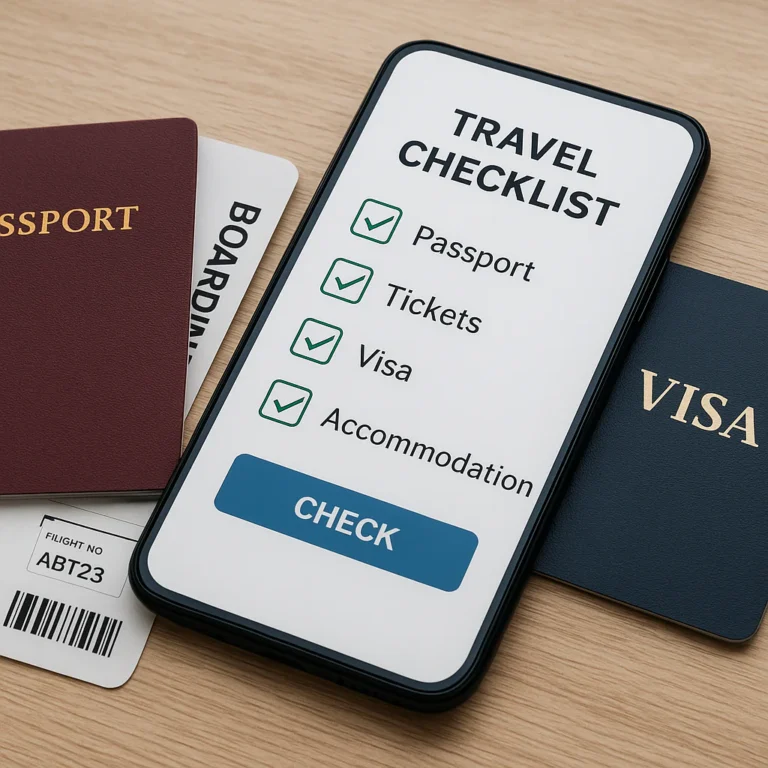
- Travel Checklist App: Our very own app allows you to create custom lists, share them with travel buddies, and check off items in real-time.
- TripIt: Organizes your itinerary and documents.
- PackPoint: Generates a list based on your destination, weather, and activities.
Pro Tip: Use Google Keep or Notion to create a master template that you can duplicate and customize for each trip.
📝 Real Traveler Stories: How We Overhauled Our Lists for Specific Destinations
Let’s look at how we customized our lists for three very different trips.
Case Study 1: The Japan City Break
- Challenge: Limited luggage space, cash-heavy society, strict customs.
- Customization:
Added: Portable Wi-Fi, cash (Yen), umbrella, comfortable walking shoes.
Removed: Hair dryer (hotel provided), large amounts of cash (ATMs available).
Lesson: Pack light to buy souvenirs!
Case Study 2: The African Safari
- Challenge: Dust, heat, remote locations.
- Customization:
Added: Neutral clothing, malaria meds, power bank, binoculars.
Removed: Bright colors (atract bugs), heavy makeup.
Lesson: Function over fashion.
Case Study 3: The European Summer Tour
- Challenge: Coblestones, heat, multiple cities.
- Customization:
Added: Comfortable sandals, laundry detergent sheets, universal adapter.
Removed: Hels, heavy coats.
Lesson: Pack for the worst day, not the best.
✅ Final Pre-Departure Sweep: The 24-Hour Countdown
The night before you leave, run this final sweep:
- Check Passport: Is it valid for 6+ months?
- Confirm Flights: Check in online and get your boarding pass.
- Notify Bank: Tell them you’re traveling.
- Charge Devices: Phone, camera, power bank.
- Lock Up: Secure your home, water plants, take out trash.
- Final Check: Did you pack your meds and passport?
Question: Did you remember to pack your umbrella? (You’ll thank us later.)
Conclusion

Customizing your travel checklist isn’t just about packing; it’s about preparing for the experience. By tailoring your list to your destination, trip type, and personal needs, you transform from a stressed-out traveler into a confident explorer.
Whether you’re jet-setting to Tokyo, treking the Andes, or lounging in the Maldives, the right checklist ensures you have everything you need—and nothing you don’t.
Our Top Recommendation:
Start with a Master Checklist of non-negotiables, then use our Customization Layers to add the specific items for your trip. Don’t forget to use digital tools like the Travel Checklist App to keep everything organized.
Final Thought: The best checklist is the one you actually use. Make it yours, tweak it, and enjoy the journey!
Recommended Links
Essential Gear
- Universal Travel Adapters: Amazon | EPICKA Official
- Noise-Canceling Headphones: Amazon | Sony Official
- Compression Socks: Amazon | Brand Official
- Portable Power Bank: Amazon | Anker Official
- Travel Backpacks: Amazon | Osprey Official
Books & Resources
FAQ

How do I adjust my travel checklist for business versus leisure trips?
Business Trips: Focus on formal attire, a professional laptop bag, and a portable charger for long meetings. You might need a suit carrier and a laundry service plan.
Leisure Trips: Prioritize comfort, casual wear, and entertainment. You can pack more “fun” items like swimsuits or hiking gear.
Key Difference: Business travel requires a polished look and productivity tools, while leisure travel allows for flexibility and comfort.
What essential items should be added to a checklist for long-haul international flights?
For long-haul flights, add:
- Comfort: Neck pillow, eye mask, earplugs, noise-canceling headphones.
- Hydration: Lip balm, eye drops, moisturizer, collapsible water bottle.
- Health: Compression socks, motion sickness meds, snacks.
- Tech: Power bank, charging cables, entertainment (downloaded movies/books).
Read more about “🎒 25 Ultimate Travel Essentials Kit Items for 2026”
How can I customize a travel checklist for trips to countries with different voltage standards?
- Check Voltage: Look at your device’s label. If it says “10-240V,” you only need an adapter. If not, you need a converter.
- Plug Type: Research the plug type (e.g., Type A, C, G) for your destination.
- Pack Smart: Bring a universal adapter with USB ports to charge multiple devices.
- Avoid Damage: Never plug a 10V device into a 20V outlet without a converter.
What are the best checklist apps for organizing documents for visa requirements?
- Travel Checklist App: Allows you to create custom lists and track document status.
- TripIt: Organizes itineraries and documents in one place.
- Google Keep: Great for creating shared checklists with travel buddies.
- Notion: Perfect for creating detailed, customizable templates for complex trips.
Read more about “🌍 How to Create a Travel Checklist for International Travel (2026)”
How do I handle restricted medications in countries like Japan?
Japan has strict rules on medications containing pseudoephedrine or codeine.
- Check First: Visit the Japanese Ministry of Health, Labour and Welfare website.
- Bring a Note: Carry a doctor’s note explaining your prescription.
- Declare: Declare any restricted meds at customs.
- Alternative: Consider bringing a generic alternative if possible.
Reference Links
- SITA Bagage Report 2023: SITA
- IATA Travel Centre: IATA
- Japanese Ministry of Health, Labour and Welfare: MHLW
- New York Times Article: This is the checklist I follow before international trips
- Travel Checklist App Categories:
- Adventure Travel Checklists
- Digital Nomad Checklists
- Beach Vacation Checklists
- Budget Travel Checklists
- Backpacking Checklists