Support our educational content for free when you purchase through links on our site. Learn more
12 Trending Micro-Cation Destinations + Quick Trip Checklists ✈️

The best micro-cation is a short, easy-to-reach getaway built around one experience you’re genuinely excited about—and a checklist that keeps the details from eating your weekend. Our guide to Trending micro-cation destinations and quick trip checklists covers 12 U.S. and international ideas, plus practical planning and packing lists for city breaks, beach escapes, and outdoor adventures.
We learned the hard way that “we’ll figure it out when we get there” can mean arriving hungry, tired, and searching for the hotel address in a dead phone. A simple checklist and a realistic itinerary can turn that same two-night trip into a proper reset, with room for a great meal or a wrong turn that becomes the best part.
Key Takeaways
- Choose for convenience, not hype: Short trips work best when transport is simple and activities are close together.
- Pick one anchor experience: Build the weekend around a show, museum, hike, food crawl, beach day, or a much-needed nap.
- Explore 12 destinations: Options range from New York City, Washington, D.C., and Chicago to Savannah, San Diego, Montréal, and Mexico City.
- Keep the itinerary flexible: Group activities by neighborhood and leave time for meals, rest, and unexpected discoveries.
- Pack with a reusable checklist: Cover documents, medication, chargers, weather-appropriate clothes, and trip-specific gear.
- Check the details before you go: Confirm schedules, weather, accessibility, booking terms, and current travel guidance.
- Remember that short doesn’t always mean cheap—or restful: Compare the full trip cost and protect downtime if relaxation is the goal.
Table of Contents
- ⚡️ Quick Tips and Facts for Trending Micro-Cations
- 🌱 The Rise of the Micro-Cation: Short Trips, Big Payoffs
- 🧭 What Makes a Destination Perfect for a Micro-Cation?
- Travel Time, Transit, and Walkability
- Seasonality, Weather, and Local Events
- Budget, Crowds, and Accessibility
- 🌎 Trending Micro-Cation Destinations to Put on Your Shortlist
- 1. New York City, New York: Big-City Energy in a Weekend
- 2. Washington, D.C.: Museums, Monuments, and Neighborhood Wandering
- 3. Charleston, South Carolina: Historic Streets and Coastal Charm
- 4. New Orleans, Louisiana: Food, Music, and a Little Magic
- 5. Savannah, Georgia: A Slower Southern City Break
- 6. Asheville, North Carolina: Mountain Air and Creative Finds
- 7. Austin, Texas: Live Music, Tacos, and Lake Time
- 8. Chicago, Illinois: Architecture, Food, and Lakefront Views
- 9. Portland, Oregon: Neighborhoods, Coffee, and the Outdoors
- 10. San Diego, California: Beaches and Easygoing City Breaks
- 11. Montréal, Québec: A European-Feeling Escape Close to Home
- 12. Mexico City, Mexico: A Culture-Rich Long Weekend
- How to Choose the Right Destination for Your Travel Style
- 🗓️ How to Plan a Micro-Vacation That Fels Longer
- Pick the Right Trip Length and Departure Time
- Build a Flexible Two- or Three-Day Itinerary
- Book Smart: Flights, Trains, Hotels, and Vacation Rentals
- Use Points, Transit Passes, and Travel Apps Wisely
- ✅ The Complete Micro-Cation Packing Checklist
- Weekend Trip Essentials
- Clothing and Shoes for Changing Plans or Weather
- Toiletries, Medications, and Personal Items
- Tech, Chargers, and Offline Travel Documents
- Carry-On Packing Tips for a Short Trip
- 🏙️ Destination-Specific Quick Trip Checklists
- City Weekend Checklist
- Beach Escape Checklist
- Mountain and Outdoor Getaway Checklist
- Food, Festival, and Event Trip Checklist
- 💸 Micro-Cation Budgeting and Ways to Save
- Estimate Transportation, Lodging, Meals, and Activities
- Avoid Hidden Fees and Last-Minute Costs
- Find Free and Low-Cost Things to Do
- 🛡️ Safety, Accessibility, and Travel Insurance for Short Trips
- Check Local Conditions and Keep Documents Secure
- Plan for Mobility, Dietary, and Sensory Needs
- When Travel Insurance Makes Sense
- 🌿 Sustainable Micro-Cations and Responsible Travel
- 📱 Helpful Tools, Apps, and Booking Resources
- 🙋 Frequently Asked Questions About Micro-Cations
- What Counts as a Micro-Cation?
- How Many Days Do You Need for a Micro-Cation?
- What Should You Pack for a Weekend Trip?
- How Far Should You Travel for a Short Getaway?
- Are Micro-Cations Cheaper Than Longer Vacations?
- 🎒 Conclusion
- 🔗 Recommended Links
- ❓ FAQ
- 📚 Reference Links
⚡️ Quick Tips and Facts for Trending Micro-Cations
A micro-cation can be a nearby beach weekend, a train-powered city break, or a three-day mountain reset. For more destination inspiration, browse our top travel destinations—then use a checklist to turn “we should go somewhere” into an actual plan. ✅
| Quick fact | What it means for your trip |
|---|---|
| There’s no single official definition. Allianz described micro-cations as trips of four nights or less in its 2021 survey; other coverage uses fewer than four nights. | Treat it as a short leisure trip, usually one to four nights, rather than getting hung up on the label. |
| Short trips have broad appeal. In Allianz’s 2021 survey, 34% of Americans planned multiple short vacations that summer. | You can build travel into the year without needing one long block of time off. |
| Travel days matter more on a short break. | Choose a destination with simple connections, compact neighborhoods, and activities close to where you’re staying. |
| One anchor experience beats an overstuffed itinerary. | Pick the one thing you’d be disappointed to miss, then leave room for meals, wandering, and a change of plan. |
| Packing ahead reduces departure-day chaos. | Save a reusable packing list in the Travel Checklist app and tailor it for each trip. |
A note about those statistics: the Allianz figures describe 2021 travel intentions, not a current forecast. They help explain why the trend caught on; they shouldn’t be mistaken for this year’s booking data. You’ll also see “micro-cation,” “micro-vacation,” and “weekend getaway” used somewhat interchangeably. The useful distinction is the trip’s scale: short, purposeful, and easy to fit into real life.
Our field-tested starting checklist:
- ✅ Pick one main experience: a show, food crawl, hike, museum, beach day, or serious nap.
- ✅ Limit the trip to one or two nearby areas instead of racing across town.
- ✅ Check transit, opening hours, weather, and reservation requirements before you book.
- ✅ Pack for the forecast and the activity—not for an imaginary version of yourself who changes outfits six times a day.
- ✅ Save confirmation numbers, addresses, and tickets offline.
- ❌ Don’t confuse a short itinerary with a relaxing one. Five activities and three connections can turn a weekend into a tiny logistics conference.
🌱 The Rise of the Micro-Cation: Short Trips, Big Payoffs
The appeal is easy to understand: less time away from work, fewer nights to coordinate, and more chances to travel across the year. The 2021 Allianz survey found that some respondents preferred several short vacations, and cited ease of taking time off, cost, and finding a travel companion among their reasons. That is useful context, not a promise that a short trip is automatically cheap or restful. See the Allianz survey details.
Micro-cations also fit the way many of us actually plan: around a long weekend, a concert, a school break, a friend’s open calendar, or a sudden need to see something other than the same kitchen wall. In its reporting on short-trip trends, Business Insider described the appeal of fitting travel around busy work lives. That flexibility is real—but the work boundary can follow you unless you decide where it stops.
Micro-cation, weekend getaway, or city break?
The labels overlap. We use micro-cation for a compact leisure trip, often one to four nights; weekend getaway for a trip organized around a weekend; and city break when exploring an urban destination is the main event. A short road trip, cabin stay, or beach escape can all qualify.
| Trip style | Best for | Planning priority |
|---|---|---|
| City break | Museums, dining, shows, neighborhoods | Choose a walkable base and reserve timed-entry activities |
| Road-trip getaway | Scenic routes, small towns, flexible stops | Check drive time, parking, and a realistic turnaround plan |
| Beach escape | Swimming, downtime, coastal food | Check beach access, weather, and what your lodging provides |
| Outdoor reset | Hiking, biking, paddling, or snow activities | Match the route and gear to your experience and conditions |
| Sleep-cation | Rest, quiet, comfortable lodging | Protect downtime; don’t schedule every waking hour |
| Challenge-focused trip | A demanding hike, race, or adventure | Research difficulty, safety, recovery, and backup plans |
A short getaway can also have very different emotional aims. The first video’s distinction between a restorative “sleep-cation” and a physically demanding “pain-cation” is a useful reminder: decide whether you want to recover or challenge yourself before picking the destination. If you’re aiming for the latter, start with our Adventure Travel Checklists. The right choice depends on your energy, not on which one sounds more impressive over brunch.
Why shorter trips can work—and when they don’t
A shorter break can be easier to schedule, but travel time takes a bigger bite out of the experience. A direct train ride into the center of a city may work beautifully for two nights. A flight with a tight connection, a long airport transfer, and a rental-car pickup may not.
There’s another trade-off: a weekend away does not always provide the same recovery as a longer vacation. Allianz’s article discusses research suggesting happiness may peak after a longer vacation, while also presenting short breaks as a practical option for time-pressed travelers. These ideas aren’t contradictory. A micro-cation can offer a welcome change of scene, but it may not replace a proper stretch of uninterrupted rest.
Our recommendation: use micro-cations as deliberate breaks, not as a way to cram every missed vacation feeling into Friday night through Sunday afternoon. And if work email is the trip’s uninvited fourth guest, set an out-office boundary before you leave.
🧭 What Makes a Destination Perfect for a Micro-Cation?
The “best” destination is less about a trending hashtag and more about how much of your limited time you’ll spend enjoying it instead of getting there. We compare door-to-door travel, ease of getting around, lodging location, the trip’s anchor experience, and what happens if the weather or schedule changes.
Travel Time, Transit, and Walkability
For a two-night trip, a three-hour journey can be more valuable than a six-hour journey to a supposedly more exciting place. Compare the whole trip, not just the flight or train schedule:
- Time from home to the airport or station.
- Check-in, security, boarding, and likely delays.
- Arrival transfer to your accommodation.
- Time needed to reach your planned activities.
- How you’ll get home—and whether the return leaves enough breathing room.
A direct flight may save time, but it isn’t automatically the best option if the airport is far from both home and destination. Trains, buses, and driving can be smoother door-to-door for nearby trips. Check official operator sites—such as Amtrak in the United States—and compare schedules with local transit agencies.
| Transport | Usually works best when | Watch out for |
|---|---|---|
| Train | Stations are central and schedules suit your dates | Limited service on some routes; verify the return |
| Direct flight | Distance is large and airport access is easy | Airport transfers, baggage rules, and disruption risk |
| Bus | You want a simple, often city-center connection | Journey length and the effect of traffic |
| Car | Your plans include rural areas or multiple stops | Parking, traffic, fatigue, and one-way rental logistics |
| Ferry | The water crossing is part of the destination or route | Weather-related schedule changes and limited departures |
Traveler’s tip: If a central hotel saves an hour of commuting each day, that convenience may be worth considering. It still needs to fit your budget and priorities. Compare the lodging’s location against the actual activities you want, not just the phrase “near downtown.”
Seasonality, Weather, and Local Events
A destination can be ideal one month and a headache the next. Check the forecast, daylight hours, local event calendars, and seasonal conditions before you commit. For U.S. destinations, the National Weather Service provides official alerts and forecasts. For national parks, confirm current operating conditions directly with the National Park Service.
A festival weekend can deliver exactly the atmosphere you want—or fill hotels, close streets, and make dinner reservations scarce. Decide which is true for your trip:
- Going for an event? Buy tickets and arrange lodging early; verify entry rules and transportation.
- Avoiding crowds? Check school holidays, major conventions, and local event dates.
- Traveling outdoors? Confirm trail, beach, road, and water conditions close to departure.
- Planning a rest-focused stay? Avoid booking next to a late-night venue unless your idea of relaxation includes bass through the wall.
Budget, Crowds, and Accessibility
A short trip can still cost more than expected when lodging, transport, meals, tickets, and local rides all land on the same weekend. Before booking, build a rough total and include fees, parking, transit, baggage, and meals. If you’re trying to keep the total down, explore our Budget Travel Checklists.
Accessibility deserves a place in destination selection—not as a last-minute add-on. Verify accessible transit, step-free entrances, room features, restroom access, and the physical demands of attractions directly with the relevant providers. A listing’s “accessible” label may not answer the details you need.
| Check before booking | Questions to ask |
|---|---|
| Lodging | Is the entrance step-free? What bathroom and room features are available? |
| Transport | Are lifts, ramps, assistance, or accessible seating available? |
| Attractions | Can you reserve access services? Are routes paved, steep, or lengthy? |
| Food | Can venues accommodate allergies or dietary requirements? |
| Budget | Are there resort, parking, cleaning, or transit fees to account for? |
🌎 Trending Micro-Cation Destinations to Put on Your Shortlist
These destinations offer different flavors of a quick getaway: major-city culture, coastal charm, food-focused weekends, and outdoor escapes. “Trending” here means popular, recognizable choices that can work well as short trips, not a real-time ranking or a claim about current booking demand. Check official visitor resources for opening hours, seasonal notices, and events before you go.
The first video recommends anchoring a short trip around one experience and using flexible dates to compare travel options. We agree: start with the thing you’re excited about, then make the logistics fit around it. (The video is referenced as the featured video.)
1. New York City, New York: Big-City Energy in a Weekend
New York City packs museums, theater, food, parks, and distinctive neighborhoods into a transit-rich destination. For a quick visit, pick one area per half-day and avoid trying to “do Manhattan” as if it were a checkbox.
- Anchor ideas: a Broadway show, a museum visit, a food-focused neighborhood walk, or a Central Park outing.
- Stay smart: choose lodging near the subway route or areas you actually plan to visit.
- Leave room: allow time for queues, meals, and simply taking the wrong exit at least once.
- Check before you go: use NYC Tourism and MTA for visitor information and transit updates.
2. Washington, D.C.: Museums, Monuments, and Neighborhood Wandering
D.C. is a strong short-trip pick for travelers who want history and museums, especially because many Smithsonian museums offer free admission, though some timed-entry passes or special exhibitions may have separate requirements. Verify details on the Smithsonian visitor page.
- Anchor ideas: National Mall museums, a monument walk, or an evening in a neighborhood such as Georgetown or the Wharf.
- Plan the walking: distances between sites can be longer than they look on a map.
- Check updates: the National Mall and Memorial Parks site shares official park information.
3. Charleston, South Carolina: Historic Streets and Coastal Charm
Charleston rewards a slower pace: historic architecture, local food, waterfront views, and neighborhoods best explored on foot. It’s a better fit for a compact, relaxed itinerary than a checklist of every nearby beach and plantation.
- Anchor ideas: a guided historic walk, a market visit, or a meal built around Lowcountry cooking.
- Practical note: summer heat and humidity can make midday sightseeing less pleasant; plan breaks and water.
- Check local guidance: Explore Charleston for current visitor information and events.
4. New Orleans, Louisiana: Food, Music, and a Little Magic
New Orleans is tailor-made for a trip built around live music, distinctive neighborhoods, and memorable meals. Pick a few priorities, then let the city supply the soundtrack.
- Anchor ideas: live music, a French Quarter walk, a food tour, or a visit to the New Orleans Museum of Art.
- Plan responsibly: check event dates and local transport; don’t assume every venue or route suits every traveler.
- Look up current events: New Orleans & Company offers destination and visitor information.
5. Savannah, Georgia: A Slower Southern City Break
Savannah’s squares, historic streets, and walkable core make it a good choice for a gentle city break. The trick is to wander with a loose plan, not hurry between every square like a very polite delivery driver.
- Anchor ideas: a historic district walk, a local food stop, or a visit to a museum or garden.
- Keep comfortable: wear shoes that can handle walking and check the forecast, especially in hot months.
- Check current information: Visit Savannah.
6. Asheville, North Carolina: Mountain Air and Creative Finds
Asheville combines a creative food and arts scene with access to outdoor scenery. It can suit both a low-key town weekend and an active getaway—but those are different itineraries, so choose one main emphasis.
- Anchor ideas: downtown galleries, a scenic drive, or a hike matched to your ability and current conditions.
- Outdoor check: trail access, road status, and weather can change; verify before setting out.
- Destination resource: Explore Asheville.
- For a more active trip: browse our Adventure Travel Checklists.
7. Austin, Texas: Live Music, Tacos, and Lake Time
Austin offers a lively mix of food, music, and outdoor options. Choose a festival or show as the anchor if that’s your reason for going; otherwise, avoid building a schedule that depends on crossing the city repeatedly.
- Anchor ideas: live music, a food crawl, or time near the water.
- Plan transport: check the venue location and return options before booking lodging.
- Local information: Visit Austin.
8. Chicago, Illinois: Architecture, Food, and Lakefront Views
Chicago works well for a culture-rich weekend with architecture, neighborhoods, museums, and lakefront time. For a first visit, pick either a museum-heavy day or an architecture-and-neighborhood day rather than attempting both at full speed.
- Anchor ideas: an architecture river cruise, a museum, or a lakefront walk.
- Check schedules: seasonal tours and outdoor attractions may operate differently through the year.
- Visitor resource: Choose Chicago.
9. Portland, Oregon: Neighborhoods, Coffee, and the Outdoors
Portland suits travelers who like independent shops, food, coffee, and nearby outdoor options. Keep the itinerary neighborhood-based, and check conditions before adding a farther-flung excursion.
- Anchor ideas: a food-focused day, a garden visit, or an outdoor trip with a realistic transit plan.
- Local transport: consult TriMet for public transit.
- Destination resource: Travel Portland.
10. San Diego, California: Beaches and Easygoing City Breaks
San Diego can combine beaches, coastal neighborhoods, and city attractions, but its sights are spread out. Choose a coastal base or a city-focused plan instead of treating every neighborhood as a quick walk away.
- Anchor ideas: beach time, Balboa Park, or a waterfront outing.
- Pack for the plan: beach gear is handy only if you’ve actually scheduled beach time.
- Check official guidance: San Diego Tourism Authority.
- For a seaside packing list: see our Beach Vacation Checklists.
11. Montréal, Québec: A European-Feeling Escape Close to Home
Montréal offers historic streets, food, festivals, and a distinct Francophone culture. It can be a satisfying long weekend, especially when you focus on a few connected neighborhoods.
- Anchor ideas: Old Montréal, a market visit, a festival, or a food-centered walk.
- Before booking: confirm entry-document requirements for your nationality and current travel dates.
- Official destination information: Tourisme Montréal.
12. Mexico City, Mexico: A Culture-Rich Long Weekend
Mexico City can fill a short break with museums, historic sites, markets, architecture, and outstanding food. Its scale is enormous, so choose a small geographic footprint and avoid planning an ambitious cross-city itinerary every day.
- Anchor ideas: a museum, a historic-center visit, or a guided food experience.
- Plan with care: check current official travel advice, local transport options, and entry requirements.
- Visitor resource: Mexico City’s official tourism site.
- Safety information: consult your government’s travel advisory before departure; U.S. travelers can use the U.S. Department of State.
How to Choose the Right Destination for Your Travel Style
Use this quick-match table before you open seventeen browser tabs:
| If you want… | Consider… | Make the trip work by… |
|---|---|---|
| Museums and landmarks | Washington, D.C.; New York City; Chicago | Picking timed-entry priorities and checking walking distances |
| Food and live music | New Orleans; Austin; Montréal | Reserving one anchor meal or show, then leaving flexible time |
| A slower historic break | Savannah; Charleston | Booking a walkable base and building in rest |
| Beach time | San Diego | Staying close to the coastline you plan to use |
| City plus outdoor access | Asheville; Portland | Checking trail, transport, and weather conditions |
| A more immersive international city trip | Mexico City; Montréal | Confirming entry documents, local transport, and current advice |
Our rule: when two destinations sound equally appealing, choose the one with the simpler journey and a clearer plan for your first evening. That first evening often decides whether a micro-cation feels easy—or begins with you eating crackers beside a suitcase while searching for a late-night restaurant.
🗓️ How to Plan a Micro-Vacation That Fels Longer
A good micro-cation doesn’t need military-grade scheduling. It needs a clear anchor, uncomplicated transport, and enough open space to enjoy the place you came to see. We use a repeatable planning sequence so every short trip doesn’t require reinventing the wheel.
Pick the Right Trip Length and Departure Time
Start with your available time, then work backward from the door-to-door journey. A one-night trip can make sense for a nearby destination or a special event; a farther-away city usually deserves two or three nights so travel doesn’t swallow the break.
- Choose your nights away. Check work, school, and personal commitments before booking.
- Set a travel-time ceiling. Decide how much of the trip you’re willing to spend in transit.
- Compare departure windows. A Friday evening departure may save a vacation day, but only if it doesn’t create an exhausting arrival.
- Check the return. Leave space for delays, unpacking, and the inevitable laundry pile.
- Use flexible dates if you can. The featured video suggests comparing date grids in Google Flights; flexible dates can reveal options, but verify the final itinerary and fare conditions before buying.
If you’re using airline miles or credit-card points, compare the cash fare too. A points redemption isn’t automatically good value simply because it avoids paying cash.
Build a Flexible Two- or Three-Day Itinerary
Think in anchor plus options:
- Anchor: the one experience that makes the trip worthwhile.
- Nearby additions: a meal, park, shop, or second attraction in the same area.
- Flex time: room for weather, rest, and serendipity.
- Backup: an indoor alternative or another open activity.
A simple three-day template
| Time | Day 1 | Day 2 | Day 3 |
|---|---|---|---|
| Morning | Travel and check in | Main attraction or outdoor activity | Easy breakfast and one nearby stop |
| Afternoon | Explore close to lodging | Lunch and a relaxed second activity | Return journey, with a buffer |
| Evening | Anchor dinner or show | Flexible meal, reservation optional | Home—or one final local treat |
This is a framework, not an assignment. If your goal is a sleep-cation, replace the museum block with an unhuried breakfast and a nap. If you’re planning an active challenge, schedule recovery time rather than pretending your legs signed a waiver.
Book Smart: Flights, Trains, Hotels, and Vacation Rentals
For a short trip, convenience has measurable value in hours—even when it doesn’t show up as a line item.
- Compare the full journey: fares, baggage, transfers, parking, and arrival times.
- Prefer reliable connections: Allianz’s advice warns that a layover can add disruption risk. A direct route may be worth considering when timing is tight, though schedule and total cost still matter.
- Stay near your activities: check the map, transit links, and late-night return options.
- Review the cancellation terms: know the deadlines and what happens if plans change.
- Check the basics: check-in time, luggage storage, accessibility, Wi-Fi, and any extra property rules.
- For vacation rentals: read recent guest reviews and confirm the exact location and check-in process.
When you compare lodging, look beyond star ratings. Recent reviews can reveal noise, construction, or practical issues, but individual experiences vary. Read for recurring patterns rather than treating one dramatic review as a court verdict.
Use Points, Transit Passes, and Travel Apps Wisely
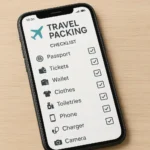
Keep trip information in one place: transport details, lodging address, confirmation numbers, tickets, packing lists, and reminders. A checklist app is especially helpful when you repeat similar trips but need to adjust the list for a beach weekend, city break, or outdoor trip.
With the Travel Checklist app, the practical goal is to create a reusable routine: save the items you always forget, duplicate or adapt a checklist for the next trip, and check things off before departure. Confirm app features and availability directly in the official app listing before relying on a specific function.
A useful digital setup might include:
- ✅ Travel checklist and packing list
- ✅ Reservation emails or saved confirmation details
- ✅ Offline map for your destination
- ✅ Transit app or route information
- ✅ Emergency contacts and travel-document copies stored securely
- ✅ Calendar reminders for check-in, tickets, and departure
If you’re traveling with just a backpack or moving between multiple stops, our Backpacking Checklists can help you pare down the “just in case” pile.
✅ The Complete Micro-Cation Packing Checklist
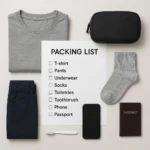
Short trips are where overpacking gets especially silly. You do not need four backup outfits for a two-night stay—but you do need your medication, the right shoes, and a charger that works. Save this list, then customize it in your travel checklist.
Weekend Trip Essentials
- ☐ Government-issued ID and any required travel documents
- ☐ Wallet, payment cards, and a small amount of backup cash if useful
- ☐ Booking confirmations, tickets, and lodging address
- ☐ Phone and charging cable
- ☐ Prescription medication and basic personal-care items
- ☐ Reusable water bottle where permitted and practical
- ☐ Sunglasses, weather-appropriate outer layer, and day bag
- ☐ Earplugs or sleep mask if you use them
- ☐ Emergency contacts and key information saved offline
- ☐ House-preparation checklist: doors, appliances, pets, plants, and rubbish
Clothing and Shoes for Changing Plans or Weather
Pack by activity, not by fantasy itinerary:
- One outfit per planned day, plus a small backup layer if appropriate.
- Comfortable walking shoes that are already broken in.
- Weather-ready layer: rain shell, warm layer, sun hat, or swimwear as needed.
- Activity-specific clothing for hiking, workouts, or special events.
- Sleepwear and underwear.
- A simple mix-and-match color palette to reduce “nothing goes with anything” packing.
Check the forecast again before departure. For outdoor trips, check official local conditions too; a weather app alone may not tell you whether a trail, road, or beach access point is open.
Toiletries, Medications, and Personal Items
- Toothbrush, toothpaste, deodorant, and everyday skincare.
- Prescription medication in its original packaging where appropriate, plus extra for reasonable delays.
- Glasses, contact lenses, or hearing-aid supplies.
- Sunscreen and insect protection suited to your destination and activities.
- Menstrual products, if needed.
- A small first-aid kit tailored to your plans.
- Refillable or travel-size containers that comply with your transport operator’s rules.
For medication and medical-device travel requirements, check official guidance for your route and destination rather than relying on a packing blog.
Tech, Chargers, and Offline Travel Documents
- Phone, charging cable, and charging adapter.
- Portable battery if useful; check airline rules before carrying one.
- Headphones.
- Camera or e-reader, if you’ll actually use it.
- Downloaded tickets, maps, and confirmation details.
- Secure copies of essential documents, stored separately from originals.
- Travel adapter for international travel, after checking plug type and voltage compatibility.
If your phone is your ticket, map, camera, and emergency contact list, it deserves a charged battery. We’ve all had a “the map is loading” moment at precisely the wrong intersection.
Carry-On Packing Tips for a Short Trip
- Check the carrier’s current baggage rules before leaving home.
- Put medication, documents, valuables, and essential electronics in your personal item.
- Pack one spare top and essential toiletries where practical in case of a delay or checked-bag issue.
- Keep liquids and electronics accessible if screening procedures require it.
- Use a packing cube only if it genuinely helps you organize; it is not a magical suitcase TARDIS.
For longer outdoor weekends or a more minimalist packing style, adapt a list from our Backpacking Checklists.
🏙️ Destination-Specific Quick Trip Checklists
The base packing list handles the essentials. These mini-lists add the items that make each type of getaway smoother.
City Weekend Checklist
- ☐ Comfortable walking shoes
- ☐ Transit payment method or app
- ☐ Offline map and saved lodging address
- ☐ Reservations or timed-entry tickets
- ☐ Weather layer for long walks
- ☐ Small day bag and reusable water bottle
- ☐ Plan for getting back after evening events
Beach Escape Checklist
- ☐ Swimwear and cover-up
- ☐ Sun protection and sunglasses
- ☐ Sandals plus comfortable walking shoes
- ☐ Beach towel, if lodging doesn’t provide one
- ☐ Water-resistant bag for damp items
- ☐ Check local beach access, safety flags, and conditions
- ☐ Verify what your hotel or rental supplies before packing bulky items
Find more ideas in our Beach Vacation Checklists.
Mountain and Outdoor Getaway Checklist
- ☐ Weather-appropriate layers
- ☐ Broken-in footwear suited to the activity
- ☐ Water, snacks, and sun protection
- ☐ Offline route or map
- ☐ Headlamp or light for early starts, if needed
- ☐ Any required permits or reservations
- ☐ Check trail, road, and weather conditions before departure
- ☐ Tell someone your plan for remote activities
Choose routes that fit your experience and current conditions. For additional preparation, see our Adventure Travel Checklists.
Food, Festival, and Event Trip Checklist
- ☐ Tickets and confirmation saved offline
- ☐ Venue rules, bag policy, and entry time checked
- ☐ Transport plan for after the event
- ☐ Restaurant booking or backup dining option
- ☐ Comfortable shoes and ear protection if useful
- ☐ Weather-appropriate clothing for outdoor events
- ☐ Lodging and transport booked with the event’s location in mind
For a festival or major event, the itinerary starts with the return journey, not just the headliner. A great show becomes less charming when you discover every ride-share car in town has also heard the final song.
💸 Micro-Cation Budgeting and Ways to Save
Short trips aren’t inherently inexpensive. Demand, event dates, and transport choices can make a one-night getaway surprisingly costly. Set a trip budget based on your priorities, then compare the complete cost rather than looking at airfare alone.
Estimate Transportation, Lodging, Meals, and Activities
| Budget category | Include |
|---|---|
| Transport | Tickets, baggage, parking, fuel, transfers, local transit |
| Lodging | Nightly total, taxes, fees, parking, and cancellation terms |
| Food | Meals, snacks, drinks, and any special occasion dining |
| Activities | Admission, tours, reservations, equipment, tips |
| Buffer | A reserve for delays, weather changes, or unexpected needs |
For two travelers, decide early whether you’re splitting costs evenly or tracking shared and individual expenses. It’s much easier to agree before the final brunch bill arrives.
Avoid Hidden Fees and Last-Minute Costs
- Read the full trip total before booking, including fees and baggage.
- Check whether a rental includes the services or amenities you actually need.
- Verify parking costs and overnight options before choosing a hotel.
- Check event cancellation and ticket-transfer rules.
- Review rental-car fuel, mileage, and pickup requirements.
- Keep a backup plan for transport disruptions—especially on the return day.
Find Free and Low-Cost Things to Do
Look for public parks, free museum hours, self-guided walks, public art, local markets, and public waterfront access. Verify opening times and admission policies with the official venue; “free” can sometimes mean free with a reservation or only at certain times.
To build a lower-cost trip from the beginning, browse our Budget Travel Checklists. A city with strong public transport and free attractions may be a better value than a destination with a low headline fare but expensive local transfers.
🛡️ Safety, Accessibility, and Travel Insurance for Short Trips
A short trip still deserves sensible preparation. Keep essentials accessible, check official local updates, and make sure your plan works for the travelers in your group—not just for the person who booked it.
Check Local Conditions and Keep Documents Secure
- Confirm entry requirements and travel advisories for your destination.
- Save the lodging address, transport details, and emergency contacts offline.
- Use secure storage for essential documents and avoid sharing sensitive information publicly.
- Tell a trusted person your itinerary if you’re traveling alone or going remote.
- Check official weather, road, trail, and transit information close to departure.
For U.S. international travel, the U.S. Department of State provides country information and advisories. Travelers of other nationalities should check their own government’s guidance.
Plan for Mobility, Dietary, and Sensory Needs
Contact hotels, transport operators, and attractions directly with specific questions. For example, ask whether a room has a roll-in shower, whether a station lift is working, whether an attraction has quiet space, or how a restaurant handles a serious allergy.
- ✅ Request accommodations early and keep confirmation details.
- ✅ Build rest stops and realistic transfer times into the schedule.
- ✅ Identify nearby pharmacies, accessible toilets, or quiet spaces if useful.
- ❌ Don’t assume a website’s general accessibility label covers your particular needs.
When Travel Insurance Makes Sense
Travel insurance is not a universal must-buy, and coverage varies by policy. Consider it when you have significant prepaid, nonrefundable costs; a complex itinerary; a higher risk of disruption; or travel plans where emergency medical coverage matters. Compare policy wording, benefits, exclusions, and claims requirements—not just a brand name.
Allianz’s micro-cation article discusses trip cancellation, interruption, delay, and medical coverage as possible benefits, but coverage depends on the specific plan, circumstances, and applicable terms. Its annual-plan suggestion is not a fit for everyone. The first video also stresses buying coverage ahead of time and understanding waiting periods; insurance generally cannot retroactively cover an event that has already happened or is known when you buy.
Before purchasing:
- Check what your existing health insurance and credit card already cover.
- Read definitions, exclusions, coverage limits, and documentation requirements.
- Confirm whether the policy covers the particular activity you plan to do.
- Check how and when to contact the insurer during a disruption.
- Compare the policy’s value against the risks and costs of your trip.
🌿 Sustainable Micro-Cations and Responsible Travel
Short trips can be a chance to travel more thoughtfully, especially when you choose destinations reachable by train or bus and avoid adding unnecessary transfers. The environmental impact varies by route and transport mode, so compare options for your specific journey rather than assuming one choice is always best.
- Prefer direct public transport when it’s practical.
- Stay longer in one neighborhood instead of making multiple long transfers.
- Support local restaurants, shops, and guides.
- Follow park rules, stay on marked trails, and leave natural places as you found them.
- Carry reusable items only when you’ll genuinely use them.
- Visit busy places at less crowded times where possible.
If your short trip involves a multi-stop outdoor itinerary, browse our Adventure Travel Checklists and Backpacking Checklists for planning reminders.
📱 Helpful Tools, Apps, and Booking Resources
A small set of dependable tools can save planning time without turning your phone into a crowded control room.
| Tool or resource | Useful for | Good practice |
|---|---|---|
| Travel Checklist app | Reusable packing and preparation lists | Adapt each list to the trip; check the official app details for current features |
| Google Flights | Comparing air schedules and flexible dates | Confirm baggage and fare conditions with the airline |
| Amtrak | U.S. train schedules and booking | Check station location and return options |
| National Weather Service | U.S. forecasts and alerts | Recheck close to departure and before outdoor activities |
| National Park Service | Park conditions, access, and visitor information | Verify closures, permits, and reservations |
| Official destination websites | Local events and visitor guidance | Prefer current official information over old itineraries |
| Offline maps | Directions when data is limited | Download the correct area before leaving |
If you’re working while traveling, our Digital Nomad Checklists can help you remember work gear and boundaries—but for an actual break, consider leaving the laptop behind.
🙋 Frequently Asked Questions About Micro-Cations
What are the best trending micro-cation destinations for a quick getaway?
The best pick depends on where you’re starting, how much time you have, and what kind of break you want. For a culture-focused weekend, consider Washington, D.C., Chicago, or New York City. For food and music, New Orleans or Austin may fit. For a slower historic getaway, consider Savannah or Charleston; for coast and outdoors, look at San Diego, Asheville, or Portland.
Start with door-to-door travel time, not a destination’s popularity. The most appealing place is one you can reach without spending most of your short break in transit.
How do I plan a micro-cation with a travel checklist app?
Start with a reusable master list, then tailor it to the trip:
- Create or choose a list for your trip type.
- Add transport, lodging, tickets, documents, and packing needs.
- Include reminders for bookings, weather checks, and check-in times.
- Check items off as you prepare, not just at the door.
- Save key confirmations and addresses somewhere accessible offline.
The Travel Checklist app is designed around checklist-based trip preparation; check its official listing for current features and platform availability. A checklist helps prevent forgotten essentials, but it can’t replace checking live schedules, entry rules, or local conditions.
What should I pack for a two-day micro-cation?
Pack two outfits, comfortable shoes, sleepwear, essential toiletries, medication, ID, payment method, phone charger, and weather-appropriate layers. Add activity-specific gear only if it’s part of the plan. Check baggage rules if flying, and keep documents and medication with you rather than in checked luggage.
For a quick reminder, use the Weekend Trip Essentials list above.
How can I find affordable weekend getaways near me?
Search destinations within a realistic drive or direct-transit distance, then compare the complete cost of transport, lodging, meals, local travel, and activities. Try flexible dates, consider a nearby city or small town, and look for official free attractions and public transport.
Use our Budget Travel Checklists to structure your planning. Compare the final booking terms before committing: a low headline fare can lose its shine after baggage, parking, or transfer costs appear.
What essentials should I include in a quick trip checklist?
At minimum, include:
- ID and required travel documents
- Wallet and payment cards
- Reservations and tickets
- Phone, charger, and any needed adapter
- Medication and essential toiletries
- Weather-appropriate clothing and comfortable shoes
- Destination-specific gear
- Home-preparation reminders
Then add items based on the trip. A beach getaway needs different gear from a museum weekend or a hike.
How do I organize travel plans and reservations in one app?
Use one checklist or planning hub to track what needs doing, and keep confirmation details in a secure, accessible place. Add reservation dates, transport times, lodging addresses, tickets, and reminders to your itinerary. Download anything you may need offline, and keep sensitive documents protected.
A checklist app is useful for tasks and preparation; an itinerary or booking app may better for storing live reservations. You can use both, but avoid scattering the only copy of important details across emails, screenshots, and a text message called “maybe the hotel.”
Which destinations are best for a spontaneous three-day trip?
Choose a place with frequent direct transport, a compact center, and activities that don’t require extensive advance reservations. Major cities such as Chicago, New York, and Washington, D.C. can work if lodging and transport are available; nearby coastal or small-town breaks can be easier if you can drive.
For a spontaneous trip, check availability, weather, event schedules, and cancellation conditions first. A destination is only spontaneous-friendly if you can get there and sleep somewhere without heroic improvisation.
Is a micro-cation enough time to feel rested?
It can offer a welcome pause, but it won’t suit every kind of recovery. Allianz’s 2021 article notes research suggesting a longer vacation may deliver greater happiness gains, while short trips can be easier to schedule. If rest is the goal, protect unplanned time, reduce travel friction, and resist filling every hour.
Should I buy travel insurance for a weekend trip?
It depends on your prepaid costs, itinerary, existing coverage, destination, and risk tolerance. Review policy terms and exclusions before buying, and check whether your credit card or health plan already provides relevant benefits. No policy covers every disruption, and claims depend on the policy language and facts of the event.
Are micro-cations always cheaper than a long vacation?
No. Fewer nights may reduce some expenses, but flights, event weekends, and short-stay lodging can be costly. Compare total costs across the year, including transport and activities, and don’t assume several short trips will cost less than one longer one.
How can I avoid feeling rushed on a short trip?
Choose one anchor experience, group activities by neighborhood, and leave open time around meals and transport. If the trip requires multiple connections or long transfers, add a night or pick a closer destination. A lighter plan is not a failed plan; it’s often the reason the trip feels like a vacation.