Support our educational content for free when you purchase through links on our site. Learn more
✈️ 35+ Essential Items for International Travel Checklist (2026)

The single most important item on your Essential items for international travel checklist isn’t a specific gadget or outfit; it’s the peace of mind that comes from knowing your documents, meds, and backup power are secure in your carry-on. We learned this the hard way when a colleague’s checked bag vanished in Frankfurt, leaving him with nothing but the clothes on his back and a panic attack—until he remembered his “survival kit” tucked safely in his backpack.
That’s why we’ve compiled the ultimate Essential items for international travel checklist to ensure you never face that nightmare again. From the six-month passport rule that catches 40% of first-time travelers off guard to the specific eSIMs that keep you connected without roaming fees, this guide covers every angle of preparation.
- ✅ The “Never Check” Rule: Always keep passports, meds, and a change of clothes in your carry-on.
- ✅ The 6-Month Passport Buffer: Many countries will deny entry if your passport expires within six months of your return.
- ✅ Digital Redundancy: Scan all critical documents to the cloud and keep a physical copy in a separate bag.
- ✅ Connectivity First: Set up an eSIM like Holafly or Airalo before you even land to avoid expensive roaming fees.
Table of Contents
- ⚡️ Quick Tips and Facts
- 🌍 The Evolution of the Global Wander: A Brief History of Travel Prep
- 🛂 Pre-Flight Essentials: What to Do Before International Travel
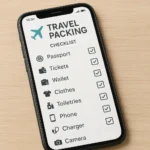
- 🧳 The Ultimate International Travel Checklist: 35+ Must-Have Items
- 1. Vital Documents & Money Matters
- 2. Health, Safety, and First Aid Kit
- 3. Electronics, Power, and Connectivity
- 4. Clothing Strategies for Every Climate
- 5. Toiletries and Personal Care Essentials
- 6. Comfort, Sleep, and In-Flight Survival Gear
- 7. Miscellaneous Gadgets and “Just in Case” Items
- 🚫 The Forbidden List: What Not to Pack for International Travel
- 🎒 Mastering the Art of Packing: How to Pack a Suitcase to Maximize Space
- 🌐 Digital Nomad & Connectivity: eSIMs, Roaming, and Staying Online
- 👗 Destination-Specific Packing Guides: From Bali to Tulum
- 🧠 Smart Travel Hacks: Planning Your Trip with Confidence
- 📝 Final Thoughts: Are You Ready to Fly?
- 🔗 Recommended Links
- ❓ Frequently Asked Questions (FAQ)
- 📚 Reference Links
⚡️ Quick Tips and Facts
Before we dive into the nitty-gritty of stuffing your suitcase, let’s hit the pause button and drop some hard truths that could save your vacation (and your wallet).
- The Six-Month Rule: Your passport isn’t just a fancy booklet; it’s your golden ticket. But here’s the kicker: many countries will deny you entry if your passport expires within six months of your arrival date. Yes, even if you’re only staying for a weekend. Check your expiration date now. 🇺🇸 U.S. Department of State
- The “Cary-On” Lifeline: We’ve all heard the horror stories of lost luggage. The golden rule? Never pack your medication, a change of clothes, or your passport in checked bags. If your suitcase vanishes into the ether, you can still function.
- Medication Minefield: Did you know that Adderall, a common prescription for ADHD in the U.S., is a controlled substance in Japan, South Korea, and the UAE? Bringing it without proper documentation can lead to arrest. Always check local laws. 🌍 International Travel Health
- The “Day Before” Hack: One of the most overlooked steps? Laying out your travel outfit. It sounds simple, but it saves you from the 3:0 AM panic of trying to find matching socks while your flight is boarding.
- Connectivity is King: Relying on hotel Wi-Fi is a gamble. We recommend setting up an eSIM (like Holafly or Airalo) before you land. You’ll need data for maps, translation, and finding that elusive taco spot.
Curious about how to actually build this list without going crazy? We’ll break down the exact timeline and checklist creation process later in the “Smart Travel Hacks” section. But first, let’s look at where this obsession with packing lists came from.
🌍 The Evolution of the Global Wander: A Brief History of Travel Prep

You might think the anxiety of forgetting a toothbrush is a modern phenomenon, but the history of travel preparation is as old as the first caravan.
In the Age of Exploration, travelers didn’t worry about TSA liquids; they worried about scurvy, pirates, and getting lost in the Atlantic. The “checklist” was a mental list of survival skills: navigation, bartering, and knowing which herbs cured dysentery.
Fast forward to the Golden Age of Travel (1920s-1950s), when steamships and early airplanes made international travel a luxury. The checklist evolved into a wardrobe curation. Gentlemen packed three-piece suits; ladies packed hats and gloves. The focus was on appearance and etiquette.
Then came the Jet Age (1960s-190s). Suddenly, the world shrank. The checklist shifted from “what do I wear to dinner?” to “how do I survive a 12-hour flight?” The invention of the carry-on and the standardization of TSA rules in the early 20s revolutionized packing. We went from checking heavy trunks to rolling lightweight suitcases, prioritizing efficiency and security over style.
Today, in the Digital Nomad Era, our checklist is a hybrid of the old and new. We need dual-voltage hair dryers (old school) and portable Wi-Fi hotspots (new school). The core anxiety remains the same: Did I forget something essential? But the tools to solve it have never been better.
🛂 Pre-Flight Essentials: What to Do Before International Travel
You can’t just show up at the airport and hope for the best. International travel requires a military-grade timeline. If you wait until the week of your trip, you’re already behind.
The 30-Day Countdown
- Passport Check: Is it valid for six months past your return date? If not, renew it immediately. Processing times can be sluggish.
- Visa & Entry Requirements: Some countries require visas weeks in advance. Others need proof of onward travel. Use the IATA Travel Centre to verify entry rules.
- Vaccinations: Some destinations require yellow fever certificates or malaria prophylaxis. Visit a travel clinic 4-6 weeks before departure.
- International Driver’s Permit (IDP): If you plan to rent a car, apply for an IDP through your local automobile association. It takes time to process and is often required alongside your domestic license.
The 7-Day Sprint
- Notify Your Bank: Tell your bank and credit card companies where you are going. A transaction in Italy flagged as “suspicious” can freeze your funds while you’re standing in line at a gelato shop.
- Download Offline Maps: Google Maps allows you to download specific areas. Do this before you leave Wi-Fi.
- Confirm Reservations: Double-check your hotel, tour, and flight bookings. Print physical copies of your itinerary and confirmation numbers.
- Arrange Airport Transport: Don’t rely on hailing a cab at 4 AM. Book a shuttle or ride-share in advance.
The Day Before
- The “Start Adjusting” Strategy: If you’re flying east, try to go to bed an hour earlier. If west, stay up later. It sounds trivial, but it helps mitigate jet lag.
- Charge Everything: Your phone, power bank, camera, and Kindle.
- Clean House: Take out the trash, water the plants, and feed the pets. The last thing you want is a smelly house or a hungry cat when you return.
Wait, what about the actual packing? We know you’re itching to get to the list. But before we open the suitcase, we need to talk about the digital side of things. How do you stay connected without paying a fortune?
🧳 The Ultimate International Travel Checklist: 35+ Must-Have Items
This is the moment you’ve been waiting for. We’ve compiled the ultimate list, covering everything from the boring paperwork to the “I’m so glad I brought this” gadgets.
1. Vital Documents & Money Matters
- Passport: The MVP. Keep it in a secure, RFID-blocking travel wallet.
- Visas/ETAs: Printed and digital copies.
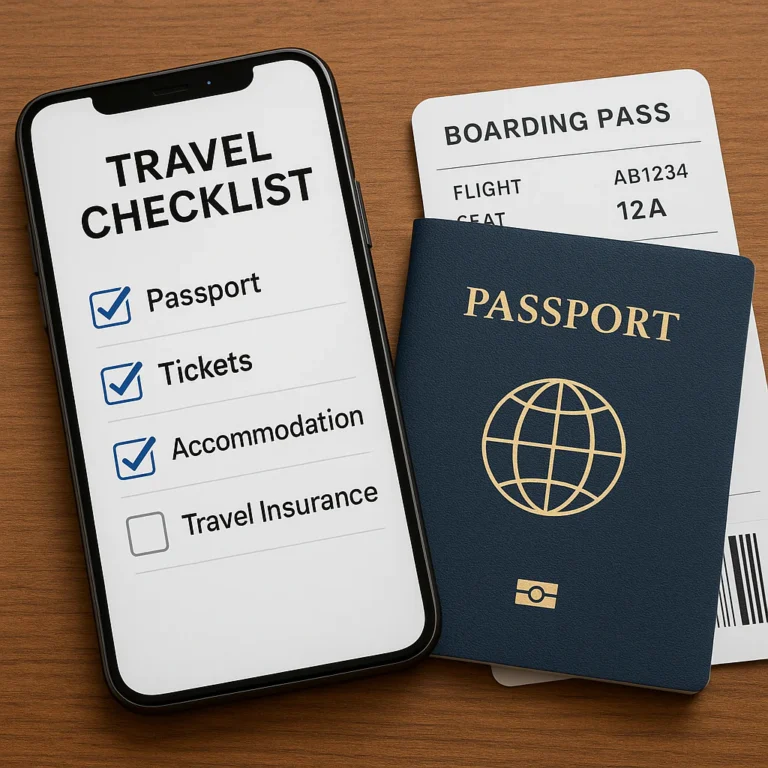
- Travel Insurance Policy: Have the policy number and emergency contact info handy.
- Credit/Debit Cards: At least two different banks. One with no foreign transaction fees is a must.
- Cash: A small amount of local currency for immediate expenses (taxis, tips).
- Copies: Digital scans of all documents saved to the cloud (Google Drive, Dropbox) and a physical copy in a separate bag.
2. Health, Safety, and First Aid Kit
- Prescription Meds: In original labeled containers. Bring a doctor’s note for controlled substances.
- OTC Meds: Pain relievers, anti-diarrheal, motion sickness (Dramine), antihistamines, and electrolyte packets.
- First Aid: Band-aids, antibiotic ointment, blister pads (Compeed), and twezers.
- Insect Repellent: DET or Picaridin based.
- Hand Sanitizer & Wipes: Keep a bottle in your pocket and a pack of wipes in your bag.
3. Electronics, Power, and Connectivity
- Universal Travel Adapter: Look for one with USB-C ports.
- Power Bank: Minimum 10,0mAh.
- eSIM or International Plan: Set up before you land.
- Noise-Canceling Headphones: Essential for long flights.
- AirFly Adapter: If you want to use your own Bluetooth headphones on the plane’s entertainment system.
- Luggage Tracker: AirTag or Tile for every checked bag.
4. Clothing Strategies for Every Climate
- The “Capsule” Wardrobe: Pack items that mix and match. Stick to a color palette.
- Layers: A lightweight jacket, a warm sweater, and a rain shell.
- Comfortable Walking Shoes: Broken in before the trip.
- Sandals/Flip-Flops: For showers and beaches.
- Underwear & Socks: Pack one extra pair per day, plus a few spares.
- Swimsuit: Even in winter, you might find a pool or hot tub.
- Sleepwear: Comfortable, breathable fabric.
5. Toiletries and Personal Care Essentials
- Travel-Sized Liquids: All under 3.4 oz (10ml) for carry-on.
- Cadence Travel Capsules: Great for organizing small amounts of shampoo, lotion, etc.
- Sunscreen: High SPF, reef-safe if going to the ocean.
- Lip Balm & Moisturizer: Airplane air is dry.
- Hair Tools: Dual voltage only! If it’s not dual voltage, leave it or buy a converter.
- Femine Hygiene Products: Don’t assume you can find your specific brand abroad.
6. Comfort, Sleep, and In-Flight Survival Gear
- Neck Pillow: Look for one that supports the chin, not just the neck.
- Eye Mask: Blackout is key.
- Earplugs: Foam or silicone.
- Compression Socks: Crucial for flights over 4 hours to prevent DVT.
- Reusable Water Bottle: Empty it before security, fill it after.
- Snacks: Granola bars, nuts, or dried fruit.
7. Miscellaneous Gadgets and “Just in Case” Items
- Packing Cubes: The ultimate space savers.
- Laundry Sheets: Lightweight and eco-friendly for washing clothes in the sink.
- Travel Umbrella: Compact and sturdy.
- Dry/Wet Bags: For muddy hikes or wet swimsuits.
- Money Belt/Anti-theft Wallet: For crowded tourist spots.
- Collapsible Tote: For shopping or day trips.
But wait, what about the stuff you shouldn’t bring? Overpacking is the enemy of travel. Let’s talk about the “Forbidden List.”
🚫 The Forbidden List: What Not to Pack for International Travel
We’ve all been there: you close the suitcase, it’s overflowing, and you think, “I’ll just squeeze it in.” Don’t. Here’s what to leave at home.
- Full-Size Toiletries: Unless you’re checking a bag, leave the big bottles. They are heavy and will get confiscated.
- Non-Dual Voltage Hair Tools: If you bring a US-only hair dryer to Europe, you will burn it out instantly.
- Expensive Jewelry: Why risk it? Wear it if you must, but don’t pack it in checked luggage.
- Fresh Food & Agricultural Items: Fruits, meats, and seeds are strictly prohibited in many countries. You could face heavy fines.
- Illegal Medications: As mentioned, check local laws. Adderall, certain painkillers, and even some cold medicines are banned in places like Japan and the UAE.
- Drones: Many countries have strict regulations or bans on drones. Check before you fly.
- Too Many Shoes: Shoes are heavy. Limit yourself to three pairs max.
- More Than One Physical Book: Use a Kindle or download books to your phone.
🎒 Mastering the Art of Packing: How to Pack a Suitcase to Maximize Space
Packing isn’t just about throwing things in a bag; it’s an art form. Here’s how to pack like a pro.
The Rolling vs. Folding Debate
- Rolling: Best for t-shirts, jeans, and casual wear. Saves space and reduces wrinkles.
- Folding: Best for blazers, dress shirts, and structured items. Use the “bundle wrapping” technique formal wear.
The Layering Strategy
- Bottom Layer: Heavy items (shoes, toiletry bag) at the bottom (wheel side).
- Middle Layer: Rolled clothes and packing cubes.
- Top Layer: Delicate items and items you might need last.
Use Packing Cubes
Packing cubes are not a gimmick. They compress your clothes and keep you organized. Use one for underwear, one for tops, one for bottoms.
The “Just in Case” Bag
Always pack a small bag with a change of clothes, meds, and toiletries in your carry-on. If your checked bag is lost, you can survive for a few days.
Ready to take your packing to the next level? Let’s talk about the digital tools that make travel seamless.
🌐 Digital Nomad & Connectivity: eSIMs, Roaming, and Staying Online
In 2024, being offline is a luxury you can’t afford. Here’s how to stay connected.
eSIMs vs. Physical SIMs
- eSIM: No physical card needed. You can buy a plan online and activate it before you land. Holafly and Airalo are top contenders.
- Physical SIM: Requires a SIM tray and a local SIM card. Can be cheaper but requires finding a store upon arrival.
Roaming Plans
Check with your carrier (Verizon, T-Mobile, AT&T) for international plans. They are convenient but often more expensive than eSIMs.
Offline Tools
- Google Maps: Download offline maps.
- Google Translate: Download language packs.
- Currency Converter: Download an offline app.
But what if you’re going to a specific destination like Bali or Tulum? The packing list changes based on the climate and culture.
👗 Destination-Specific Packing Guides: From Bali to Tulum
Bali, Indonesia
- Climate: Tropical, humid, rainy season.
- Essentials: Lightweight, breathable fabrics, rain jacket, mosquito repellent, sarong for temple visits.
- Shoes: Sandals and water shoes.
Tulum, Mexico
- Climate: Hot, humid, beach-focused.
- Essentials: Swimsuits, cover-ups, sunscreen (reef-safe), cenote gear (water shoes), light evening wear.
- Shoes: Sandals, flip-flops, one pair of nice shoes for dinner.
Europe (Winter)
- Climate: Cold, snowy, wet.
- Essentials: Heavy coat, thermal layers, waterproof boots, gloves, scarf, hat.
- Shoes: Waterproof, insulated boots.
Still feeling overwhelmed? Let’s break down the planning process into simple, actionable steps.
🧠 Smart Travel Hacks: Planning Your Trip with Confidence
Planning a trip doesn’t have to be a nightmare. Here’s our step-by-step guide.
Step 1: Define Your Budget
Set a realistic budget for flights, accommodation, food, and activities. Use tools like Skyscanner to find the best deals.
Step 2: Choose Your Dates
Be flexible. Flying mid-week is often cheaper. Avoid peak tourist seasons if possible.
Step 3: Book Accomodation
Use Booking.com or Airbnb to find the best places. Read reviews and check the location.
Step 4: Plan Your Itinerary
Don’t overplan. Leave room for spontaneity. Use Google Maps to mark places you want to visit.
Step 5: Prepare for the Unexpected
Buy travel insurance. Pack a first aid kit. Have a backup plan for flights.
Are you ready to fly? Let’s wrap this up with some final thoughts and recommendations.
📝 Final Thoughts: Are You Ready to Fly?
We’ve covered a lot of ground, from the history of travel prep to the nitty-gritty of packing cubes and eSIMs. But the most important thing to remember is this: Travel is about the experience, not the perfection.
Yes, you need a checklist. Yes, you need to pack smart. But don’t let the fear of forgetting something stop you from going. If you forget a toothbrush, you can buy one. If you forget a passport, well, that’s a different story.
The key is preparation. By following the steps we’ve outlined, you’ll be ready to hit the ground running. So, pack your bags, charge your devices, and get ready for an adventure.
But wait, what about the specific products we mentioned? We’ve got you covered with links to the best gear.
🔗 Recommended Links
Essential Travel Gear
- Travel Adapter: Amazon Search: Universal Travel Adapter | Brand Official: EPICKA
- Packing Cubes: Amazon Search: Packing Cubes | Brand Official: Eagle Creek
- Noise-Canceling Headphones: Amazon Search: Noise Canceling Headphones | Brand Official: Sony
- eSIM Provider: Holafly Official Website | Airalo Official Website
- Luggage Tracker: Amazon Search: Apple AirTag | Brand Official: Apple
- Travel Insurance: World Nomads Official Website | SafetyWing Official Website
Books for Travelers
❓ Frequently Asked Questions (FAQ)

What documents are essential for international travel?
You absolutely need a valid passport (with at least six months of validity). Depending on your destination, you may also need a visa, ETAs, or proof of vaccination. Always check the specific entry requirements for your country.
Read more about “🛡️ 12 Critical Checks for Your Pandemic Travel Checklist (2026)”
How do I pack efficiently for a long international trip?
Use the capsule wardrobe method: pack versatile items that mix and match. Roll your clothes to save space and use packing cubes to organize. Limit yourself to one carry-on and one checked bag if possible.
Read more about “🎒 The Ultimate Travel Checklist for Backpackers: 50+ Essentials (2026)”
What are the most important travel apps to download before going abroad?
- Google Maps: For offline navigation.
- Google Translate: For language barriers.
- Currency Converter: For quick calculations.
- eSIM App: For data connectivity.
- Flight Tracker: For real-time flight updates.
Read more about “25 Commonly Forgotten International Travel Items (2026) 🧳”
Do I need travel insurance for every international destination?
While not always mandatory, travel insurance is highly recommended. It covers trip cancellations, medical emergencies, and lost luggage. Some countries, like Schengen Area nations, require specific insurance for visa applications.
Read more about “🍽️ 15 Best Food Destinations to Plan with Itinerary Apps (2026)”
What should I do if my luggage is lost?
Report it immediately at the airport baggage claim. Keep your luggage tracker (like AirTag) active. Most airlines have a process for reimbursement, but having a carry-on with essentials ensures you can survive while waiting.
Read more about “🎒 The Ultimate Digital Nomad Travel Checklist (2026): 50+ Essentials”
📚 Reference Links