Support our educational content for free when you purchase through links on our site. Learn more
🛂 7 Essential Documents for International Travel (2026)


Imagine standing at the departure gate, heart pounding, only to be told your trip is over before it begins because your passport expires in five months. It’s a nightmare we’ve seen too often at Travel Checklist™. Did you know that over 10 countries strictly enforce the “six-month validity rule,” turning away thousands of travelers annually? Whether you’re chasing sunsets in Bali or navigating the bustling streets of Tokyo, the difference between a smooth journey and a stranded disaster often comes down to a single piece of paper.
In this comprehensive guide, we’re pulling back the curtain on the exact documents you need for international travel in 2026. We’ll decode the confusing world of e-visas, explain the critical 90/180 rule for Europe, and reveal the hidden paperwork required for traveling with children or pets. From the non-negotiable passport to the often-overlooked proof of onward travel, we’ve got you covered. By the end of this read, you’ll know exactly how to organize your paperwork so you can focus on what really matters: the adventure.
Key Takeaways
- Passport Validity is King: Ensure your passport is valid for at least six months beyond your return date to avoid immediate denial of entry.
- Visas Vary Wildly: Requirements change by destination; always check for e-visas, Visa on Arrival, or strict embassy applications before booking.
- Proof of Onward Travel: Many border agents will deny entry if you cannot show a return ticket or proof of leaving the country.
- Insurance is Mandatory: For the Schengen Area and highly recommended everywhere, comprehensive travel insurance is a critical safety net.
- Digital & Physical Copies: Always carry originals on your person, physical copies in your luggage, and digital backups in the cloud.
Table of Contents
- ⚡️ Quick Tips and Facts
- 🕰️ A Brief History of Passport Control and Border Security
- 🛂 The Non-Negotiables: Essential International Travel Documents
- 1. Valid Passport: The Golden Ticket to the World
- 2. Visas: Your Permission Slip for Entry
- 3. Proof of Onward Travel: The “You Won’t Stay Forever” Card
- 4. Travel Insurance: Your Safety Net Abroad
- 5. Vaccination Records: The New Health Passport
- 🌍 Destination-Specific Requirements: Navigating Regional Nuances
- Schengen Area Rules for European Travelers
- Asia-Pacific Entry Protocols and Digital Visas
- The Americas: Visa Waivers and Tourist Cards
- 👶 Special Circumstances: Minors, Seniors, and Dual Citizens
- Travelling with Children: Consent Letters and Birth Certificates
- Dual Citizenship: Which Passport Should You Use?
- Pet Passports: Flying with Your Furry Co-Pilot
- 📝 Digital vs. Physical: The Future of Travel Documentation
- 🚨 Common Pitfalls: What Gets Travelers Stuck at the Gate
- 🛡️ Smart Traveler Enrollment Program (STEP): Why You Should Sign Up
- 💡 Pro Tips for Organizing Your Travel Paperwork
- 🏁 Conclusion
- 🔗 Recommended Links
- ❓ FAQ: Your Burning Questions Answered
- 📚 Reference Links
⚡️ Quick Tips and Facts
Before we dive into the nitty-gritty of visa stamps and passport validity, let’s hit the high notes that could save your trip (and your wallet) before you even pack your toothbrush. We’ve seen too many travelers get turned away at the gate because they missed these non-negotiables.
- The 6-Month Rule is Real: Most countries will deny entry if your passport expires within six months of your arrival date. It’s not a suggestion; it’s a hard stop. 🛑
- Digital Copies Save Lives: Always email yourself PDFs of your passport, visa, and insurance. If your bag gets lost or stolen, you’re not stranded without proof of identity.
- One Size Does Not Fit All: Just because you can visit France without a visa doesn’t mean you can visit Switzerland without one (wait, actually you can, but the point stands: check every country on your itinerary, including layovers!).
- Minors Need Paperwork Too: A child’s passport is mandatory for air travel, but land/sea travel has specific exceptions. However, if a child is traveling with one parent, a notarized consent letter from the other is often required.
- Insurance is Not Optional: Your domestic health plan likely covers zero medical costs abroad. A single ambulance ride in Europe can cost more than your entire flight ticket.
For a deeper dive into organizing all these specifics, be sure to check out our comprehensive guide on our travel checklist international page.
🕰️ A Brief History of Passport Control and Border Security

You might think the red passport stamp is a modern invention, but the concept of border control dates back to ancient times. The word “passport” itself comes from the French porte (gate) and port (port), originally referring to documents allowing passage through city gates.
Fast forward to the 19th century, and the League of Nations standardized the modern passport in 1920 to facilitate post-WI travel. But the real game-changer? 9/1. The security landscape shifted dramatically, moving from a “trust but verify” model to a “verify everything” regime. Today, we live in an era of biometric data, e-gates, and digital visas.
Why does this history matter to you? Because understanding that border security is dynamic helps you realize that rules can change overnight. A visa-free agreement today could be suspended tomorrow due to political shifts. That’s why relying on a blog post from 2019 is a recipe for disaster. Always check the current requirements.
🛂 The Non-Negotiables: Essential International Travel Documents
So, you’ve booked the flight. The excitement is palpable. But wait—do you actually have the keys to the kingdom? Let’s break down the absolute essentials you cannot leave home without.
1. Valid Passport: The Golden Ticket to the World
Your passport is your primary identity document globally. Without it, you are essentially a ghost in the eyes of international law.
- Validity Check: As mentioned, ensure it’s valid for at least six months beyond your planned departure date from the destination country. Some countries, like Thailand and Indonesia, are strict about this.
- Blank Pages: Many countries require two to four blank visa pages. A passport full of stamps but no blank pages is useless for entry.
- Damage Control: Is your passport torn, water-damaged, or missing a page? Do not travel with a damaged passport. It can be rejected at the border.
Pro Tip: If you are a frequent traveler, consider applying for a 50-page passport instead of the standard 28-page version. It’s the same price and saves you from running out of space halfway through your globe-troting adventures.
2. Visas: Your Permission Slip for Entry
A visa is a formal endorsement placed in your passport, granting permission to enter, leave, or stay in a country for a specific period.
- Visa-Free Travel: Many countries have reciprocal agreements allowing citizens to enter without a visa for short stays (usually 30-90 days).
- Visa on Arrival (VoA): You get the visa when you land. Sounds convenient, right? Wrong. Lines can be hours long, and if you don’t have the exact cash or photos, you’re stuck.
- e-Visas: The modern solution. Apply online, get a PDF, print it, and go. Countries like Turkey, India, and Australia (ETA) rely heavily on this system.
Comparison: Visa Types
| Visa Type | Processing Time | Cost | Best For |
|---|---|---|---|
| Visa-Free | N/A | Free | Short trips, leisure |
| e-Visa | 1-7 Days | $20 – $10 | Tech-savy travelers, pre-planning |
| Visa on Arrival | 1-4 Hours | $25 – $150 | Spontaneous trips (risky) |
| Embassy Visa | 2-8 Weeks | $50 – $20+ | Long stays, work, complex itineraries |
3. Proof of Onward Travel: The “You Won’t Stay Forever” Card
Immigration officers are trained to spot potential overstayers. If you arrive with a one-way ticket and no proof of leaving, you might be denied entry.
- What counts? A confirmed return flight, a bus ticket to a neighboring country, or a cruise itinerary.
- The Workaround: If you are backpacking and don’t have a return date, you can rent a refundable flight ticket for 48 hours to satisfy the airline and border control, then cancel it. Services like Onward Ticket or Best Onward Ticket specialize in this.
4. Travel Insurance: Your Safety Net Abroad
We cannot stress this enough: Travel insurance is mandatory for many countries (like Schengen Area nations) and highly recommended for everyone else.
- Medical Coverage: Ensure it covers emergency evacuation, which can cost upwards of $10,0.
- Trip Cancellation: Life happens. If you get sick or a family emergency strikes, insurance reimburses your non-refundable costs.
- Lost Luggage: Airlines are notoriously slow to compensate for lost bags. Insurance fills the gap.
Recommended Brands:
- World Nomads: Great for adventure travelers and digital nomads.
- SafetyWing: Perfect for long-term nomads with flexible coverage.
- Allianz Global Assistance: Reliable for standard family vacations.
👉 Shop Travel Insurance on:
- World Nomads: World Nomads Official Website | Compare on Squaremouth
- SafetyWing: SafetyWing Official Website | Review on InsureMyTrip
5. Vaccination Records: The New Health Passport
While the pandemic-era “health passports” have largely faded, vaccination requirements remain critical for specific regions.
- Yellow Fever: Mandatory for entry into many African and South American countries if you are arriving from a country with risk of Yellow Fever transmission. You need the International Certificate of Vaccination or Prophylaxis (ICVP), often called the “Yellow Card.”
- CDC Guidelines: Always check the CDC Travelers’ Health page for your destination. Some vaccines (like Hepatitis A or Typhoid) take weeks to become effective, so plan ahead!
🌍 Destination-Specific Requirements: Navigating Regional Nuances
One size definitely does not fit all. Let’s break down the rules for the world’s most popular regions.
Schengen Area Rules for European Travelers
The Schengen Area comprises 29 European countries (including France, Germany, Italy, and Spain) that have abolished internal borders.
- The 90/180 Rule: You can stay for a maximum of 90 days within any 180-day period. This applies to the entire Schengen zone, not per country.
- ETIAS: Starting in 2025, visa-exempt travelers will need to apply for ETIAS (European Travel Information and Authorization System), a pre-screening similar to the US ESTA.
- Passport Validity: Your passport must be valid for at least three months beyond your intended date of departure from the Schengen area.
Asia-Pacific Entry Protocols and Digital Visas
Asia is a mix of strict visa regimes and easy e-visa systems.
- Japan & South Korea: Generally visa-free for many Western nationals, but strict on passport validity.
- China: Recently relaxed visa-free transit rules, but still requires a visa for most direct entries.
- Australia & New Zealand: Both require Electronic Travel Authority (ETA) or NZeTA respectively, which must be obtained before boarding.
- Southeast Asia: Countries like Vietnam, Cambodia, and Laos offer convenient e-visas, while Thailand has recently extended visa-free entry for many nationalities.
The Americas: Visa Waivers and Tourist Cards
- USA: The Visa Waiver Program (VWP) allows citizens of 41 countries to enter for 90 days without a visa, provided they have an approved ESTA.
- Canada: Requires an eTA for visa-exempt foreign nationals flying to Canada.
- Mexico: Most tourists need a FMM (Forma Migratoria Múltiple), often included in your airline ticket price, but you must keep the paper copy for exit.
👶 Special Circumstances: Minors, Seniors, and Dual Citizens
Traveling isn’t just about the adults. Special rules apply to the little ones, the elders, and those with multiple passports.
Travelling with Children: Consent Letters and Birth Certificates
- Passports: Every child, including infants, needs their own passport for international air travel.
- Consent Letters: If a child is traveling with one parent, grandparents, or a group, a notarized letter of consent from the non-acompanying parent(s) is highly recommended. It should include the child’s details, travel dates, destination, and contact info for the absent parent.
- Birth Certificates: For land/sea travel within the Western Hemisphere, a birth certificate might suffice for children under 16, but a passport is always safer.
Dual Citizenship: Which Passport Should You Use?
If you hold two passports, you have a strategic advantage, but also a responsibility.
- The Golden Rule: Enter and exit the country of your citizenship using that country’s passport.
Example: If you are a dual US-Canadian citizen, enter Canada with your Canadian passport and the US with your US passport. - Why? It prevents you from being stuck in immigration limbo or being denied entry for not having a visa.
- Airline Check-in: When checking in, show the passport that allows you to enter your destination. If you are flying from the US to France, show your US passport (visa-free) or French passport (citizen).
Pet Passports: Flying with Your Furry Co-Pilot
Taking your dog or cat abroad? They need their own “passport” (pet travel documents).
- Microchip: Most countries require an ISO-compliant microchip.
- Rabies Vaccination: Must be administered within a specific timeframe (usually 30 days to 12 months before travel).
- Health Certificate: A USDA-endorsed health certificate issued within 10 days of travel is often required.
- Breed Restrictions: Be aware that countries like Australia and New Zealand have strict quarantine periods and breed bans.
📝 Digital vs. Physical: The Future of Travel Documentation
We are moving toward a paperless future, but don’t ditch your printer just yet.
- Mobile Wallets: Apple Wallet and Google Pay now support digital boarding passes and some digital IDs (like driver’s licenses in select US states).
- Digital Visas: Many countries now accept e-visas printed on standard paper or displayed on a phone screen.
- The Hybrid Approach: The smartest travelers carry both. A dead battery or a lost phone shouldn’t ground you.
Physical: Keep original passports and visas in a secure neck pouch.
Digital: Store encrypted PDFs in a secure cloud service (like Google Drive or Dropbox) and email them to yourself.
🚨 Common Pitfalls: What Gets Travelers Stuck at the Gate
Even the most seasoned travelers slip up. Here are the top reasons people get denied boarding:
- The “Six-Month” Blind Spot: Arriving with a passport that expires in 5 months and 29 days. Result: Denied boarding.
- The Missing Blank Page: Landing in a country that requires a full page for a stamp, only to find your passport is full. Result: Denied entry.
- The Name Mismatch: Booking a flight with a nickname (e.g., “Bob” instead of “Robert”) that doesn’t match the passport. Result: Expensive rebooking fees.
- The Transit Visa Trap: Flying through a country (like the UK or Canada) without realizing you need a transit visa even if you don’t leave the airport.
- The “One-Way” Ticket: Arriving without proof of onward travel. Result: Immigration detention or forced return.
🛡️ Smart Traveler Enrollment Program (STEP): Why You Should Sign Up
STEP is a free service provided by the U.S. Department of State for U.S. citizens traveling abroad.
- What it does: It registers your trip with the nearest U.S. Embassy or Consulate.
- Why do it?
Safety Updates: Receive critical information about safety conditions in your destination.
Emergency Contact: Makes it easier for the embassy to contact you and your family in an emergency (natural disaster, civil unrest, or family crisis).
Lost/Stolen Passport: Helps the embassy locate you if your passport is lost or stolen.
“Enroll in STEP to receive safety updates and make it easier for the embassy to contact you in an emergency.” — U.S. Department of State
It takes 5 minutes and could save your life. Sign up at travel.state.gov.
💡 Pro Tips for Organizing Your Travel Paperwork
How do you keep it all together without losing your mind?
- The “Go-Bag” Strategy: Keep all essential documents (Passport, Visa, Insurance, Itinerary) in a waterproof, RFID-blocking neck pouch or a dedicated document organizer. Never check these in your luggage.
- Color Coding: Use colored folders or tabs for different documents (e.g., Blue for Passport, Red for Visas, Green for Insurance).
- The “Three Copies” Rule:
Original: On your person.
Physical Copy: In your checked bag (separate from the original).
Digital Copy: In the cloud and emailed to yourself. - Checklist Apps: Use apps like Travel Checklist™ to ensure you haven’t forgotten a single document. We specialize in helping you travel smoothly with our curated checklists for every type of trip, from Adventure Travel Checklists to Digital Nomad Checklists.
Remember: The goal is to have your documents ready before you even get to the airport counter. If you are still digging through your bag at the gate, you’ve already failed the first test of travel.
🏁 Conclusion

So, there you have it. The world is vast, exciting, and waiting for you, but it demands respect for its rules. From the six-month passport validity to the nuances of Schengen visas and the critical importance of travel insurance, the documents you carry are your lifeline.
We started this journey by asking: Are you ready to explore the world without a worry? The answer lies in your preparation. Don’t let a missing stamp or an expired passport ruin your dream trip. By following the non-negotiables, understanding destination-specific rules, and organizing your paperwork with the pro tips we’ve shared, you’re not just a traveler; you’re a smart traveler.
Final Recommendation:
Before you book that flight, take 30 minutes to:
- Check your passport expiration date.
- Verify visa requirements for every country on your itinerary.
- Purchase comprehensive travel insurance.
- Enroll in STEP.
- Make digital and physical copies of everything.
Travel is about freedom, but that freedom is built on a foundation of preparation. Pack smart, travel safe, and enjoy the adventure!
🔗 Recommended Links
Travel Insurance Providers:
- World Nomads: World Nomads Official Website | Compare on Squaremouth
- SafetyWing: SafetyWing Official Website | Review on InsureMyTrip
- Allianz Global Assistance: Allianz Travel Insurance
Passport & Visa Services:
- U.S. Department of State: Passport Services
- iVisa: iVisa Official Website (For visa applications and requirements)
- Global Entry: TSA Global Entry
Books & Guides:
- “The Art of Travel” by Alain de Botton: Amazon Link
- “Lonely Planet World Guide” Series: Amazon Link
Checklist Resources:
❓ FAQ: Your Burning Questions Answered

What documents do I need to bring to airport for international flight?
You need your valid passport, any required visas, your boarding pass (digital or physical), and proof of onward travel if requested. Don’t forget your travel insurance details and vaccination records if applicable. Always arrive at least 3 hours before your flight.
Read more about “🌍 What Do You Need to Travel Internationally? (2026 Ultimate Guide)”
What information is needed to book an international flight?
You need your full legal name (exactly as it appears on your passport), date of birth, passport number, expiration date, and nationality. Some airlines also require your gender and contact information. Accuracy is key to avoid check-in issues.
Read more about “🌍 How to Create a Travel Checklist for International Travel (2026)”
What documents to carry when travelling abroad?
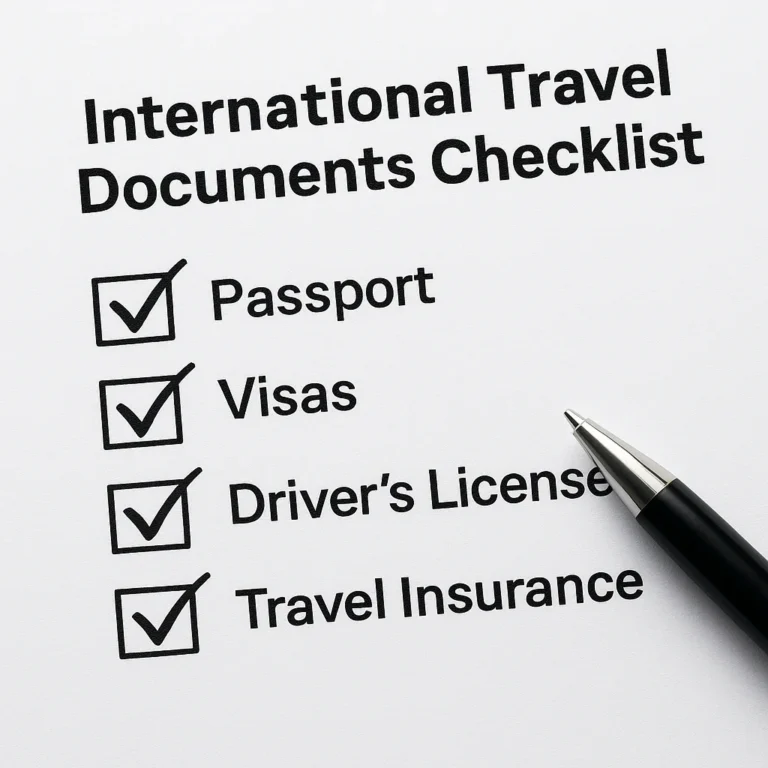
Cary your original passport, visas, travel insurance policy, itinerary, emergency contact info, and copies of all documents. If you are driving, bring your driver’s license and International Driving Permit (IDP). Keep these in a secure, accessible place.
Read more about “🌍 25-Item International Packing Checklist for a Week (2026)”
What documents do I need to travel internationally?
The core documents are a valid passport and any necessary visas. Depending on your destination, you may also need proof of vaccination, proof of funds, and proof of accommodation. Always check the specific entry requirements for your destination country.
Read more about “✈️ 15-Step International Travel Checklist: Never Get Stuck at the Gate (2026)”
What identification documents do I need for international travel?
For air travel, a passport is the only universally accepted ID. For land/sea travel within the Western Hemisphere, a Passport Card, Enhanced Driver’s License, or Trusted Traveler Card (NEXUS, SENTRI) may suffice.
Read more about “✈️ 50+ Ultimate Travel Must Haves for 2026: The Only List You Need”
Are visas mandatory for all international trips?
No. Many countries have visa waiver programs allowing citizens of specific nations to enter without a visa for short stays. However, you must still meet entry requirements like passport validity and proof of onward travel. Always verify the rules for your specific nationality and destination.
Read more about “Ultimate Travel Checklist for Travel Documents in 2026 ✈️”
How can I organize my travel documents efficiently?
Use a document organizer or a waterproof pouch. Keep originals on your person, physical copies in your checked bag, and digital copies in the cloud. Use apps like Travel Checklist™ to track your progress.
Read more about “✈️ Creating a Travel Checklist: The Ultimate 2026 Guide (No More Forgotten Items!)”
What travel documents should I keep digital copies of?
Keep digital copies of your passport, visas, travel insurance, itinerary, driver’s license, and emergency contact info. Store them in a secure cloud service and email them to yourself.
Read more about “25 Must-Have Items for Your 7-Day Beach Vacation Packing List (2026) 🏖️”
📚 Reference Links
- U.S. Department of State: International Travel Checklist
- U.S. Customs and Border Protection (CBP): Documents needed to enter the United States
- American Airlines: International Travel Document Requirements
- CDC Travelers’ Health: Vaccinations and Health Advice
- IATA Travel Centre: Travel Requirements
- Sherpa: Travel Restrictions by Destination
- World Nomads: Travel Insurance Guide
- SafetyWing: Nomad Insurance
- iVisa: Visa Requirements