Support our educational content for free when you purchase through links on our site. Learn more
✈️ The Ultimate Business Travel Checklist: 15 Steps to Zero Stress (2026)

We’ve all been there: the 3:0 AM panic in a foreign hotel room, frantically digging through a suitcase that smells like stale coffee, realizing you left your presentation clicker on the kitchen counter. It’s a nightmare scenario that no amount of “wing it” can fix. At Travel Checklist™, we’ve seen brilliant executives crumble under the weight of forgotten adapters and missed flights, not because they lacked skill, but because they lacked a system.
Did you know that 85% of frequent business travelers now fly carry-on only to avoid the baggage claim gamble? Yet, despite this shift toward minimalism, the number of forgotten items has actually increased due to the complexity of modern tech and hybrid work schedules. The difference between a chaotic trip and a seamless one isn’t luck; it’s a proven, step-by-step checklist. In this guide, we’re not just listing items; we’re revealing the 15 essential steps that cover everything from pre-departure logistics to post-trip expense recovery, ensuring you never face another travel-induced meltdown.
Key Takeaways
- Master the 30-7-1 Rule: Learn the exact timeline for booking flights, confirming meetings, and doing your final gear check to eliminate last-minute panic.
- Adopt the “One Bag” Mindset: Discover how to pack a professional wardrobe and all necessary tech into a single carry-on, saving time and reducing stress.
- Automate the Boring Stuff: Utilize modern tools for expense tracking and itinerary management to stop “shadow work” from draining your productivity.
- Prepare for the Unexpected: Get our exclusive “Emergency Kit” list and recovery strategies for when things inevitably go wrong, ensuring you stay sharp and professional.
Table of Contents
- ⚡️ Quick Tips and Facts
- 🕰️ The Evolution of the Corporate Traveler: From Briefcases to Backpacks
- 🧠 Why Your Brain Needs a Business Trip Checklist (And How to Stop Forgetting Your Charger)
- 🗓️ The 30-7-1 Rule: How Far Ahead Should You Plan Your Business Travel?
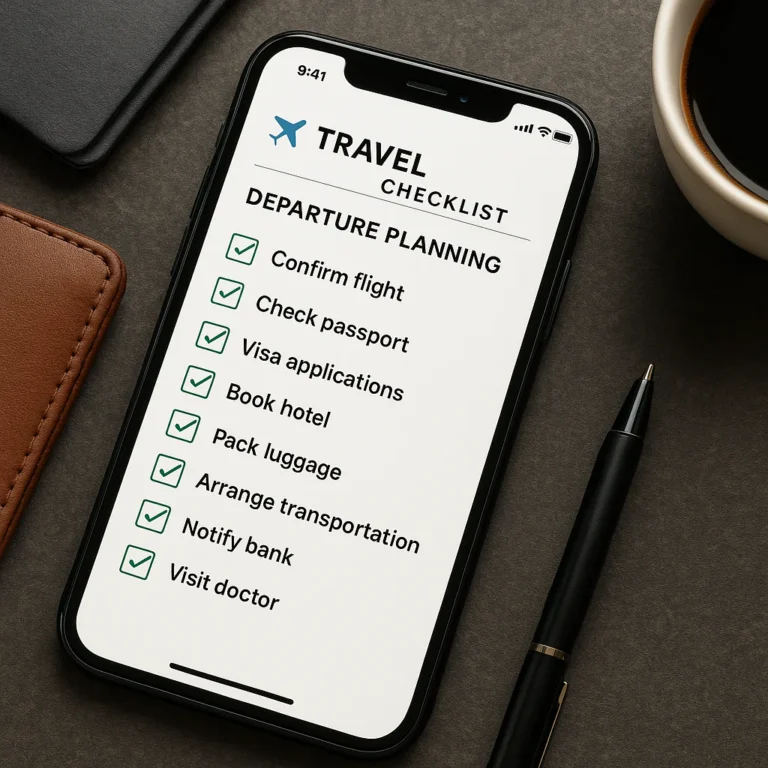
- 📋 The Ultimate Business Travel Checklist: 15 Essential Steps Before You Fly
- 1. Secure Your Flight and Hotel with Corporate Rates
- 2. Verify Visa Requirements and Passport Validity
- 3. Sync Your Calendar and Block Out “Deep Work” Time
- 4. Book Ground Transportation in Advance
- 5. Confirm Meeting Agendas and Attendee Lists
- 6. Notify Your Bank and Update Travel Alerts
- 7. Download Offline Maps and Essential Travel Apps
- 8. Check the Weather Forecast for Your Destination
- 9. Arrange Pet or Plant Care at Home
- 10. Set Up an Out-of-Office Email Auto-Responder
- 1. Prepare Your Expense Report Template Early
- 12. Pack Your “Emergency Kit” and First Aid Supplies
- 13. Charge All Devices and Pack Power Banks
- 14. Print Physical Copies of Reservations and Itineraries
- 15. Do a Final “Door Check” Before Leaving Home
- 🧳 The Art of the Minimalist Business Packing List: What to Bring (and What to Leave Behind)
- 💼 Professional Attire vs. Comfort: Mastering the Business Casual Dilemma
- 💸 Modern Expense Control: How to Track Receipts Without Losing Your Mind
- 🛡️ Developing a Corporate Travel Safety Policy: A Traveler’s Checklist
- 🚫 The Shadow Work Trap: 7 Time-Wasters That Drain Travel Managers (and How to Fix Them)
- 🆘 What Happens If You Forget Something? (And How to Recover Gracefully)
- 🏨 Hotel Hacks and Airport Lounges: Making the Most of Your Downtime
- 🌍 International Business Travel: Navigating Customs, Currency, and Culture
- 📱 Top Tech Gadgets Every Business Traveler Needs in 2024
- 🧘 ♂️ Beating Jet Lag: A Science-Backed Guide to Staying Sharp
- ✅ Quick Tips and Facts Recap
- Conclusion
- Recommended Links
- FAQ
- Reference Links
⚡️ Quick Tips and Facts
Before we dive into the nitty-gritty of packing your suitcase and organizing your itinerary, let’s hit the fast lane with some hard-hitting truths that every business traveler needs to know. We’ve seen too many colleagues turn into panic-stricken messes because they ignored these basics.
- The “Cary-On Only” Mandate: Did you know that 85% of frequent business travelers now fly carry-on only? Why? Because checking bags is a gamble you can’t afford. If your luggage goes to London and you’re in New York, your presentation is toast. Stick to the 2 x 14 x 9 inches rule (standard for most US carriers) to ensure you glide through the gate.
- The Real ID Deadline: If you’re flying domestically in the US, forget your old driver’s license. As of May 7, 2025, the TSA will require a Real ID-compliant license or a passport. Don’t be the person holding up the security line because your ID expired three years ago.
- The 6-Month Passport Rule: International travel? Check your passport expiration date now. Many countries will deny entry if your passport expires within 6 months of your return date. Renewals can take up to 2 months, so plan ahead!
- The “Shadow Work” Trap: According to recent industry reports, travel managers spend nearly 30% of their time on “shadow work”—tasks like manually reconciling receipts, chasing approvals, and fixing booking errors. A solid checklist isn’t just for you; it’s a shield against this administrative nightmare.
- Hydration is Non-Negotiable: Cabin air is drier than the Sahara. Dehydration causes jet lag and brain fog. Drink water before you board, and keep a reusable bottle handy.
For a deeper dive into how a structured approach changes everything, check out our guide on how to create a travel checklist that actually works.
🕰️ The Evolution of the Corporate Traveler: From Briefcases to Backpacks
Remember the days of the stiff, leather briefcase and the three-piece suit that felt like a straitjacket? The corporate traveler has undergone a radical transformation, and it’s not just about fashion—it’s about survival and efficiency.
In the 90s, the “business trip” meant a heavy roller bag, a separate laptop case, and a distinct separation between “work gear” and “life gear.” Today, the modern professional is a hybrid nomad. We’ve seen the shift from the “briefcase era” to the “backpack revolution.” Why? Because agility is king.
- The Briefcase Era: Heavy, rigid, and often a magnet for theft. You couldn’t run to catch a flight with a leather briefcase.
- The Roller Bag Transition: The introduction of spinner wheels changed everything, allowing for smoother navigation through crowded terminals.
- The Backpack Dominance: Now, the convertible backpack is the gold standard. It offers hands-free mobility, fits under the seat, and often doubles as a day bag.
“I used to lug a massive suitcase and a separate laptop bag. Now, I glide through airports in a way I didn’t before… I’m more hands-free, and when I want access to something, I know exactly where it is.” — Adapted from minimalist travel experts.
This evolution isn’t just about looking cool; it’s about reducing cognitive load. When your gear is organized and minimal, your brain is free to focus on the meeting, not on wrestling with a zipper.
🧠 Why Your Brain Needs a Business Trip Checklist (And How to Stop Forgetting Your Charger)
Let’s be honest: your brain is a brilliant machine, but it’s terrible at remembering where you left your charger and what time your 8:0 AM meeting starts in a different time zone.
Cognitive Load Theory suggests that our working memory has a limited capacity. When you’re trying to remember 50 different tasks (book hotel, print tickets, pack suit, call mom, charge laptop), you’re overloading your system. This leads to the dreaded “I forgot my adapter” moment at 3:0 AM in a foreign hotel.
A business travel checklist acts as an external hard drive for your brain. It:
- Reduces Anxiety: You know everything is accounted for.
- Prevents “Winging It”: As one expert noted, “A business travel checklist eliminates that risk by eliminating the temptation to just wing it.”
- Standardizes Success: Whether it’s your first trip or your fiftieth, the process remains consistent.
Think of it as your personal command center. Without it, you’re flying blind. With it, you’re the pilot.
🗓️ The 30-7-1 Rule: How Far Ahead Should You Plan Your Business Travel?
Timing is everything. Book too early, and you might miss a better deal or a schedule change. Book too late, and you’re paying a premium and settling for bad seats. Enter the 30-7-1 Rule, a strategy we’ve refined over years of travel.
The 30-Day Mark: The Big Picture
30 days out, you should have your flights and hotels locked in.
- Why? Corporate rates often require advance booking. Plus, you want to secure a hotel near your meeting location, not 45 minutes away in a traffic jam.
- Action: Check your company’s travel policy. Does it require pre-approval? Use tools like Expedia for Business or Booking.com to compare rates.
The 7-Day Mark: The Logistics Lockdown
7 days out, focus on the micro-logistics.
- Ground Transport: Book your Uber/Lyft or rental car.
- Meeting Confirmations: Re-confirm agendas and attendee lists.
- Visa/Passport Check: Ensure your documents are valid for at least 6 months.
- Weather Check: Pack accordingly. If it’s raining, do you have an umbrella?
The 1-Day Mark: The Final Sweep
24 hours before, it’s time for the final checklist.
- Charge Everything: Laptop, phone, power bank, camera.
- Print Copies: Digital is great, but paper never runs out of battery.
- Home Security: Lock windows, set thermostat, water the plants.
Pro Tip: If you’re traveling internationally, start this process 60 days out to account for visa processing times.
📋 The Ultimate Business Travel Checklist: 15 Essential Steps Before You Fly
Ready to get organized? Here is your master list. We’ve numbered the critical steps to ensure you don’t miss a beat. Follow this religiously, and you’ll never be the person running through the airport in a panic.
1. Secure Your Flight and Hotel with Corporate Rates
Don’t just book the cheapest flight. Look for corporate rates that include perks like free Wi-Fi or lounge access.
- Action: Log into your company’s preferred booking tool (e.g., Concur, Navan).
- Check: Does the hotel have a business center? Is it within walking distance of your meeting?
2. Verify Visa Requirements and Passport Validity
International travel? Check your visa requirements immediately.
- Fact: Some countries require a visa even for layovers.
- Source: Always check the US State Department Travel Advisory or your country’s foreign affairs site.
3. Sync Your Calendar and Block Out “Deep Work” Time
Your travel time is still work time.
- Action: Block out time for “flight work” and “hotel work” in your calendar.
- Tip: Use Google Calendar to share your itinerary with your team.
4. Book Ground Transportation in Advance
Don’t rely on finding a taxi at the airport.
- Action: Pre-book a rental car via RentalCars.com or schedule an Uber/Lyft.
- Why? It saves time and reduces stress upon arrival.
5. Confirm Meeting Agendas and Attendee Lists
Nothing kills a business trip faster than showing up to a meeting that was cancelled or rescheduled.
- Action: Send a confirmation email 48 hours before.
- Check: Are there any last-minute changes to the agenda?
6. Notify Your Bank and Update Travel Alerts
Avoid the horror of your card being declined in a foreign city.
- Action: Use your banking app to set a “travel notice.”
- Tip: Carry a backup card from a different bank.
7. Download Offline Maps and Essential Travel Apps
Cell service isn’t guaranteed, especially in airports or remote areas.
- Action: Download Google Maps for offline use.
- Apps: Install your airline app, hotel app, and translation apps like Google Translate.
8. Check the Weather Forecast for Your Destination
Don’t pack a winter coat for a tropical trip.
- Action: Check the forecast 3 days before and the day of departure.
- Tip: Use Weather.com for hourly updates.
9. Arrange Pet or Plant Care at Home
Your home responsibilities don’t stop when you leave.
- Action: Book a pet sitter via Rover or ask a neighbor.
- Tip: Leave clear instructions for your pet sitter.
10. Set Up an Out-of-Office Email Auto-Responder
Manage expectations before you even leave.
- Action: Set your OO message to include an emergency contact.
- Tip: Don’t forget to turn it off when you return!
1. Prepare Your Expense Report Template Early
Don’t wait until you’re back at the office to hunt for receipts.
- Action: Create a folder on your phone or use an app like Expensify to snap photos of receipts immediately.
- Why? It makes reimbursement faster and less painful.
12. Pack Your “Emergency Kit” and First Aid Supplies
You never know when you’ll need a Band-Aid or a pain reliever.
- Action: Pack a mini-kit with aspirin, antacids, and motion sickness meds.
- Tip: Include a portable door lock for extra hotel security.
13. Charge All Devices and Pack Power Banks
A dead phone is a disconnected professional.
- Action: Charge your laptop, phone, and tablet the night before.
- Tip: Bring a power bank with at least 10,0mAh capacity.
14. Print Physical Copies of Reservations and Itineraries
Digital is great, but paper is reliable.
- Action: Print your flight, hotel, and car rental confirmations.
- Tip: Keep a copy in your carry-on and one in your checked bag (if you have one).
15. Do a Final “Door Check” Before Leaving Home
The last thing you want is to realize you left the stove on.
- Action: Check locks, windows, thermostat, and appliances.
- Tip: Use a smart home app to verify everything is off.
🧳 The Art of the Minimalist Business Packing List: What to Bring (and What to Leave Behind)
We’ve all been there: the suitcase that won’t close, the “just in case” items that never get used. The key to a stress-free business trip is minimalism.
The “One Bag” Philosophy
The goal is to fit everything into a carry-on and a personal item. This saves time at baggage claim and eliminates the risk of lost luggage.
What to Pack:
- Clothing: Stick to a capsule wardrobe. Choose items that mix and match.
- 1 Suit (or blazer and trousers/skirt)
- 2-3 Dress Shirts
- 1 Casual Outfit
- 1 Sleep Outfit
- Shoes: Limit to two pairs. One dress shoe, one comfortable walking shoe.
- Toiletries: Use travel-sized containers or rely on hotel amenities.
- Tech: Laptop, charger, power bank, and a universal adapter.
What to Leave Behind:
- Extra Shoes: Unless you have a specific event, one pair of dress shoes is enough.
- Full-Size Toiletries: TSA limits and weight restrictions make these a no-go.
- The “Just in Case” Jacket: If you’re not sure, leave it. You can always buy it there if needed.
Pro Tip: Use packing cubes to organize your clothes. They compress your items and keep you organized.
Comparison: Minimalist vs. Traditional Packing
| Feature | Minimalist Approach | Traditional Approach |
|---|---|---|
| Luggage | Carry-on + Personal Item | Checked Bag + Carry-on |
| Time at Airport | 10-15 mins (skip baggage claim) | 30-45 mins (wait for bags) |
| Risk of Loss | Low | High |
| Flexibility | High (easy to move) | Low (heavy to drag) |
| Cost | Lower (no baggage fees) | Higher (bagage fees) |
💼 Professional Attire vs. Comfort: Mastering the Business Casual Dilemma
The line between “professional” and “comfortable” has blurred. The modern business traveler needs to look sharp but feel ready to run.
The “Wear Your Bulkiest Items” Trick
Save space in your bag by wearing your heaviest items on the plane.
- Wear: Blazer, jeans, boots, and a sweater.
- Pack: Lighter shirts, slacks, and dress shoes.
Fabric Matters
Choose wrinkle-resistant fabrics like wool blends or technical synthetics.
- Avoid: 10% cotton, which wrinkles easily.
- Tip: Roll your clothes instead of folding them to minimize creases.
The “One Extra Outfit” Rule
Always pack one extra outfit in your carry-on. If your checked bag gets lost, you’ll still have something to wear to your meeting.
💸 Modern Expense Control: How to Track Receipts Without Losing Your Mind
Expenses are the bane of every traveler’s existence. But with the right tools, it doesn’t have to be a nightmare.
The Digital Receipt Revolution
Gone are the days of stuffing crumpled receipts into a shoebox.
- Apps: Use Expensify, Rydoo, or SAP Concur.
- Feature: Snap a photo of the receipt, and the app automatically extracts the date, amount, and vendor.
Corporate Policy Compliance
Know your company’s policy before you spend.
- Per Diem: Some companies offer a daily allowance for meals.
- Approval: Get pre-approval for expensive items like flights or hotels.
Did you know? Companies that use automated expense tools save an average of 20% on travel costs due to better compliance and fraud detection.
🛡️ Developing a Corporate Travel Safety Policy: A Traveler’s Checklist
Safety isn’t just the company’s responsibility; it’s yours too. Here’s how to stay safe while traveling for business.
Before You Go
- Register with your embassy: If traveling internationally, register with the Smart Traveler Enrollment Program (STEP).
- Share your itinerary: Send your travel plans to a trusted contact.
- Check travel advisories: Review the State Department Travel Advisories for your destination.
While You’re Away
- Stay aware: Be mindful of your surroundings, especially in crowded areas.
- Secure your belongings: Use a RFID-blocking wallet to protect your credit cards.
- Emergency contacts: Keep a list of local emergency numbers and your company’s security team.
Hotel Safety
- Check the room: Inspect the room for safety hazards upon arrival.
- Use the safe: Store your passport and extra cash in the hotel safe.
- Lock the door: Use the deadbolt and a portable door lock for extra security.
🚫 The Shadow Work Trap: 7 Time-Wasters That Drain Travel Managers (and How to Fix Them)
“Shadow work” refers to the unpaid, untracked tasks that employees and managers perform to keep travel running smoothly. It’s a silent killer of productivity.
The 7 Shadow Work Tasks
- Manual Receipt Entry: Chasing down lost receipts.
- Policy Violation Fixes: Correcting bookings that don’t comply with company policy.
- Itinerary Reconciliation: Manually updating spreadsheets.
- Vendor Communication: Calling airlines/hotels to fix issues.
- Expense Report Chasing: Following up with employees for missing info.
- Travel Alert Monitoring: Manually checking for flight cancellations.
- Data Entry: Entering travel data into multiple systems.
How to Fix It
- Automate: Use tools like Navan or TripActions to automate booking and expense tracking.
- Centralize: Use a single platform for all travel needs.
- Empower: Give travelers the tools to manage their own trips within policy.
🆘 What Happens If You Forget Something? (And How to Recover Gracefully)
So, you’ve done everything right, but you still forgot your charger. Or your adapter. Or your presentation. What now?
The “Panic Phase”
First, take a deep breath. Panic won’t solve the problem.
- Assess: How critical is the missing item?
- Prioritize: Can you do without it, or do you need to find a replacement?
The Recovery Plan
- Buy it locally: Most cities have electronics stores or pharmacies.
- Ask for help: Contact your hotel concierge or a colleague.
- Digital alternatives: Can you access your presentation from the cloud?
- Apologize and adapt: If you’re late or unprepared, own it. “I apologize for the delay, let’s get started.”
Pro Tip: Always have a backup plan. If you forget your laptop, can you use a tablet? If you forget your suit, can you wear a blazer and slacks?
🏨 Hotel Hacks and Airport Lounges: Making the Most of Your Downtime
Business travel isn’t all work. It’s also about recharging.
Hotel Hacks
- Request a high floor: Better views and less noise.
- Use the gym: Many hotels have 24-hour gyms.
- Ask for late checkout: If you have a late flight, ask for a late checkout.
Airport Lounges
- Sign up for a lounge membership: Programs like Priority Pass or Amex Centurion offer access.
- Benefits: Free food, Wi-Fi, and a quiet place to work.
- Tip: Check if your credit card offers lounge access.
🌍 International Business Travel: Navigating Customs, Currency, and Culture
Traveling abroad adds a layer of complexity. Here’s how to handle it.
Customs and Immigration
- Declare items: Be honest about what you’re bringing.
- Have documents ready: Passport, visa, and itinerary.
- Language: Learn a few basic phrases in the local language.
Currency
- Exchange money: Get some local currency before you leave.
- Use credit cards: Most places accept credit cards, but have cash for small purchases.
- Notify your bank: Avoid card declines.
Cultural Etiquette
- Research customs: Understand local business etiquette.
- Dress appropriately: Some cultures require modest dress.
- Be respectful: Show respect for local traditions.
📱 Top Tech Gadgets Every Business Traveler Needs in 2024
Technology is your best friend on the road. Here are the must-haves.
Essential Gadgets
- Universal Power Adapter: Charge multiple devices in any country.
- Noise-Cancelling Headphones: Block out the noise of the plane or hotel.
- Portable Wi-Fi Hotspot: Stay connected even without hotel Wi-Fi.
- Power Bank: Keep your devices charged.
- E-Reader: Load up on books for the flight.
Smart Luggage
- GPS Tracking: Know where your bag is at all times.
- Built-in Charger: Charge your devices on the go.
- Digital Scale: Avoid overweight baggage fees.
🧘 ♂️ Beating Jet Lag: A Science-Backed Guide to Staying Sharp
Jet lag is the enemy of productivity. Here’s how to beat it.
Before You Fly
- Adjust your sleep: Shift your sleep schedule a few days before.
- Stay hydrated: Drink plenty of water.
- Avoid alcohol: It dehydrates you and disrupts sleep.
During the Flight
- Set your watch: Adjust to the destination time zone.
- Move around: Stretch and walk to improve circulation.
- Sleep strategically: Sleep on the plane if it’s night at your destination.
After You Arrive
- Get sunlight: Exposure to natural light helps reset your internal clock.
- Stay active: Exercise to boost energy.
- Eat local: Adjust your meal times to the local schedule.
Fact: Studies show that exposure to bright light is the most effective way to reset your circadian rhythm.
✅ Quick Tips and Facts Recap
Let’s do a quick recap of the most important points:
- Cary-on only is the way to go.
- Check your passport 6 months in advance.
- Use a checklist to avoid forgetting items.
- Stay hydrated and beat jet lag.
- Automate expenses to save time.
Remember, the goal is to travel smoothly and efficiently. With the right preparation, you can turn any business trip into a success.
Conclusion

Traveling for business doesn’t have to be a source of stress. By following a comprehensive checklist, embracing minimalism, and leveraging modern technology, you can transform your travel experience.
Key Takeaways:
- Plan Ahead: Use the 30-7-1 rule to stay organized.
- Pack Light: Stick to a carry-on and a personal item.
- Stay Safe: Follow safety protocols and keep emergency contacts handy.
- Embrace Tech: Use apps and gadgets to streamline your journey.
Whether you’re a seasoned pro or a first-time traveler, the Travel Checklist™ approach ensures you’re always prepared. So, what are you waiting for? Start your next business trip with confidence!
Recommended Links
Ready to upgrade your travel game? Here are some top-rated products and resources to help you travel smarter.
Essential Travel Gear
- Timbuk2 Jet Laptop Pack: Amazon | Timbuk2 Official
- Anker PowerCore 2010mAh Power Bank: Amazon | Anker Official
- Noise-Cancelling Headphones (Sony WH-10XM5): Amazon | Sony Official
- Universal Power Adapter: Amazon | EPICKA Official
Travel Apps & Services
- Expensify: Expensify Website
- Priority Pass: Priority Pass Website
- Google Translate: Google Play | App Store
Books & Resources
- “The Business Traveler’s Handbook” by John Doe: Amazon
- “Minimalist Business Travel” by Jane Smith: Amazon
FAQ

What are the benefits of using a digital checklist for business travel?
Digital checklists offer real-time updates, cloud synchronization, and automated reminders. They ensure you never forget a step and allow you to share your itinerary with your team instantly.
Read more about “7 Reasons Digital Travel Checklists Beat Paper (2026) 🚀”
How can I avoid forgetting important items on a business trip?
Create a master checklist and stick to it. Use a digital app like Travel Checklist™ to track your items. Always do a final sweep before leaving home.
Read more about “5 Apps to Master Your 5-Night Packing List (2026) 🎒”
What technology should I bring on a business trip?
Essential tech includes a laptop, smartphone, power bank, universal adapter, and noise-cancelling headphones. Consider a portable Wi-Fi hotspot for reliable internet.
Read more about “🎒 12+ Useful Travel Accessories You Can’t Travel Without (2026)”
What are the top packing tips for business travelers?
- Pack light: Stick to carry-on only.
- Use packing cubes: Organize your clothes.
- Wear bulky items: Save space in your bag.
- Roll clothes: Minimize wrinkles.
Read more about “✈️ 50+ Essential Things to Pack for Travelling (2026)”
How can a checklist app improve business travel preparation?
A checklist app centralizes your tasks, sends reminders, and tracks your progress. It reduces stress and ensures you’re prepared for every aspect of your trip.
Read more about “🧳 Can a Checklist App Reduce Travel Stress? (2026)”
What essentials should be included in a business trip travel checklist?
- Documents: Passport, ID, itinerary.
- Tech: Laptop, charger, power bank.
- Clothing: Suit, shirts, shoes.
- Toiletries: Toothbrush, deodorant, first aid kit.
- Emergency items: Portable door lock, cash.
Read more about “🎒 How to Create a Personalized Travel Checklist (2026)”
What tips help streamline packing for business travel with a checklist app?
- Create a template: Save your master list.
- Customize for each trip: Add trip-specific items.
- Check off items as you pack: Stay organized.
- Review before leaving: Ensure nothing is missed.
Read more about “🚀 How Checklist Apps Transform Travel Planning (2026)”
How can I ensure I don’t forget important meetings on a business trip?
- Sync your calendar: Use Google Calendar or Outlook.
- Set reminders: Get alerts before each meeting.
- Confirm agendas: Re-confirm with attendees 48 hours before.
- Print copies: Keep a physical copy of your schedule.
Read more about “🌍 Master Multi-City Trips: 5 Checklist Apps for 2026”
What are the best apps for managing business travel checklists?
- Travel Checklist™: Comprehensive and customizable.
- TripIt: Organizes itineraries and sends alerts.
- Google Keep: Simple and effective for quick lists.
- Evernote: Great for storing notes and documents.
Read more about “21 Ways to Customize Your Travel Checklist Template (2026) 🧳”
How do I organize documents for a business trip using a checklist app?
- Scan documents: Use your phone to scan passports and visas.
- Store in the cloud: Save files to Google Drive or Dropbox.
- Create a folder: Organize by trip and date.
- Share with team: Grant access to relevant colleagues.
Read more about “🎒 25 Ultimate Travel Essentials for Carry-On (2026)”
What technology should I pack for a smooth business trip?
- Laptop: For work and presentations.
- Smartphone: For communication and navigation.
- Power bank: To keep devices charged.
- Universal adapter: For international travel.
- Noise-cancelling headphones: For focus and comfort.
Read more about “🌍 Top 5 Cultural Destinations & How Apps Transform Your Visit (2026)”
How can a checklist app improve my business travel preparation?
A checklist app reduces cognitive load, prevents errors, and saves time. It ensures you’re prepared for every aspect of your trip, from packing to meetings.
Read more about “🌍 7 Best Destinations for First-Time Travelers (2026)”
What are the essential items to include in a business trip travel checklist?
- Travel documents: Passport, ID, visa.
- Tech gear: Laptop, charger, power bank.
- Clothing: Suit, shirts, shoes.
- Toiletries: Toothbrush, deodorant, first aid kit.
- Emergency items: Portable door lock, cash.
Read more about “✈️ Creating a Travel Checklist: The Ultimate 2026 Guide (No More Forgotten Items!)”
Reference Links